
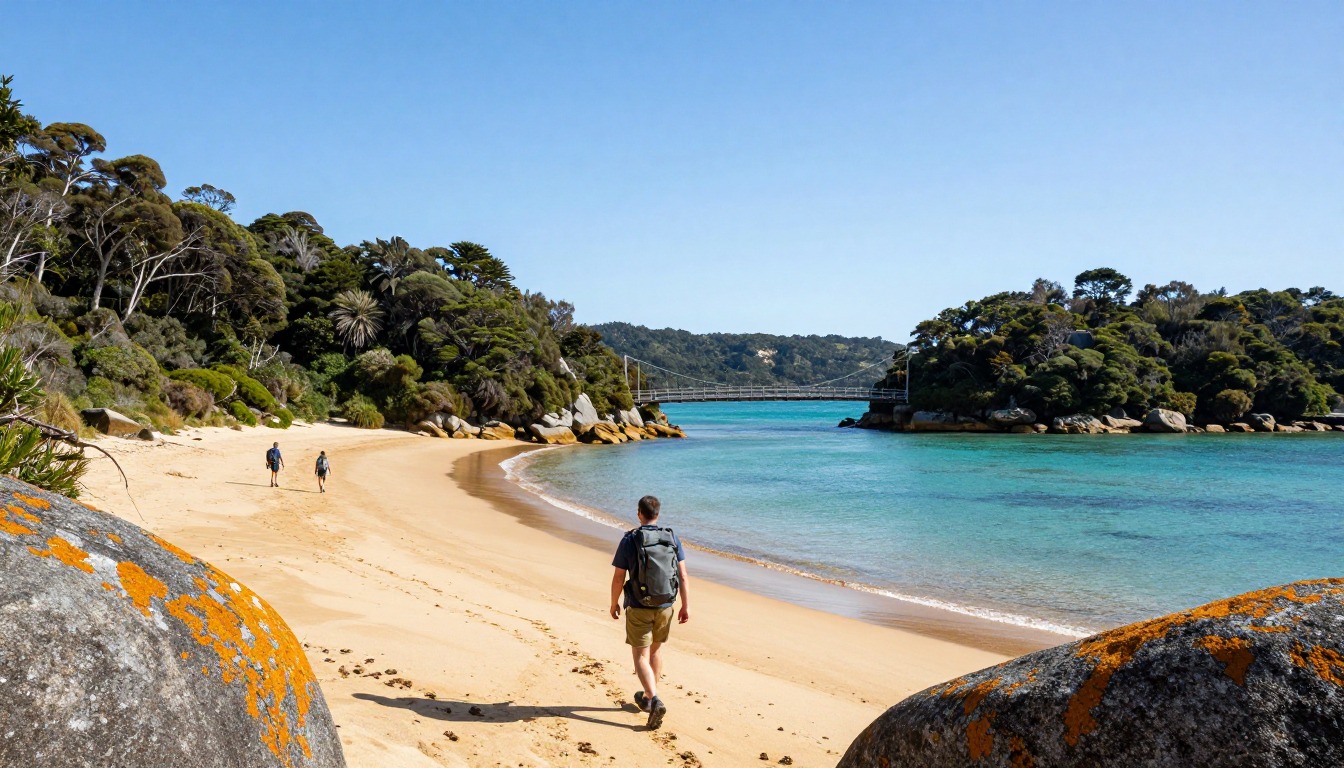
Illustrative artwork — an impression of Abel Tasman Coast Track, not a literal photograph.
The Abel Tasman Coast Track is a 3- to 5-day Great Walk along the golden-sand beaches and turquoise bays of Abel Tasman National Park, at the top of New Zealand's South Island. The Department of Conservation manages a string of huts and beachside campsites along the coast, and in the Great Walk season those spaces fill quickly, so where you sleep each night is something you book before you leave, not something you figure out on the trail.
Why hike here
What makes the Coast Track different from most Great Walks is that it's coastal, not alpine — instead of climbing toward a summit, you're weaving in and out of native forest and dropping onto one gold-sand beach after another, with the water shifting from deep blue to that turquoise you associate with somewhere much further north. Water taxis run along the coast, so you can shorten a day, skip a stretch that doesn't interest you, or just come out for an afternoon instead of the full three to five days. A couple of estuary crossings are tidal, which adds a bit of route-planning most hikes don't ask for — you're checking tide tables, not just weather. October through April gets you the longest, driest days; outside that window the track is still walkable, just wetter and shorter on daylight.
Getting there
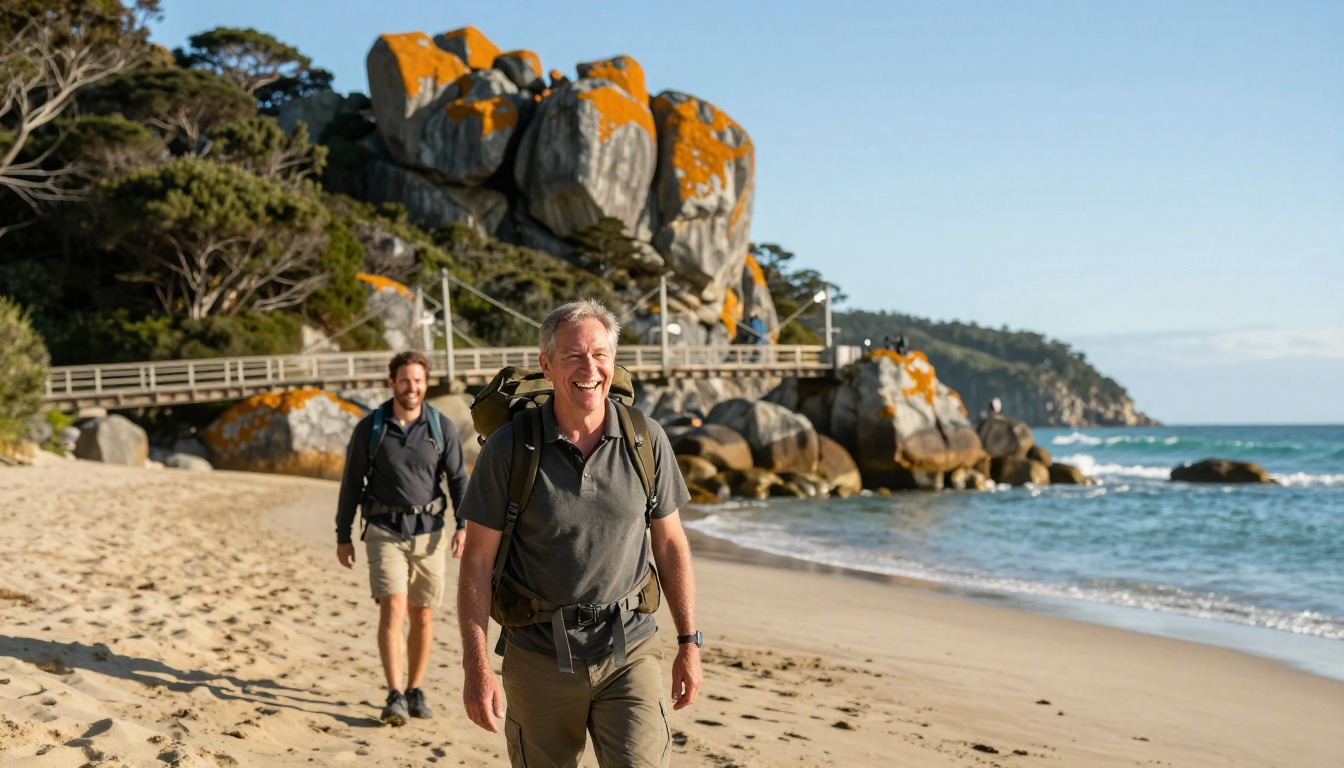
Nelson, at the top of the South Island, is the gateway to the park — flights connect Nelson to Auckland and other main New Zealand hubs, or you can drive up from elsewhere on the South Island. From Nelson it's a straightforward road transfer to Marahau or Kaiteriteri, the two small towns that sit right at the edge of the park and where most people start or finish the track. Water taxis based in those towns then run hikers along the coast to whichever section of the trail they're starting from, which is also how many people shorten the walk or arrange a one-way trip.
Where to stay
The realistic options, closest-to-the-trail first. Book through the official links — we don't list prices or availability because they change all the time.
 Illustrative — evokes the setting, not a specific property.
 For example: Department of Conservation huts and beachside campsites spaced along the coast
Independent walkers — book ahead in the Great Walk season.
Great Walk huts and campsites must be booked; water taxis let you skip or shorten sections.
Department of Conservation booking systemFor example: Lodges, motels and holiday parks near the track and in Nelson
Walkers the night before and after, and day trippers by water taxi.
Water taxis from Marahau/Kaiteriteri make day and part-track trips easy.
Nearby-town lodgingPermits & rules
In the Great Walk season, huts and campsites must be booked in advance and fill quickly. Some crossings are tidal — check the tide tables, as a couple of estuary sections are only passable around low water.
Gear you'll want for this trip
Matched to the terrain and conditions here. Real products — check current price on Amazon.


Common questions
Do I need to book huts and campsites in advance?
Yes, and well in advance during the Great Walk season. DOC huts and campsites along the Abel Tasman Coast Track fill up quickly once the weather turns good, so lodging is usually locked in before you start walking. If you're staying in Marahau, Kaiteriteri, or Nelson instead, book those rooms early too, especially in peak months.
Do I have to carry a tent, or can I stay in huts the whole way?
Both are possible. The track has a mix of DOC huts and beachside campsites, so you can walk hut-to-hut without a tent, camp the whole way, or mix the two depending on what's booked. Either way, reserve your spot ahead of time — hut and campsite bookings for the Great Walk season are separate and both need to be arranged before you go.
What's the best time of year to hike the Abel Tasman Coast Track?
October through April is the classic window, with the most settled weather and the longest daylight for beach-hopping between huts. The track is walkable year-round, but outside that stretch you'll deal with more rain and shorter days, and it's worth checking current conditions and tide tables for the estuary crossings before you commit to dates.
Complete gearsets for this trip
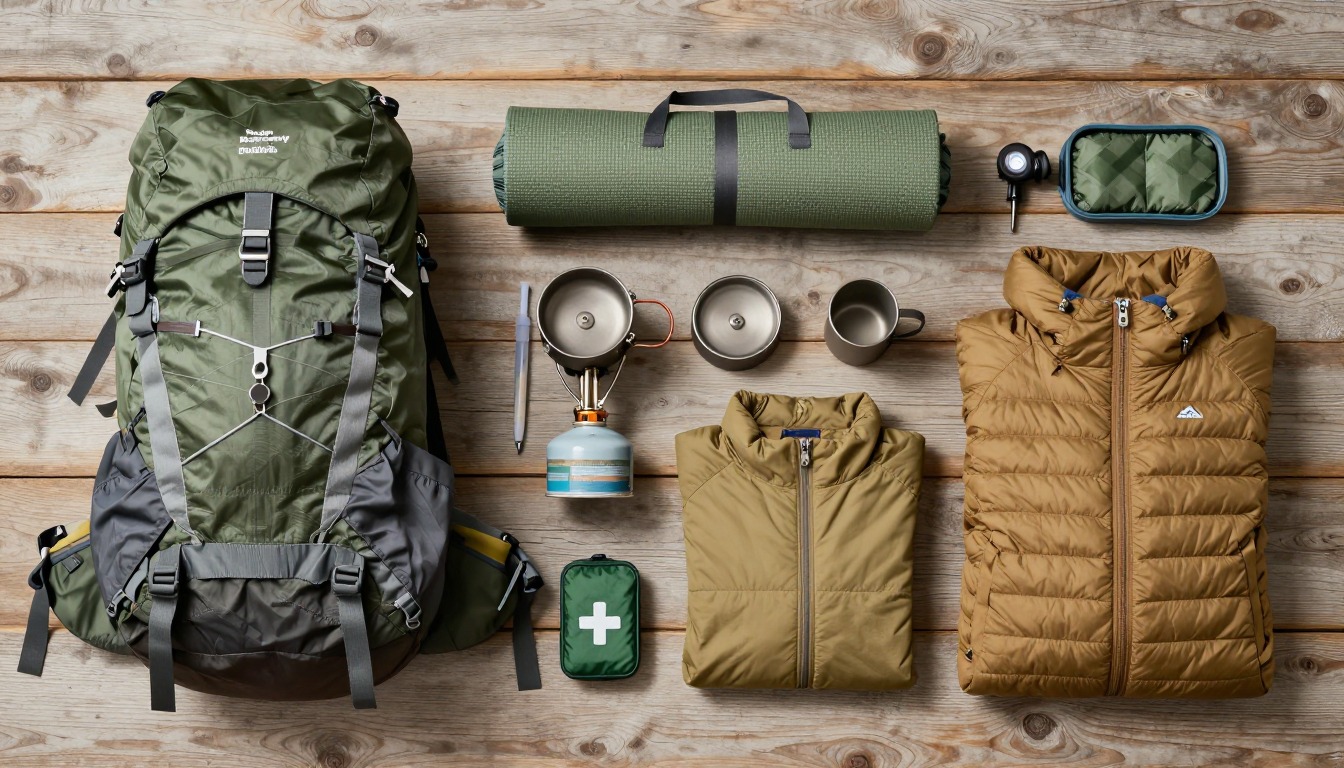
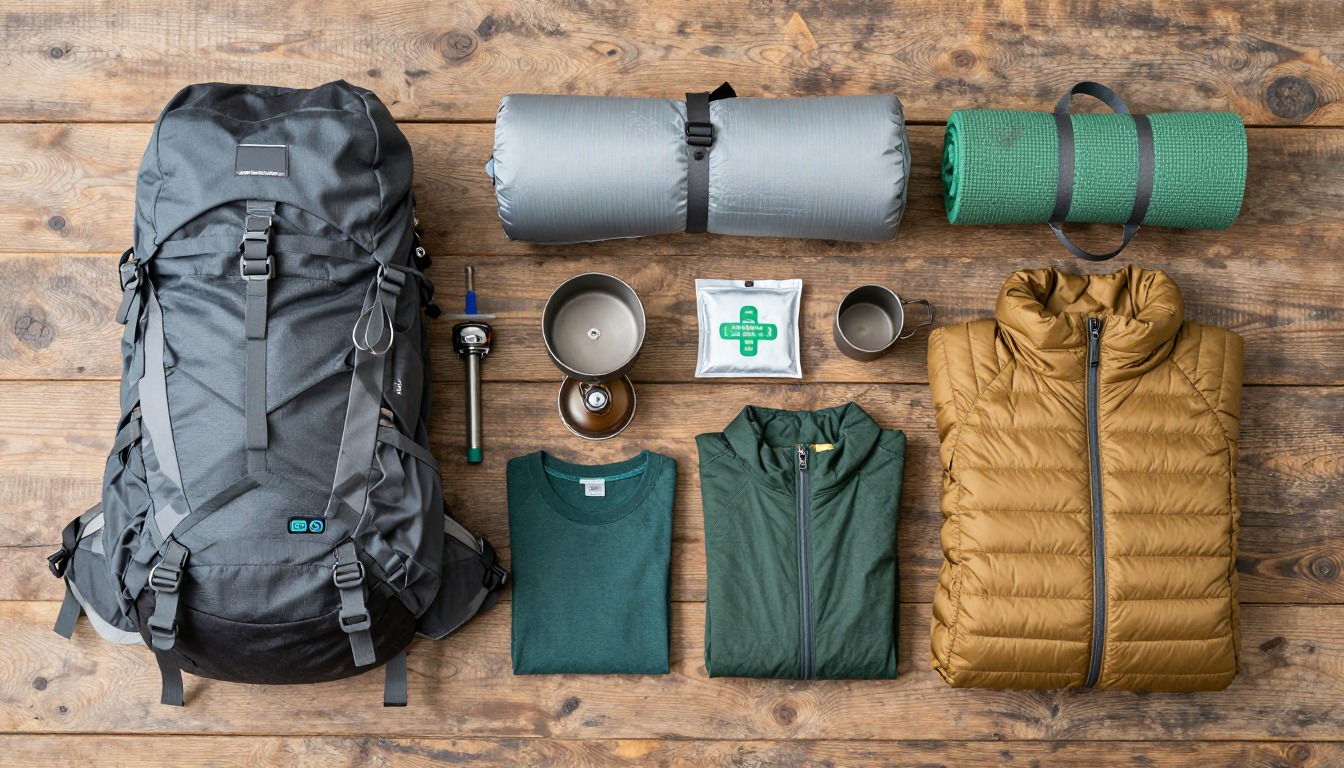
Full curated kits built for exactly this kind of hike — what to bring, why, and links to similar gear.
Lodging details are compiled from official parks, refuge associations and reservation systems and can change without notice. We publish no prices, availability or ratings — always confirm current information on the official site before booking or setting out. Product links are affiliate links: we may earn a commission at no extra cost to you; prices and availability are shown on Amazon. See our affiliate disclosure.