
The Ten Essentials, explained
The Ten Essentials are ten categories of gear — navigation, sun protection, insulation, illumination, first-aid supplies, fire, repair kit and tools, extra food, extra water and emergency shelter — that let you handle a hike going wrong. They are categories, not a fixed packing list, so what you carry scales with the trip.
In plain English
The Ten Essentials are a checklist of ten kinds of gear that help you cope when a hike does not go to plan. They are not about comfort. They are about getting through a surprise, like a twisted ankle, a sudden storm or a walk that runs past dark.
A good way to picture it is a spare tire and a jack in a car. You rarely use them, and most trips go fine without them. But when you do get a flat, having them turns a crisis into an annoying half hour.
The list names types of things, not exact products. Light could be a small headlamp. Shelter could be a thin emergency blanket. On a short summer walk, each item can be tiny. On a long trip in the mountains, each one grows. What stays the same is the question behind it: if you had to stay out overnight, could you stay warm, find your way, get water and be found?
The short answer
Pack something from all ten categories on every hike, then size each one to the trip. On a short, popular day trail that can be a headlamp, a wind shell, a blister kit, tablets, a spare bar and a foil blanket tucked in a pocket. On a multi-day route the same ten grow into real layers, a filter, a stove-capable fire source, a day of spare food and a shelter you can actually sleep in.
The list began with a Seattle climbing club in the 1930s as ten specific objects. Modern practice reframes it as ten systems, which is a far more useful idea: nobody carries the same headlamp on a summer evening stroll and a November ridge traverse, but everybody should carry light. The question the list asks is not "did I buy these ten things?" It is "if I twist an ankle at the turnaround and spend an unplanned night out here, can I stay warm, oriented, fed, watered and findable?"
The ten, one by one
Each category below is doing one specific job. Understanding the job is what lets you scale it sensibly instead of guessing.
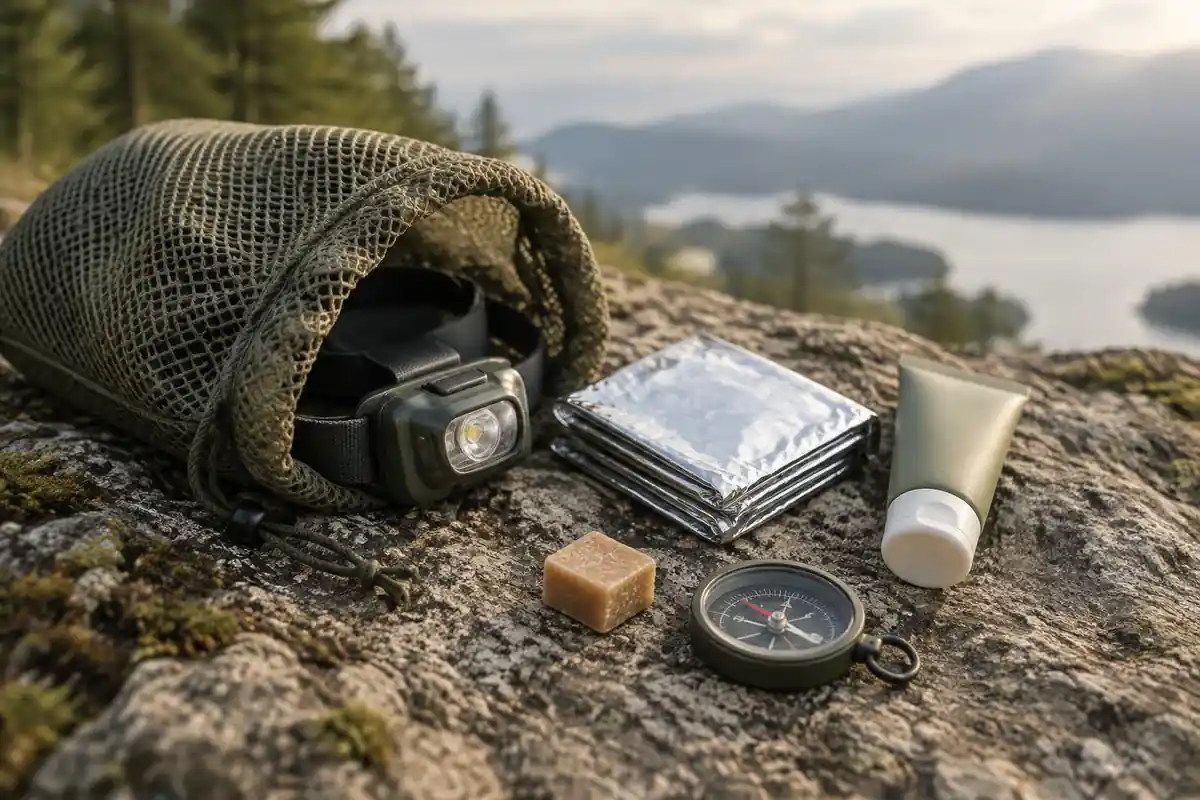
- Navigation Getting lost is the most common way a routine hike turns into a rescue, and it usually starts with an unmarked junction. Carry a paper map of the area and a compass you know how to orient, plus a phone with the map downloaded for offline use. On remote or off-trail routes many hikers add a dedicated GPS unit or a satellite messenger, because cell coverage disappears long before the trail does.
- Sun protection Sunburn and snow blindness are slow injuries that wreck the back half of a trip, and they get worse with altitude, water and snow reflecting light back at you. Sunscreen, SPF lip balm, UV-blocking sunglasses and a brimmed hat cover it. A light long-sleeve sun shirt is often more comfortable than reapplying lotion all day, and it does not run out.
- Insulation Hypothermia does not need winter — a wet, windy 50°F afternoon is plenty. The rule is to carry insulation beyond what you are hiking in, because your output drops the moment you stop moving or get hurt. A rain shell, a fleece or light puffy, a warm hat and thin gloves cover most three-season days. Avoid cotton, which holds sweat and pulls heat out of you; wool and synthetic fibers keep working when damp.
- Illumination Hikes run long, and dusk under tree cover arrives well before sunset. A headlamp keeps your hands free for scrambling, poles and map-reading, which is why it beats a flashlight or a phone screen. Check the batteries before you leave and carry a spare set; a basic headlamp weighs a few ounces and is the single item most likely to convert a bad situation into a merely late one.
- First-aid supplies Most trail first aid is unglamorous: blisters, small cuts, splinters, a rolled ankle. Carry blister care (tape, moleskin or gel pads), adhesive bandages, gauze and tape, tweezers, gloves, and any personal medication you might need. Supplies are only half of it — take a recognized wilderness first-aid course so you know how to use what you are carrying, and call 911 for anything genuinely serious.
- Fire Fire is a backup heat source and a signal, not a campfire hobby. A lighter, stormproof matches in a waterproof container, and a dedicated fire starter that burns hot and long — cotton balls packed in petroleum jelly, or commercial tinder tabs — take up almost no room. In dry country and above treeline, a stove often serves the warmth-and-hot-drink role better, and open fires may be banned outright, so check local restrictions before you count on one.
- Repair kit and tools Gear fails in boring ways: a snapped hipbelt buckle, a blown seam, a delaminating sole, a torn tent pole sleeve. A small knife or multitool, a few feet of duct tape wrapped around a water bottle or trekking pole, cordage, safety pins, zip ties and a needle with strong thread will field-repair most of it. Our guide to fixing a backpack on the trail covers the repairs worth practicing at home first.
- Extra food The word that matters is extra — food beyond what your planned day requires. An unplanned extra few hours burns calories you had not budgeted, and low blood sugar degrades judgment exactly when you need it. One or two dense, no-cook bars plus something salty is enough for a day hike. On overnight trips, the common practice is roughly an extra day of food for a multi-day route.
- Extra water Dehydration arrives quietly and takes your energy and decision-making with it. A frequently used planning figure is about half a liter per hour of moderate hiking, more in heat or at altitude. Just as important is the ability to make more water: a squeeze filter or purification tablets weigh very little and mean a creek or lake turns into resupply rather than a temptation.
- Emergency shelter This is the category people skip most and regret most. If you are stuck out overnight, something between you and the wind changes the night from dangerous to merely unpleasant. An emergency bivy, a heat-reflective blanket, or a light tarp all qualify. On an overnight trip your tent covers this — until you leave camp for a summit push, at which point a pocket bivy goes back in the daypack.
Ready to turn this into an actual pack list? Our interactive packing checklist builds a trip-specific list with the Ten Essentials already included, so you can tick items off rather than rebuilding the list from memory each time.
How the list scales: day hike vs. multi-day
The categories never change. The sizing does — and the biggest mistake is applying overnight thinking to a day hike (so the list feels absurd and gets abandoned) or day-hike thinking to an overnight (so the margin disappears on night two).
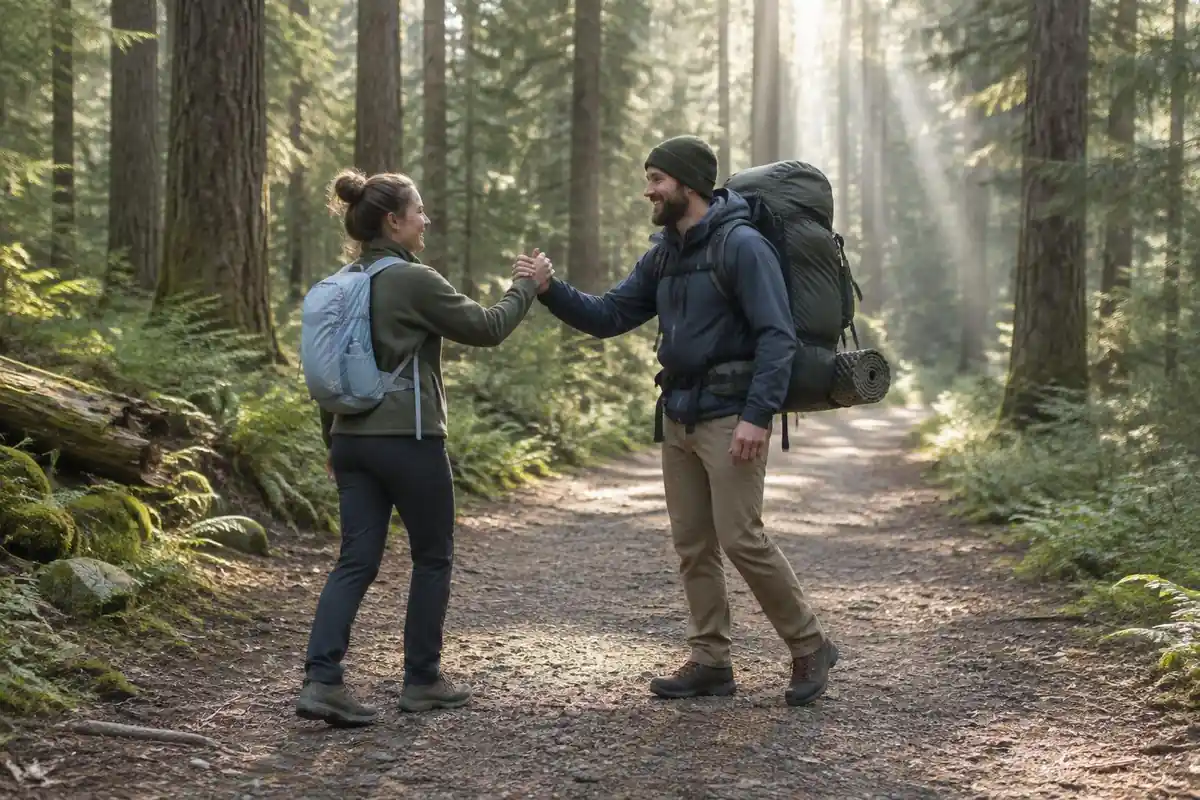
On a day hike, the Ten Essentials should be small enough that you never unpack them. Trimmed to a day-trip scale — headlamp, wind or rain shell, a compact blister and first-aid kit, tablets or a small filter, a lighter and fire starter, a mini repair kit, a spare bar, and a foil bivy or blanket — the whole set commonly lands near a pound or two, not counting water and food. Treat it as a permanent module that lives in your pack, refilled after each trip, rather than something you assemble at the trailhead at 6 a.m.
On an overnight or multi-day trip, four categories grow substantially and the rest barely move. Insulation becomes real layers, because you will be stationary in camp for hours after dark. Food grows to full meals plus that spare day. Water capacity grows because dry stretches between sources get longer, and a filter shifts from optional to structural. Shelter becomes your tent or tarp system. Navigation gets more serious too — longer routes mean more junctions, more darkness and more chance of a weather day that changes the plan.
Two categories deserve special attention as trips get longer. The repair kit matters more because you cannot walk back to the car in two hours, and the light matters more because you will use it every single evening rather than only in an emergency. If you are still deciding how much pack you need to carry all this, our gear guides break down capacity and fit by trip length.
The mistakes that catch people out
Skipping essentials is rarely a decision — it is a drift. Here is where it usually starts.
Do
- Keep a permanent, pre-packed essentials module in your pack.
- Check headlamp and spare batteries before every trip.
- Download offline maps and carry a paper backup.
- Restock what you used the evening you get home.
- Scale each category to the season, terrain and group.
Don't
- Skip items because "it is only a short hike."
- Let one person carry the group's only kit.
- Rely on a phone for navigation, light and signaling.
- Carry a first-aid kit you have never opened.
- Leave the essentials at camp for a summit push.
The short-hike exemption is the big one. Search-and-rescue call-outs skew heavily toward popular, close-to-town trails on nice afternoons, precisely because those are the hikes people start with nothing. A two-hour loop is exactly the trip where a twisted ankle at the far end means sitting in the dark, cold, without light — and it is also the trip where the trimmed-down essentials module costs you almost nothing to carry.
The second trap is a kit that exists but does not work: dead headlamp batteries, a filter that froze and cracked, tape that lost its stick, a map for a different trailhead, a first-aid kit you have never opened so you do not know what is in it. Gear that is present but untested is a false sense of margin. The same applies to skills — owning a compass is not the same as being able to take a bearing, and carrying a fire starter is not the same as having lit one in the wet.
Build it once, maintain it forever
The practical way to live with the Ten Essentials is to stop treating them as a packing decision. Assemble one small stuff sack that covers all ten in day-hike scale, keep it in whichever pack you grab, and add trip-specific items on top of it rather than starting from zero each time. Then run a two-minute ritual after every hike: replace what you used, check the light, and top up the tape and blister supplies.
Pair that habit with the rest of your trail routine — telling someone your route and expected return, matching the hike to the least experienced person in the group, and setting a turnaround time — and you have covered most of what actually keeps hikers safe. Our hiking dos and don'ts guide walks through those planning habits, and the packing checklist turns the ten categories into a list you can tick off before you close the pack.
This is general trail-craft, not medical or emergency advice. For first aid, take a recognized wilderness first-aid course; in a genuine emergency, call your local emergency number (911 in the US) as soon as you can.
What the sun and cold numbers actually say
Sun protection matters more than a day's weather suggests. The EPA says UV intensity rises about 6% for every kilometer of elevation, and that overcast skies still let through about 31% of UV, while broken clouds let through about 73%.1 Snow, water and sand reflect UV back at you, and UVB can cause snow blindness, a temporary loss of vision from sunburned corneas.2 The CDC recommends broad-spectrum SPF 30 or higher, reapplied every 2 to 4 hours,3 while the EPA advises applying it 20 minutes before going out and reapplying every two hours.2 The difference is small, but on a long exposed day the EPA's shorter interval is the safer habit.
Insulation works the same way. The CDC says hypothermia can develop above 40°F when rain, sweat or cold water chill you,4 and the National Weather Service says it can occur at air temperatures as warm as 60°F, particularly in water or with long exposure while underdressed.5 Wet feet lose heat 25 times faster than dry ones, according to NIOSH.6 That is why a spare warm layer and dry socks belong in the kit even in summer.
Extra water: where the guidance disagrees
The page gives about half a liter per hour as a common planning figure. None of the government or medical sources in this site's library gives a hiking-specific hourly amount, so treat it as a rough starting point rather than a standard. The nearest official figure is workplace guidance: NIOSH suggests one cup of water every 15 to 20 minutes for moderate work under two hours in heat, and no more than six cups an hour.7 That works out to roughly three quarters of a liter to just under a liter an hour. Grand Canyon rangers say hikers in heat can lose one to two quarts an hour.8
Agencies also differ on thirst. The Park Service says active hikers in hot weather should drink often and before feeling thirsty.9 The CDC Yellow Book says drinking to relieve thirst helps prevent hyponatremia, a dangerous drop in blood sodium, and calls the idea that you can't drink too much outdated.10 A middle path is to drink steadily, eat salty snacks, and watch for light yellow or clear urine, which the CDC says usually signals adequate hydration.11 Carrying a way to treat water matters because clear streams can still carry germs.12
Light, first aid and being found
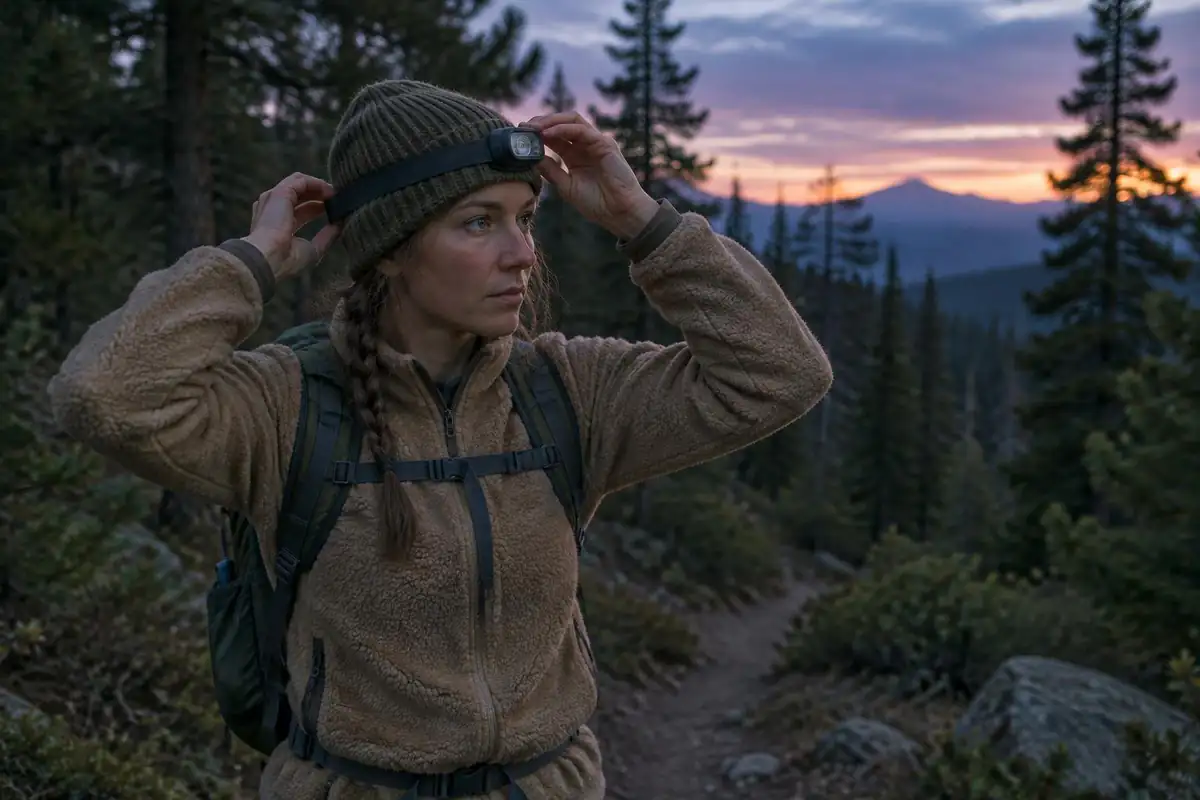
The Park Service recommends headlamps because they leave your hands free.9 When comparing them, know how the numbers are made. Under the ANSI/PLATO FL1 protocol, lumens are measured 30 to 120 seconds after switch-on with new batteries, and burn time runs until output drops to 10% of maximum.13 A lamp's rated hours include a long dim tail, which is one more reason to carry spare batteries.
For first aid, the Park Service suggests starting with a pre-made kit and adapting it to the trip and your personal medical needs,9 and it recommends learning CPR and basic wilderness first aid for backcountry trips.14 Shelter and insulation exist because help can be slow: search and rescue can take hours or days.15
One note on history. The page traces the list to a Seattle climbing club in the 1930s. That story is widely repeated, but this site's library has no readable primary source for it, so the guidance here rests on the Park Service's current list rather than the origin story.
Frequently asked questions
What are the Ten Essentials for hiking?
They are ten categories of gear: navigation, sun protection, insulation, illumination, first-aid supplies, fire, repair kit and tools, extra food, extra water, and emergency shelter. The modern version lists categories rather than ten exact objects, so a hiker can scale each one up or down to match the trip, the season and the terrain.
Do I really need all ten on a short day hike?
Yes, but in miniature. A two-hour loop still deserves a headlamp, a wind or rain layer, a small blister kit, a filter or tablets, a spare bar and an emergency blanket. The whole day-hike version of the list is often under two pounds and fits in a small side pocket you never unpack.
How much do the Ten Essentials weigh?
A trimmed day-hike version commonly lands somewhere around one to two pounds, not counting water and food. A basic headlamp weighs a few ounces, an emergency blanket only a couple, and a small repair and first-aid kit adds a few more. Weight grows on overnight trips mainly through extra insulation, food and water capacity.
Is my phone enough for navigation and light?
A phone with offline maps downloaded is a genuinely useful navigation tool, and its flashlight works in a pinch. It is a poor sole plan, though: batteries drain in cold, screens crack, and a dropped phone ends both jobs at once. Carry a paper map and a real headlamp as the backup that does not share a failure point.
Where can I get a printable version of the list?
Our interactive packing checklist builds a trip-specific list you can tick off, with the Ten Essentials baked in alongside the rest of your kit. Start there once you understand what each category is for, so you are choosing items deliberately instead of copying somebody else's pack.