
Best Hiking First-Aid Kits (2026)
A first-aid kit is one of the few things you carry hoping you'll never need, but when a blister turns raw, an ankle rolls, or a cut needs cleaning, it's the difference between a manageable setback and a trip cut short. On trail, help can be hours or days away, so even a compact kit covering basic wound care matters more than it would on a short walk near the car. The right kit matches the trip, not a generic one-size-fits-all list.
Who it's for
A first-aid kit matters for every hiker, but how much you carry should scale with the trip. A short day hike close to the trailhead needs less than a multi-day trip far from help. Solo hikers should carry a complete kit themselves, while groups can share the load and pack more supplies, plus extra for whoever's least experienced with treating an injury.
How to choose a first-aid kit
A pre-made kit gives you a sensible baseline fast, since someone already thought through the basics and packed them into one labeled pouch, which suits hikers who'd rather not build one from scratch. Building your own lets you match contents to your trip and skip what you'll never use. Many hikers start pre-made, then customize it over time.
A day hike a few miles from the trailhead needs only the basics: bandages, blister care, and a way to clean a cut. A multi-day or backcountry trip warrants more—extra dressings, tape, and supplies for wounds needing ongoing care. Group size matters too: solo hikers need a self-sufficient kit, while a group can share one kit sized up for everyone.
Look for wound care basics—adhesive bandages, gauze, and antiseptic wipes—plus dedicated blister supplies like moleskin or blister tape, since blisters are the most common trail injury. Add tweezers for splinters and ticks, small scissors, and a pair of nitrile gloves to keep wounds clean. Leave room for personal medications you add yourself, since a kit shouldn't be expected to include them.
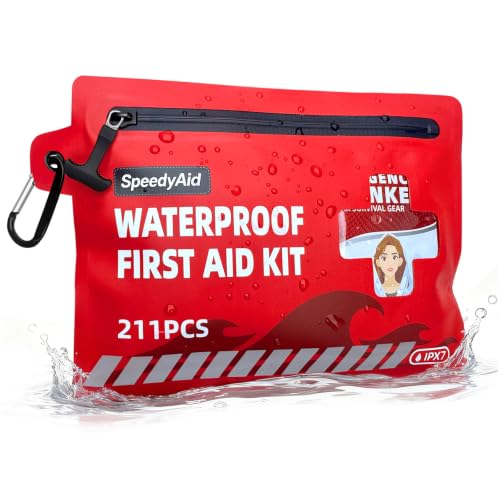
A first-aid kit should be light enough that you'll actually carry it every time, so favor compact packaging over bulky pre-built boxes. Repack contents into a lightweight zip pouch to shed weight and bulk. A waterproof or water-resistant case matters just as much as what's inside, since a soaked bandage does you no good exactly when you need it on a rainy trail.
The best-stocked kit is only as useful as the person carrying it knows how to use it. Learn the basics of wound cleaning, blister management, and when an injury means turning back. A wilderness first aid course is worth a weekend for anyone who hikes regularly, especially in groups or far from a trailhead, since backcountry care differs from what you'd do at home.
4 first-aid kits to compare
Real options that fit the criteria above. We don't publish prices or ratings — check the current price and reviews on Amazon.



Common questions
Should I buy a pre-made first-aid kit or build my own?
Either works well. A pre-made kit is a fast, sensible starting point that covers the basics without research or shopping around. Building your own lets you tailor contents to your trip length, group size, and any medications you personally need. Many hikers start pre-made, then adjust it over time.
How big should my first-aid kit be for a weekend backpacking trip?
Bigger than a day-hike kit, but it doesn't need to be huge. Plan for a few days of wound and blister care: extra dressings, blister tape, and enough gauze for more than one minor injury, since you're farther from help. If you're hiking with others, one shared, slightly larger kit usually covers the group well.
Do I need to know first aid to carry a kit, or is the kit enough on its own?
A kit alone won't help much if you don't know how to use what's in it. Learn basic wound care, blister treatment, and when a symptom means you should turn back, before you're relying on that knowledge miles from the trailhead. A short wilderness first aid class is worthwhile for anyone who hikes regularly.
This is a general buying guide, not a lab review — it explains what to look for so you can choose well, and links to real products to compare. We publish no prices or ratings; current price, availability and reviews are shown on Amazon. Product links are affiliate links: we may earn a commission at no extra cost to you. See our affiliate disclosure.