
How Much Does Backpacking Food Cost?
Food is the one part of your kit you buy again for every trip, and what it costs depends far less on the trail than on where the food comes from. A commercial freeze-dried dinner and a bag of dinner you assembled at home can weigh the same and feed you just as well, at very different cost. This page explains what actually drives that difference, in relative terms rather than figures, since pricing shifts constantly.
Affiliate disclosure: this page contains affiliate links. Purchases made through them may earn us a commission at no extra cost to you. See our affiliate disclosure.
In plain English
Backpacking food costs you in two ways. There is the price at the checkout, and there is the price you pay in weight, time and waste. A cheap meal that goes stale before your trip, or one so heavy you hate carrying it, is not really cheap.
The biggest choice is who does the work. With a ready-made freeze-dried pouch, a factory has cooked, dried and packed the meal, and you pay for all of that. With food you pack yourself from the grocery store, you do the work at your kitchen table, and it costs less.
Longer trips simply multiply whatever you spend each day. That is why small savings on everyday meals, like breakfast and snacks, add up quickly on a long hike.
Who it's for
Cost matters more as trips get longer and more frequent. A single overnight barely registers whatever you buy. But a week-long route, or a season of back-to-back weekends, multiplies every per-day decision, and thru-hikers resupplying every few days for months feel the gap between a commercial-meal habit and a home-packed one more than anyone.
What drives the cost
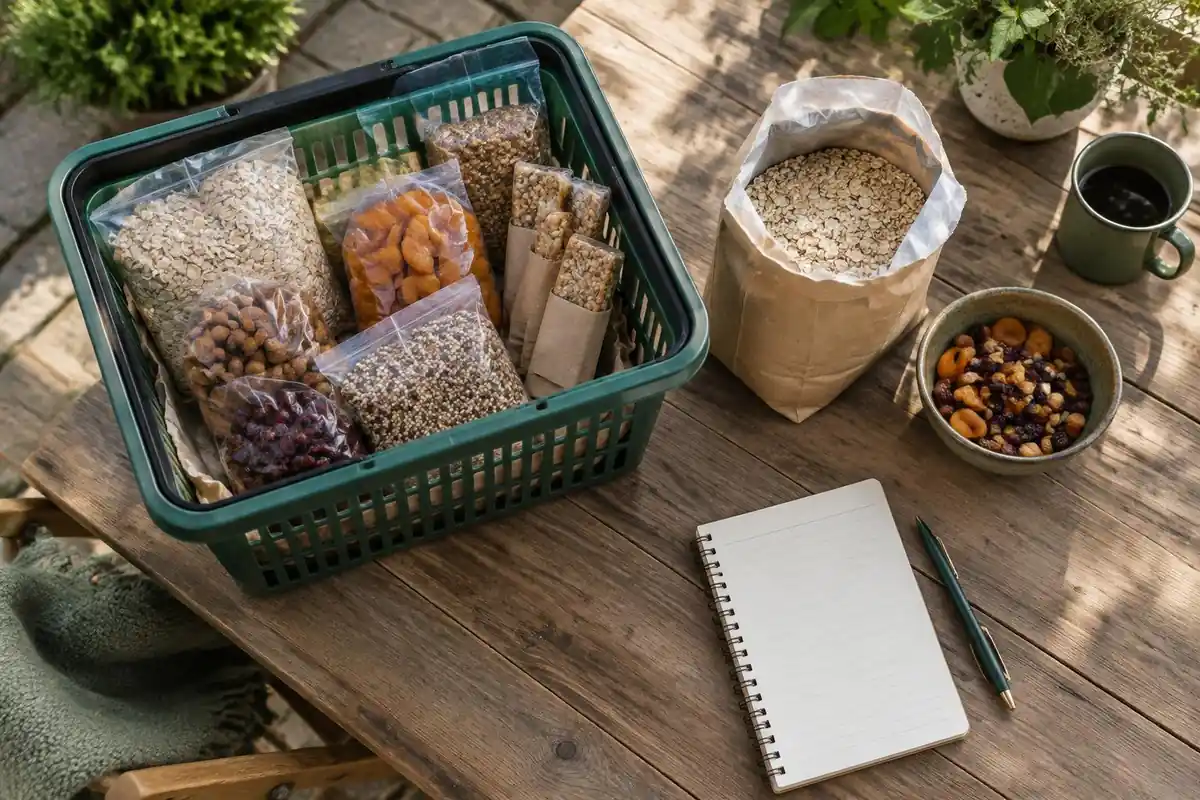
This is the single biggest lever. Commercially packaged freeze-dried entrees carry the cost of the freeze-drying process, the pouch, and retail distribution, so they sit at the top of the per-meal range. The same calories built from grocery staples — instant rice, ramen, couscous, dried beans, tortillas, nut butter — and repackaged into zip bags sit near the bottom.
Think in tiers, not numbers. The budget tier is grocery-aisle staples you portion yourself, with bulk-bin nuts and dried fruit for snacks; see /food/budget-backpacking-meals/ for that approach. The mid tier is commercial freeze-dried dinners with homemade breakfasts and lunches. The premium tier is packaged meals at every sitting plus specialty bars, drink mixes and desserts.
Whatever your per-day cost, the trip total is that figure times days out, so a habit that feels harmless on an overnight becomes the dominant line item on a two-week route. Long trips also push you into resupplying in small trail towns, where selection is thin, convenience pricing is normal, and the cheap bulk options you rely on at home rarely exist.
Gluten-free, vegan, dairy-free and allergen-conscious versions of shelf-stable trail food are made in smaller volumes and stocked in fewer stores, so they usually carry a premium. Planning further ahead and buying in quantity softens that. Always read labels rather than assuming a meal fits your needs, and talk to a doctor about any medical dietary restriction.
Per-serving cost drops sharply once you stop buying single servings. Bulk bins for oats, rice, nuts and dried fruit, case quantities of bars, and end-of-season clearance on packaged meals all pull the same lever. Buy for the season rather than the weekend, watch expiration dates, and store everything sealed and cool so nothing goes stale first.
Drying your own food shifts spending from every trip to one purchase plus a little electricity, which only pays off across many trips. That math favors frequent hikers and rarely suits someone who goes out once a year. Sale produce dries well, while meat and cooked meat sauces need extra care and short storage (dried meat keeps only about two weeks at room temperature); /food/how-to-dehydrate-backpacking-food/ walks through the process and the safety basics.
Calories are the real unit of cost
Compare food by cost per calorie, not per meal, because a small cheap dinner that leaves you hungry just moves the spending to snacks. To estimate how many calories you need, the Compendium of Physical Activities rates backpacking at 7.0 METs and hiking with a daypack at 7.8, where one MET is about 1 kcal per kilogram of body weight per hour.1,2 A 70 kg hiker carrying a pack for six hours works out to roughly 2,900 kcal for the walking alone.
Cold trips push the bill up. A National Academies review for military field operations put soldiers' energy needs in the cold at 3,400 to 4,300 kcal a day, with a military cold-weather ration standard of 4,500 kcal, and noted that snow travel and bulky clothing, boots and packs raise the energy cost of activity.7 Those are military figures, not a hiker's target, but the direction holds for anyone: colder trips need more food, and more food costs more.
Waste: the hidden cost of buying ahead
Bulk buying only saves money if the food is still good when you eat it. The National Center for Home Food Preservation says most dried fruits keep 1 year at 60°F or 6 months at 80°F, vegetables about half as long, and that dried foods belong in cool, dry, dark storage.3 Home jerky lasts only about two weeks at room temperature.8
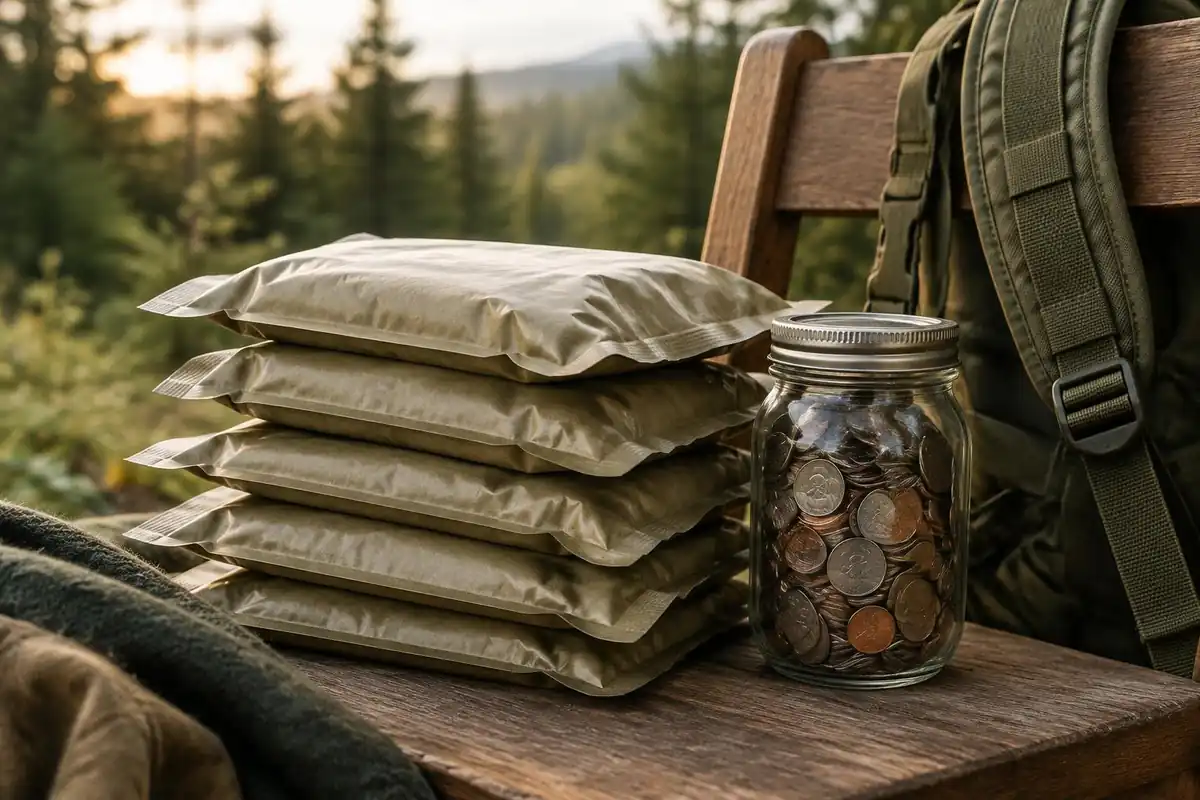
Commercial freeze-dried food is the opposite case. Utah State University Extension says it can stay safe 10 to 15 years in airtight, moisture-proof packaging, but it does not recommend keeping home freeze-dried products beyond 5 to 10 years.4 That long shelf life is a genuine financial argument for pouches in a resupply box or an end-of-season stockpile.
A dehydrator is a food-safety tool, not just an appliance
If you buy a dehydrator to save money, make sure it can dry safely. NCHFP says dehydrators are designed to dry food at 140°F and recommends an enclosed thermostat adjustable from 85°F to 160°F.9 For jerky, the meat should reach an internal temperature of 160°F before drying to kill bacteria such as E. coli O157:H7.8 A cheaper machine without reliable temperature control is a false economy.
Travel, fuel and storage gear
Fuel belongs in the food budget. TSA prohibits flammable liquid fuels, including cooking fuel, in both carry-on and checked bags, and a stove can fly only if it is completely emptied and cleaned.5,10 MSR notes that canister fuel is not available everywhere.11 Isle Royale shows how this plays out: carrying fuel canisters on its seaplanes is unlawful, so flyers buy fuel on arrival.12
Where a bear canister is required, you may not need to buy one for a single trip. Glacier Bay loans canisters free to registered backcountry users, and Sequoia and Kings Canyon offer rentals at visitor centers, except Cedar Grove, through the Sequoia Parks Conservancy.6,13 Check with the managing agency before buying gear you may use once.
Common questions
What's the cheapest way to eat well on the trail?
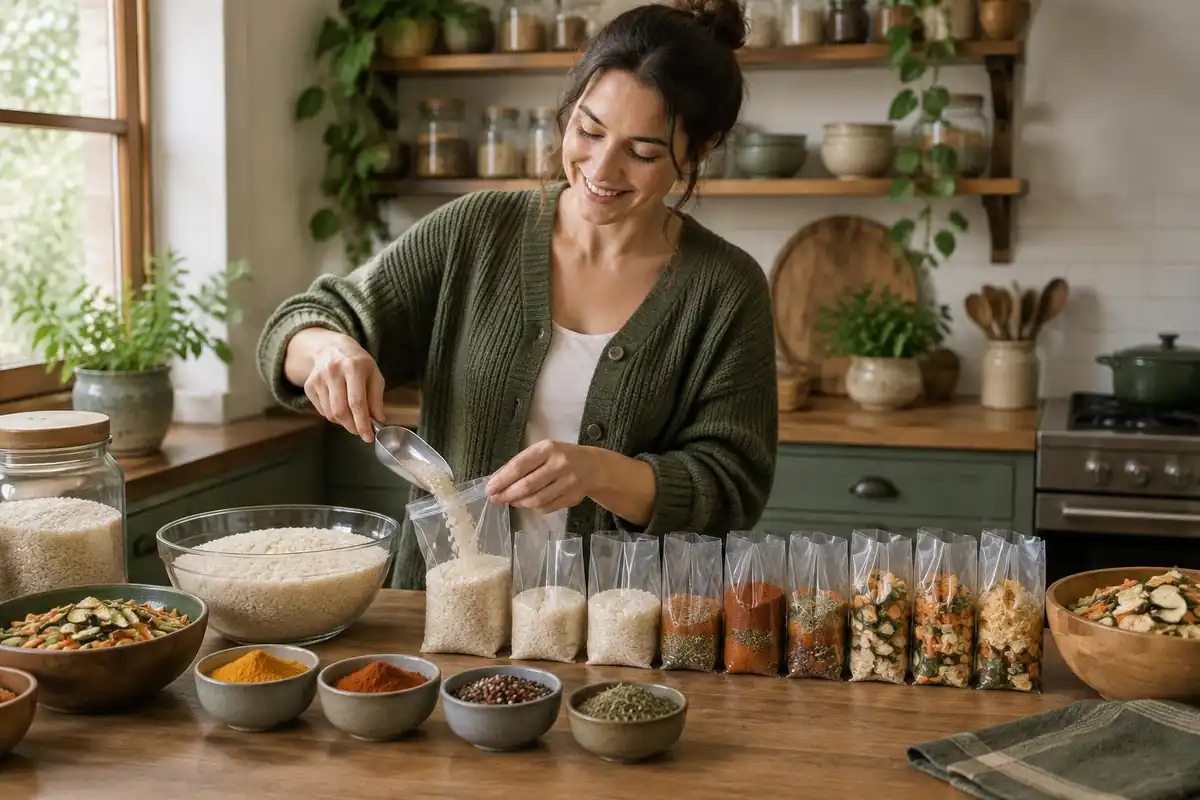
Repackaged grocery staples, assembled at home. Instant potatoes, ramen, couscous, rice, dried beans, tortillas, nut butter and bulk-bin nuts cover the calories and most of the variety for a fraction of commercial-meal cost, at similar weight. The trade-off is your time: an evening of portioning and bagging replaces the convenience you would otherwise be paying for.
Are freeze-dried meals worth the extra cost?
For some trips, yes. You are paying for convenience, long shelf life, a known calorie count and cook-in-bag cleanup with no pot to scrub. Many hikers split the difference: packaged dinners after long days, homemade breakfasts and lunches. That keeps the convenience where it matters most without paying for it three times a day.
Does cheaper food mean a heavier pack?
Not necessarily, but it takes attention. Budget staples like rice, ramen and instant potatoes are already calorie-dense; the weight penalty comes from canned goods, fresh produce and anything packed in water. Judge each item by calories per ounce and add fats such as oil or nut butter, and homemade food competes closely with packaged meals.
This is general backpacking-food guidance, not a lab review — it explains what to look for and how to plan so you can choose well. See our affiliate disclosure.