
Budget Backpacking Meals: Eat Well for Less
Commercial freeze-dried pouches are the easy way to feed yourself on trail, and they're also the most expensive way by a wide margin. Almost everything a pouch does — hot, fast, light, calorie-dense — can be built from ordinary grocery-store staples, bulk dry goods, or food you dehydrate at home. This page covers the strategies that cut a food budget the most without leaving you underfed or hauling unnecessary water weight.
Affiliate disclosure: this page contains affiliate links. Purchases made through them may earn us a commission at no extra cost to you. See our affiliate disclosure.
In plain English
Eating well on a budget on the trail mostly means buying ordinary groceries instead of ready-made trail meals. Instant rice, noodles, oats, powdered milk, peanut butter and a pouch of tuna can make a filling dinner for a fraction of the cost of a special hiking pouch.
The trick is to pick cheap food that is also light. A can of stew is cheap, but most of what you pay for, and carry, is water. Dry food from the same aisle gives you much more energy for the same weight.
Drying your own food at home saves even more over time. The trade is your time, and paying attention to how long home-dried food keeps. Write the date on every bag, keep it somewhere cool and dark, and use the oldest bags first.
Who it's for
Food cost scales with nights out, so the savings matter most to anyone stringing together regular weekends or planning a long-distance hike where resupply happens every few days for months. A once-a-year overnighter can happily buy pouches. If you're out most weekends, or feeding a family of hikers, the grocery-aisle approach changes the math quickly.
Ways to save
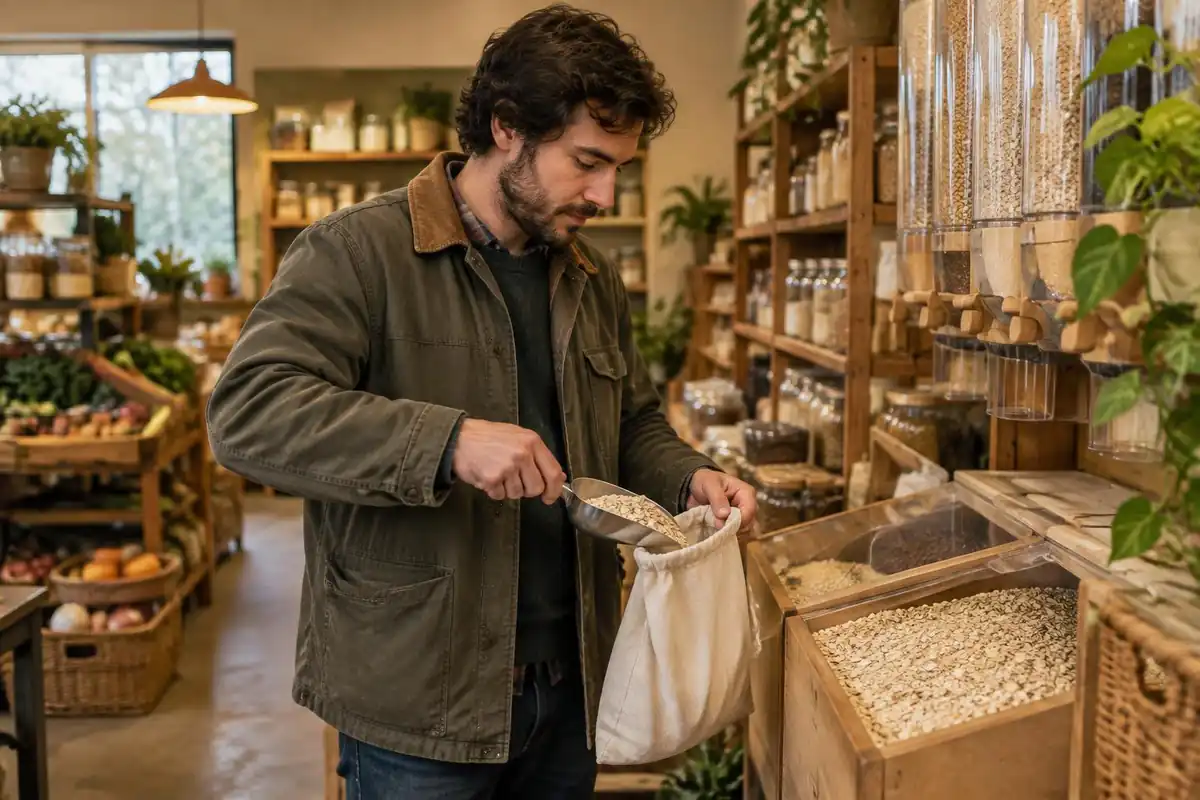
The cheapest hot dinner on trail is usually assembled, not bought: an instant rice or couscous packet, a boxed noodle side, or ramen, plus a shelf-stable protein like a foil tuna or chicken pouch, plus a handful of dried vegetables. Repackage it all into a zip-top bag at home so you carry food, not cardboard.
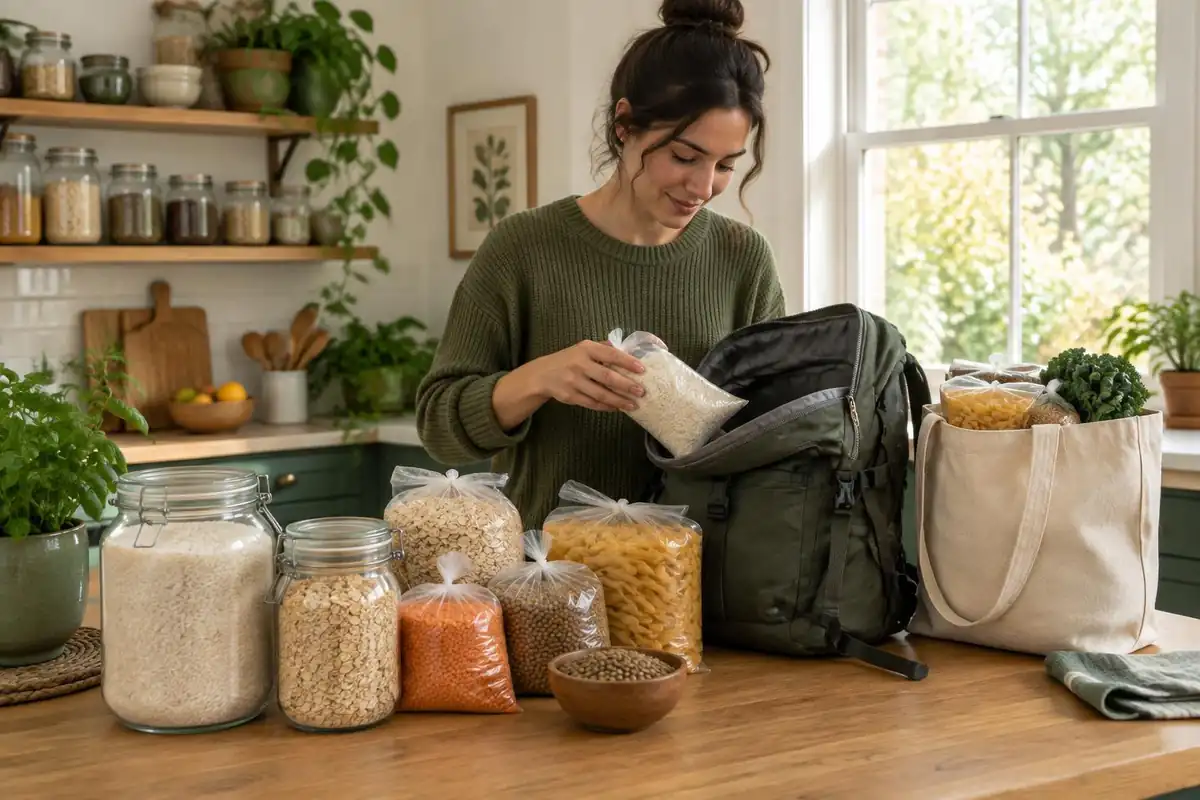
Per serving, dry goods get steadily cheaper as the package gets bigger. Oats, instant potatoes, powdered milk, dried refried beans, lentils, nuts, and dehydrated vegetables all keep for months in a sealed container at home, so a large bag bought once supplies many trips. Portion it into meal-sized bags the night before you leave.
Drying your own is the biggest long-term saver, because it turns ordinary sale-priced groceries — ground beef, pasta sauce, vegetables, fruit, even leftover chili — into trail meals for a fraction of what an equivalent pouch costs. The equipment is a one-time purchase that keeps earning back the more you hike. Meat dishes need extra care: dried meat keeps only about two weeks at room temperature, so freeze it. See /food/how-to-dehydrate-backpacking-food/ for the process and storage.
Cheap and heavy is a bad deal on a multi-day trip. Canned meals, jars, and fresh produce are mostly water, and water weighs the same whether the food was cheap or not. Aim for roughly 100 to 125 calories per ounce across the whole food bag, and judge any swap on calories carried per ounce, not on the cheapest option alone.
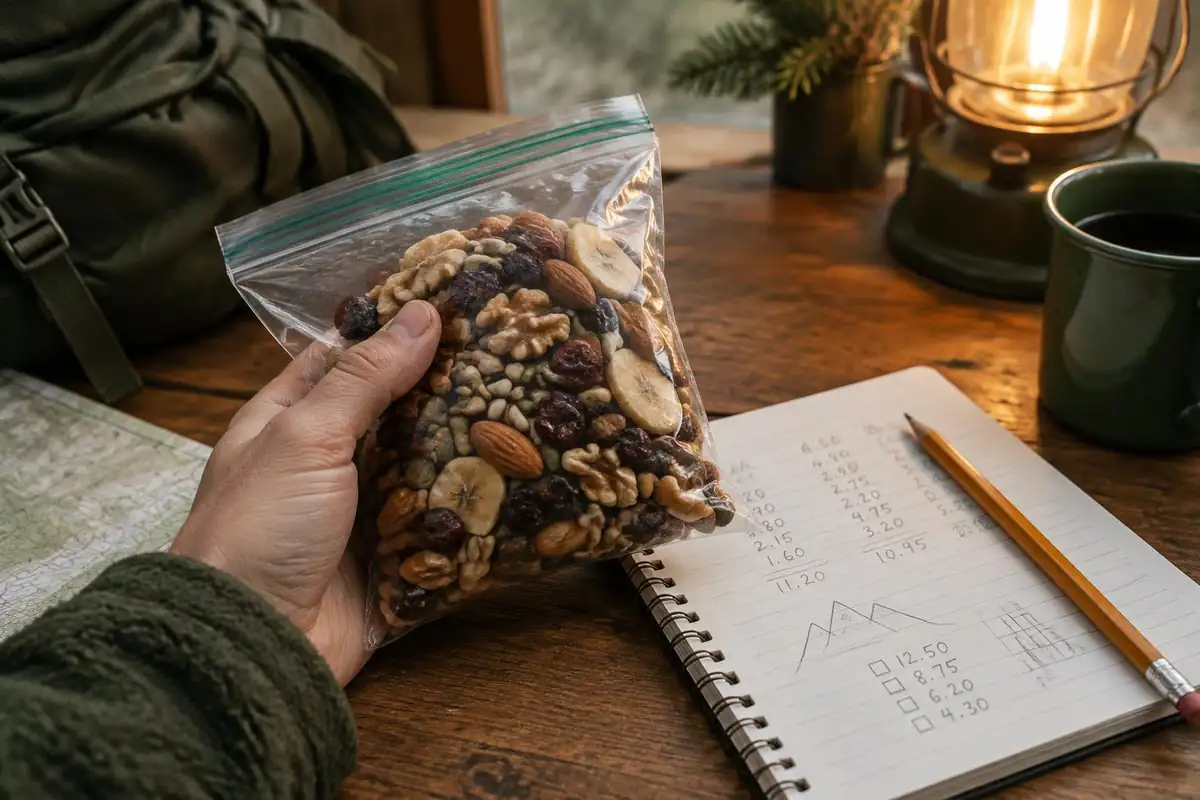
Waste is a hidden cost. Write out every breakfast, lunch, dinner, and snack by day before you shop, then build the trip around three or four meals you actually like and repeat them. A short, repeated menu means bulk bags get used up, nothing unfamiliar comes home untouched, and you know exactly what to buy next time.
Why cheap and heavy costs you on the trail
The page's warning against canned and fresh food comes down to water. The US Geological Survey notes that water's density is about 1 gram per milliliter, so each liter weighs about a kilogram.1 A can of soup or a bag of fresh fruit is mostly that weight, delivering few calories for what it adds to the pack.
That weight has a physical cost. A Journal of Experimental Biology study found walking energy use rose roughly linearly with backpack load, by about 7.6 watts per extra kilogram.2 A review of UK infantry testing with 25 to 70 kg loads found metabolic cost rose about 1% for each extra kilogram.6 Those soldier loads are far heavier than a hiker's, so treat the figure as a direction rather than a precise cost, but the point holds: every heavy, cheap item is paid for again in effort, and in food to fuel that effort.
How long bulk and home-dried food really lasts
Buying in bulk only saves money if the food is still good when you use it. For home-dried food, the National Center for Home Food Preservation says most dried fruits keep about 1 year at 60°F or 6 months at 80°F, and vegetables about half as long; store them in cool, dry, dark places.3 Meat is far shorter: properly dried jerky keeps about two weeks at room temperature in a sealed container.4 That fits the page's advice to freeze anything you will not use within a few weeks.
Safety is part of the saving. The center says meat for jerky should reach an internal 160°F before drying at 140°F.4 If you consider a home freeze dryer as a long-term saver, Utah State University Extension does not recommend keeping home freeze-dried products beyond 5 to 10 years, and says meats and eggs must be cooked before freeze-drying or after rehydration.7
Canister space is a budget too
Grocery-store staples come in boxes built for shelves, not packs. Where canisters are required, that bulk matters. Denali's small canister weighs 3 pounds and holds 3 to 5 days of food for one person; the larger one weighs 5 pounds and carries 7 to 10 days.5 The page's advice to repackage into zip-top bags pays twice: less weight and more days in the same canister. Canister rules are park-specific, so check the rules for your route before you plan the menu.
Common questions
Is a homemade backpacking meal really cheaper than a freeze-dried pouch?
Generally yes, and often by a wide margin. A dinner built from a boxed noodle side, a foil protein pouch, and dried vegetables costs a small fraction of a commercial two-serving freeze-dried entree, while landing in a similar calorie range. The trade-off is your time at home assembling and repackaging it.
How long does homemade backpacking food keep?
Store-bought dry staples keep to their printed date, and home-dehydrated food is the shorter-lived option: properly dried, sealed, and kept cool and dark, it generally holds for several months, while anything containing fat goes stale sooner, and dried meat keeps only about two weeks at room temperature, so freeze it. Label bags with the date, and freeze what you won't use in a few weeks.
What's the cheapest way to hit a full day's calories?
Fat-dense, inexpensive staples do the heavy lifting: olive oil added to dinner, peanut butter, bulk nuts and seeds, powdered milk, and instant potatoes all pack a lot of energy per ounce for very little money. A day on trail is commonly estimated by hikers at 2,500 to 4,500 calories (a rule of thumb, not an official figure), depending on effort and body size, so build up from there.
This is general backpacking-food guidance, not a lab review — it explains what to look for and how to plan so you can choose well. See our affiliate disclosure.