
How to Choose Hiking Boots That Actually Fit
Boot fit is the single thing that decides whether a hike ends with tired legs or shredded heels, and it has almost nothing to do with the size printed on your street shoes. Feet swell, socks add bulk, and downhill miles push your toes forward into the front of the boot. This page walks through the fit checks worth doing before you commit to a pair.
Affiliate disclosure: this page contains affiliate links. Purchases made through them may earn us a commission at no extra cost to you. See our affiliate disclosure.
In plain English
A boot that fits well feels snug around your heel and the middle of your foot, but leaves your toes room to wiggle. That sounds simple, but most boot problems, such as blisters, sore toenails and aching arches, come from getting one of those parts wrong.
Your feet are not the same size all day. They get a little bigger as you walk and stand, the way a sponge swells with water. So the best time to try boots is late afternoon, wearing the thick socks you actually hike in.
Length is only part of it. Feet also differ in width and in how tall they are across the top. A boot can be the right length and still pinch across the widest part of your foot. Walk up and down a slope in the store, and trust what your feet tell you on day one.
Who it's for
Anyone buying boots for the first time, or replacing a pair that quietly caused blisters, hot spots, or bruised toenails. Fit needs shift with use: short, flat day hikes forgive a lot, while steep descents, heavy packs, and multi-day mileage expose every millimeter of slop. Wide feet, high insteps, narrow heels, and one foot larger than the other all change which boot actually works.
Getting the fit right
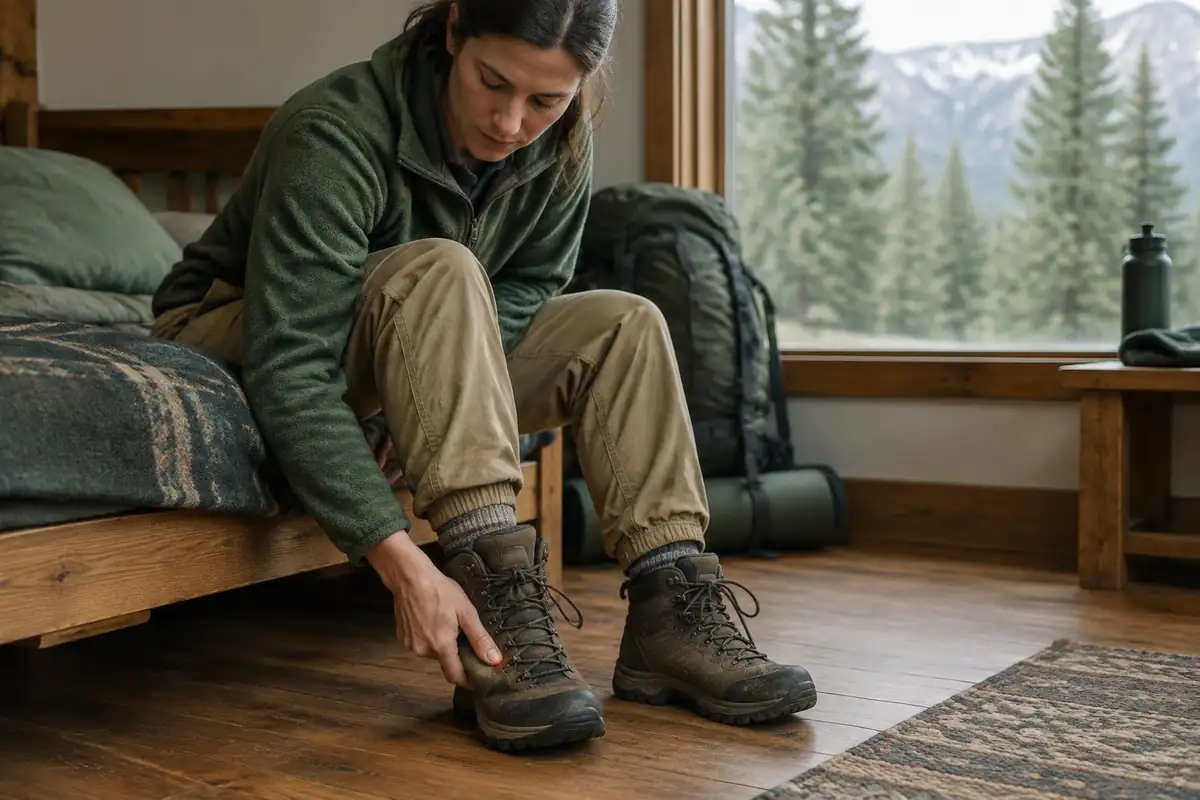
Feet swell over a day of standing and walking, and they swell more on trail. Measure or try boots in the late afternoon or evening, when your feet are closest to their trail size. Measure both feet, standing with weight on them, and fit to the larger one — most people have a noticeable difference, and sizing to the smaller foot guarantees a cramped boot.
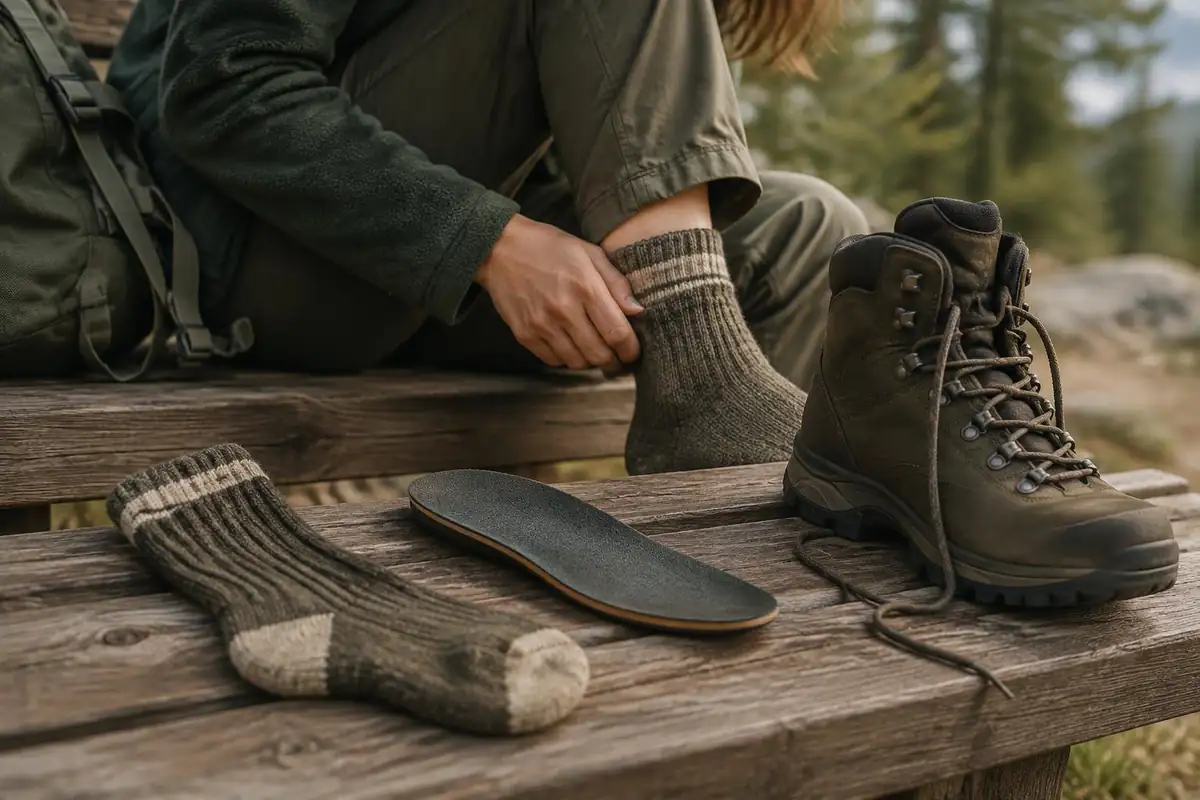
Sock thickness changes fit more than half a size in some boots, so try them with the exact socks you hike in — not the thin pair you happened to wear to the store. If you swap between midweight and thicker winter socks, fit the boot to the thicker setup and use a thinner sock when you want a little more room.
Slide your foot forward until your toes touch the front, then check that a finger fits behind your heel — roughly a thumb's width of space. Laced normally, your longest toe should never brush the end, even when you stand on a slope. Toes need that room because feet lengthen and swell on long descents; without it, you get black toenails.
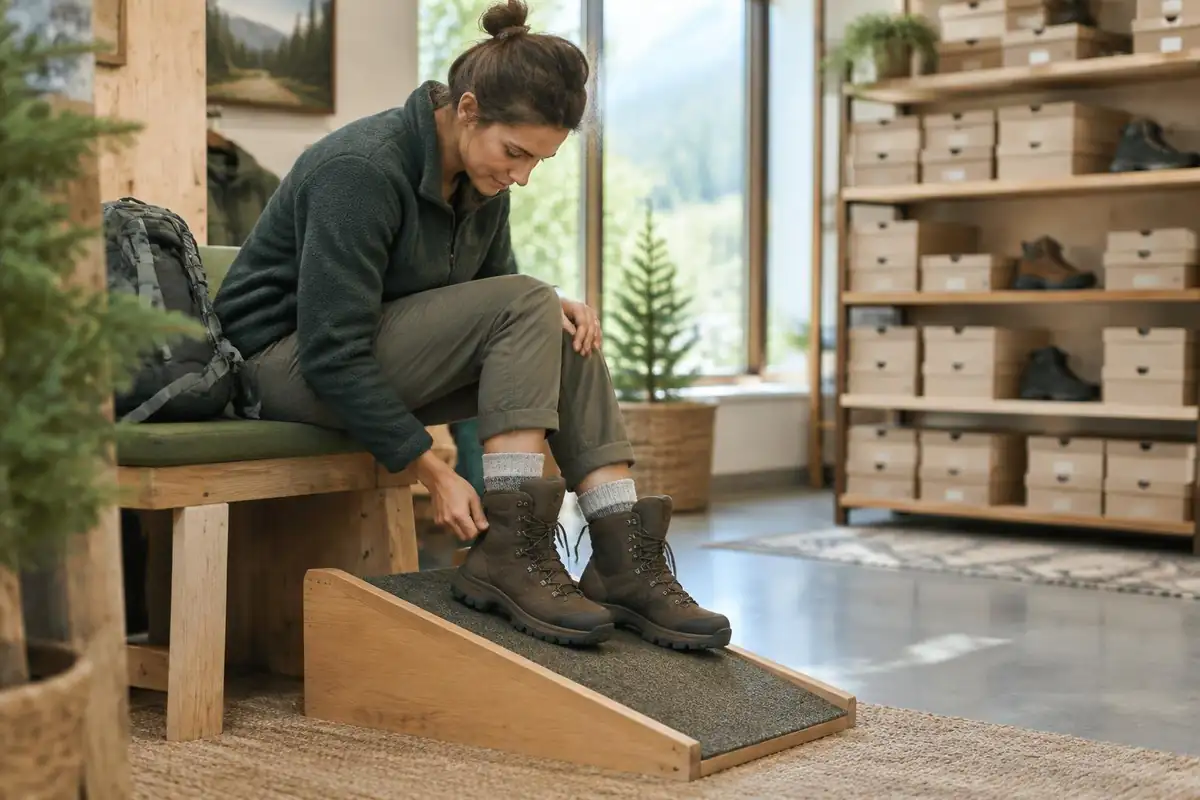
Lace the boot firmly, then walk up and down a ramp or slope — most outfitters have one. Going up, your heel should stay planted; a little lift is normal, but a heel that slides freely will rub raw over miles. Going down, your foot shouldn't slam forward. If heel lift persists after lacing tricks, the shape is wrong for you.
Length is only half of fit. Width matters across the ball of the foot, where the boot should hold you without pinching or letting your foot roll. Volume — the space from footbed to laces — matters just as much: a high instep feels crushed in a low-volume boot, while a low instep swims in one unless you add a thicker insole.
Some people end up in boots a half size or more above their street shoes, because hiking socks and swelling need room, but street sizes vary by brand, so judge by toe room instead. Snug is not the same as correct: a boot should feel locked at the heel and midfoot but roomy at the toes, and it should feel right on day one. Leather softens and molds — see /footwear/how-to-break-in-hiking-boots/ — but break-in never fixes wrong length or width.
Where the fitting rules come from
Several steps on this page come straight from orthopedic guidance. The American Academy of Orthopaedic Surgeons says feet can swell up to 8% during the day, so shoes are best bought toward the end of the day. It recommends measuring feet while standing, because body weight expands the foot, and notes that one foot may be larger, so you should size for the larger one.1 It also advises wearing the same kind of sock you will use for the activity when trying shoes on.2
On toe room, OrthoInfo recommends about half an inch between the longest toe and the tip of the shoe.1 That lines up with the thumb's-width check on this page. For hiking in particular, the AAOS says a hiking shoe should give stability on uneven ground and cushioning to absorb impacts.2
Half a size up: rule of thumb, not a rule
Many guides say hikers wear boots a half to a full size larger than their street shoes. That is a common hiking habit, but no medical or independent source in this site's library puts a number on it, and street-shoe sizes vary between brands anyway. The measurable target is the gap: roughly half an inch in front of the longest toe, with your foot measured standing and the boot fitted to the larger foot.1 If your usual size meets that in hiking socks, you do not need to go up.
Sizing up blindly carries its own risk. Dermatologists say shoes should fit properly, neither too tight nor too loose, because both lead to rubbing.4 A boot that is too long lets the foot slide forward on descents and the heel lift on climbs, which is exactly what the ramp test is designed to catch.
Why a poor fit costs more under a pack
Fit mistakes show up faster with weight on your back. In a study of long-distance hikers, forefoot pressure rose 5.41% with a pack weighing 10% of body weight and 8.73% at 20%, compared with no pack.5 More pressure at the front of the foot means more force driving the toes toward the end of the boot on every descent.
The result of that friction is well documented. A 2023 systematic review found blisters and ankle sprains were the most common hiking injuries, with blisters making up 8 to 33% of those reported.3 The American Academy of Dermatology recommends nylon or moisture-wicking socks and stopping when skin becomes red or painful, which can prevent a blister from forming.4 If a blister shows signs of infection such as redness, pus or swelling, see a doctor.4
Common questions
Should I size up for hiking boots?
Sometimes — some hikers land a half size or more above their street shoe, mostly to make room for thick socks and feet that swell over a long day. Don't size up on faith, though. Try the boot with your hiking socks and check heel hold; a boot that's too long slides and blisters.
How much toe room should hiking boots have?
About a thumb's width — roughly half an inch — between your longest toe and the front of the boot when you're standing and laced. An easy check: slide your foot forward until your toes touch, then see whether a finger fits snugly behind your heel. Less than that and steep descents will bruise your toenails.
Will boots that pinch loosen up once they're broken in?
Materials soften and mold to your foot, so a stiff boot gets more comfortable — but break-in changes flex, not shape. A boot that is too short, too narrow across the ball, or too low in volume will still be too small in a month, and you'll have worn it past returning. Start over with a different size or last instead.
This is general footwear & apparel guidance, not a lab review — it explains what to look for and how to choose so you can pick well. See our affiliate disclosure.