
The Layering System for Hiking Clothing, Explained
Layering isn't a fashion system — it's a temperature control you operate with zippers and a pack lid. Instead of one heavy garment that's either too warm or not warm enough, you wear two or three thinner pieces that each do one job, then add or shed them as the trail, the weather and your own effort change. Get the rhythm right and one kit covers a huge range of conditions.
Affiliate disclosure: this page contains affiliate links. Purchases made through them may earn us a commission at no extra cost to you. See our affiliate disclosure.
In plain English
Layering means wearing several thinner pieces of clothing instead of one big warm one. It works like the windows in a house: you open or close them to get the temperature right. When you get warm climbing a hill, you take a layer off. When you stop and cool down, you put one back on.
Most hikers use three layers. The first sits against your skin and moves sweat away. The second, such as a fleece, traps warm air. The third is a thin jacket that blocks wind and rain. You will not always wear all three, but you carry them so you can.
The biggest mistake is getting sweaty. Wet clothes pull heat out of your body fast, even when it is not very cold. So take off a layer before you start sweating hard, and put it back on before you get chilly.
Who it's for
Every hiker layers, but the stakes scale with exposure. A summer day hiker on a low forest trail may need only a wicking shirt and a packable shell. Alpine, shoulder-season and winter hikers want all three layers plus a dry spare, because wind and altitude change things fast. Hikers who run cold, or who move slowly in a group, generally need more insulation than fast movers do.
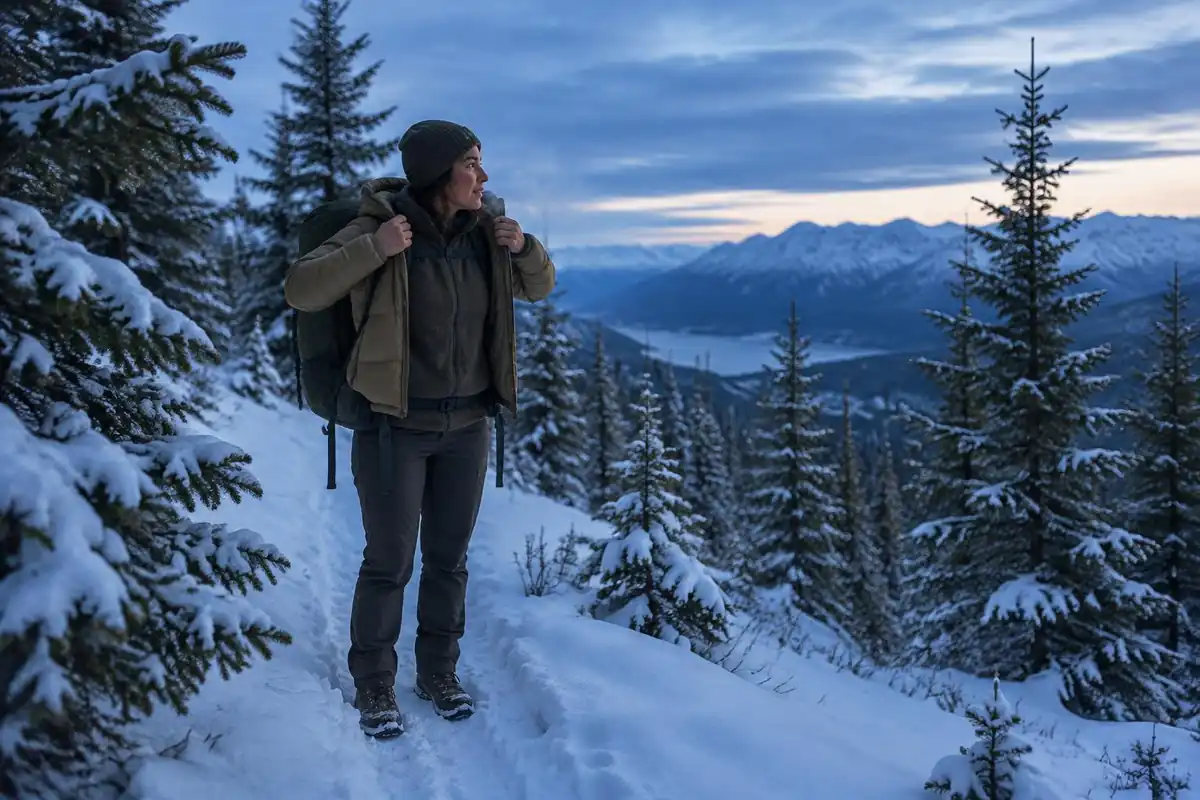
The three layers
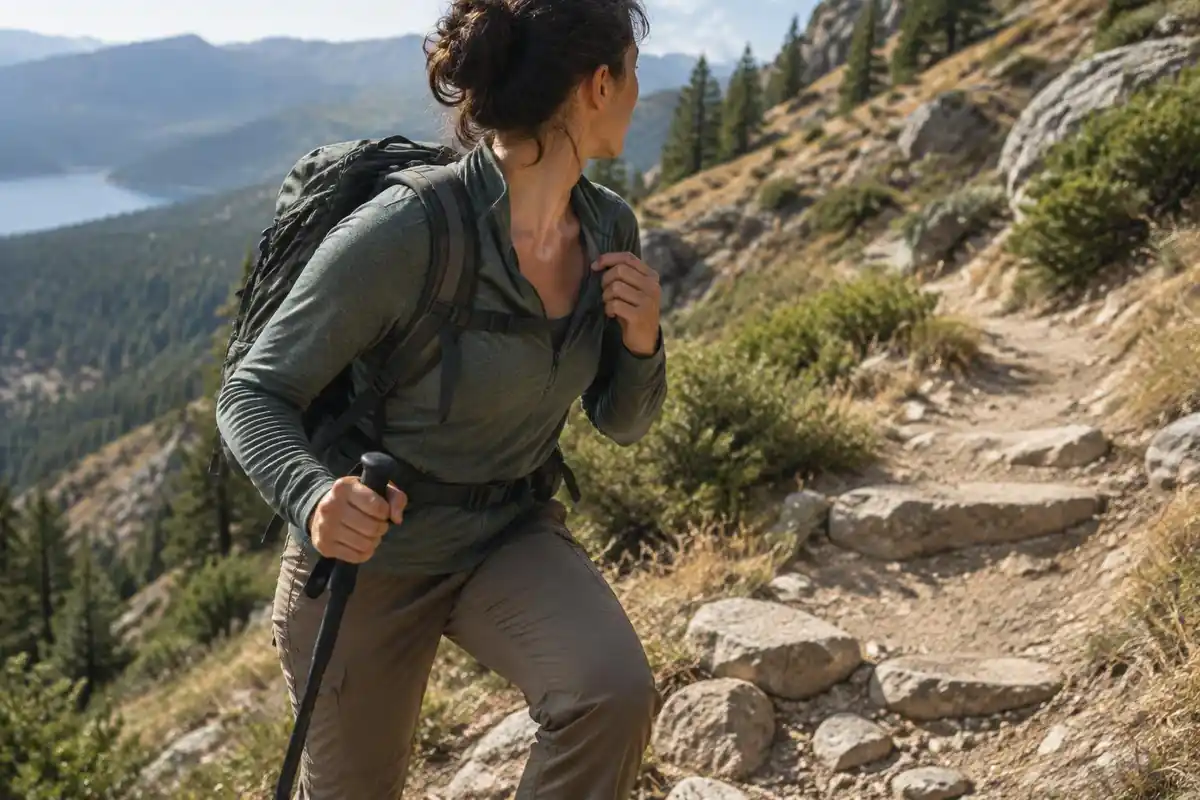
The layer against your skin has one job: move sweat away before it chills you. Snug — not tight — is what makes that work, since the fabric has to touch skin to pull moisture along. Merino wool resists odor over several days, while synthetics tend to cost less. Weights and fits are covered in the guide to women's base layers for hiking.
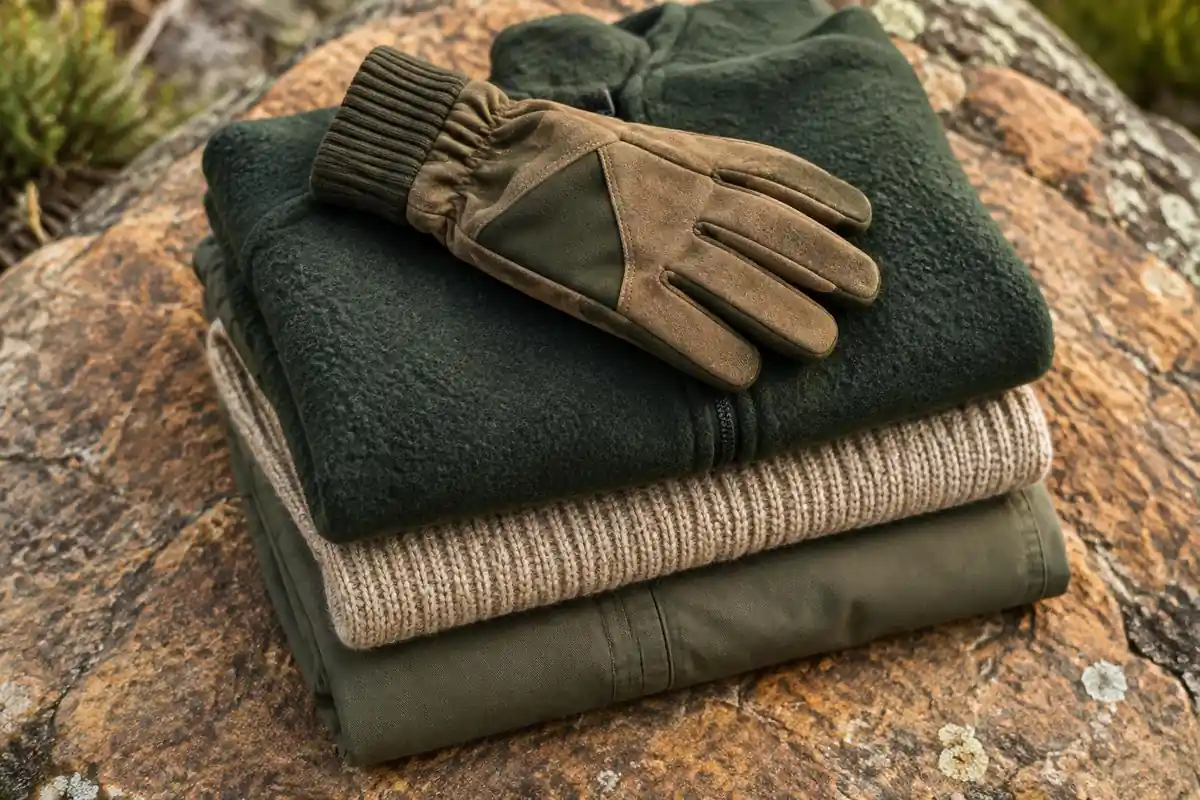
The mid layer traps the warm air your body is already making. A grid fleece breathes well and keeps insulating when damp, which suits steady climbing. A lightweight puffy is warmer for its weight and packs smaller, but it works better as a rest-stop layer than something you hike in. Pick it by how cold you get standing still, not by how warm you feel moving.
The outer shell blocks wind and rain, and wind matters more than most hikers expect — a breeze across a damp base layer strips heat quickly. A light windshirt handles dry, blustery days; a waterproof-breathable jacket with pit zips handles real weather. Size it so a mid layer fits underneath without pinching. Women's rain jackets for hiking covers fabrics and features in more depth.
The system only works if you actually operate it. Start a climb slightly cool — you'll warm up within ten minutes — then shed the mid layer before sweat soaks your base. At the top, put insulation back on before you cool down, not after. Two short stops beat one long shivering one, and a shell you can reach without unpacking is a shell you'll use.
Cotton absorbs water into its fibers, dries slowly, and keeps pulling heat out of you long after you've stopped sweating. That's where the blunt old line 'cotton kills' comes from. Synthetics and merino don't soak up water the same way and keep more warmth even when damp, which is why they dominate hiking layers — save the cotton tee for the drive home.
Three layers, three jobs, one principle
The National Park Service sets out each layer's job: base layers should wick moisture away from skin, middle layers should insulate and breathe, and outer layers should repel water and block wind.1 Weber State University's outdoor program describes the same three-layer system and notes that the outer shell protects against wind and precipitation.3 The shared principle is that every layer has to let moisture move outward, or the whole system traps sweat.
For the mid layer, Weber State says polyester fleece dries quickly and stays warm when damp, which is why fleece suits steady climbing where you will sweat.3 The page's comparison of fleece with a lightweight puffy reflects common outdoor practice rather than a neutral test in this site's library. What research does show is that merino holds far less odor than polyester: in University of Alberta worn-shirt research, polyester retained the most odor and merino the least.5
Why cotton and sweat are the real problem
The core point about cotton is well supported. The NPS says cotton absorbs water into its fibers and stays wet a long time, making it a poor cold-weather choice.1 Weber State says cotton keeps you cold by trapping moisture next to the skin.3
Sweat can soak you as thoroughly as rain. The CDC Yellow Book notes that sweat rates can reach 1 liter per hour, and says the priority in cool conditions is staying dry by layering and changing out of damp clothing quickly.6 The CDC warns that hypothermia can develop even above 40°F when a person is chilled by rain, sweat or cold water, and lists hikers among those at higher risk.4 That makes the page's advice to shed a layer before a climb safety advice, not just comfort.
Knowing when layering isn't keeping up
Hypothermia is dangerous partly because the person affected may not realize it is happening.4 Warning signs in adults include shivering, exhaustion, confusion, fumbling hands, memory loss, slurred speech and drowsiness, and a body temperature below 95°F calls for immediate medical attention.4 Watch your companions as well as yourself, especially at long stops.
Hands and feet need their own layers. The National Weather Service says mittens are better than gloves and that frostbite can develop within minutes on fingers, toes, nose and ears.7 The NPS says wool or polypropylene socks keep feet warm even when wet.1
Common questions
Do I need all three layers on every hike?
No. On a warm, dry summer day a base layer alone may be everything you wear. The shell is still worth carrying, because wind and an afternoon shower are what turn a pleasant hike into a miserable one. Think of the three layers as options living in your pack, not a uniform you put on at the trailhead.
How many mid layers should I carry?
One is usually enough for a day hike in three-season conditions. In cold weather, two thinner pieces — a fleece plus a light insulated jacket — beat one heavy garment, because you can fine-tune warmth and keep the spare dry in your pack. Save the warmest piece for stops, camp and emergencies rather than hiking in it.
Why do I still get cold when my rain jacket keeps the rain out?
Usually because sweat is soaking the layers underneath. A waterproof shell blocks moisture in both directions, so climbing hard with it zipped to the chin leaves you wet from the inside. Open the pit zips, drop a layer before the climb starts, and ease your pace slightly; ventilation does more here than fabric does.
This is general footwear & apparel guidance, not a lab review — it explains what to look for and how to choose so you can pick well. See our affiliate disclosure.