
Hiking Clothing & Gear for Plus-Size Hikers
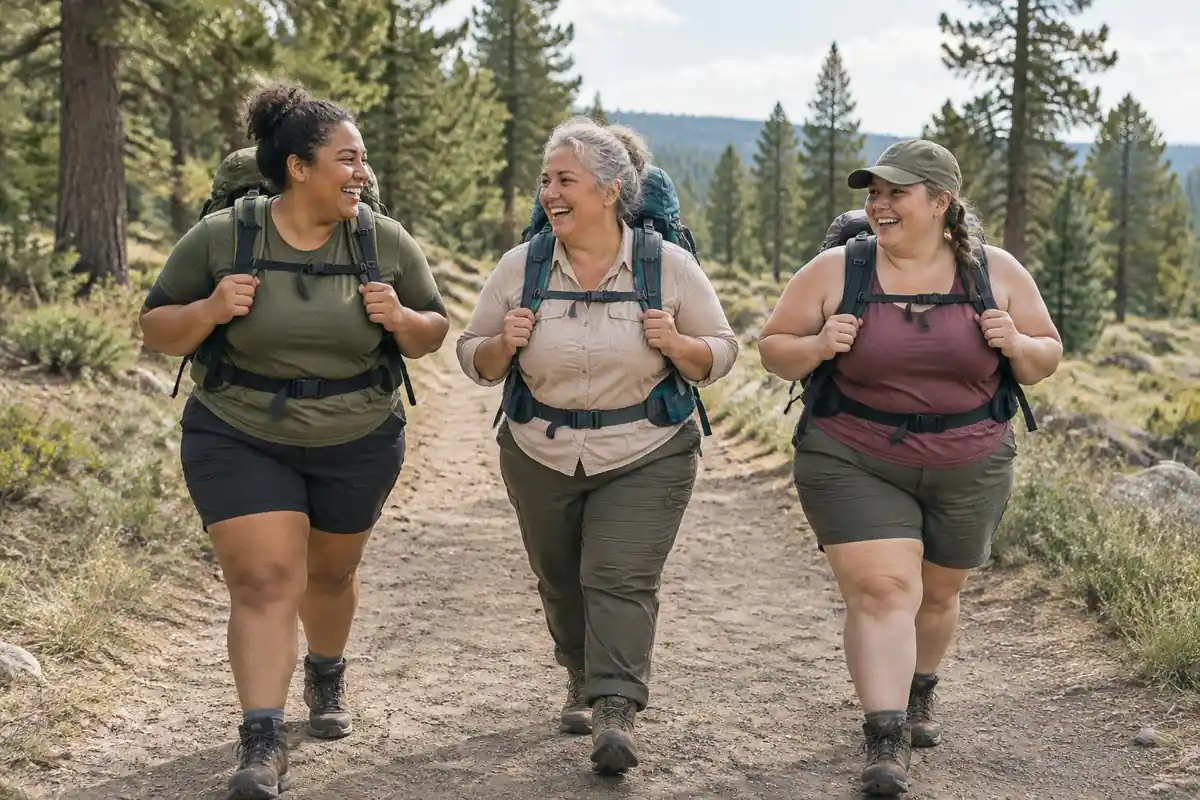
Hiking clothing that actually fits changes how a day on the trail feels: less adjusting, less chafing, and more attention on the scenery. Extended sizing has historically been hard to find in outdoor apparel, so plus-size hikers often end up compromising on cut, fabric, or coverage. This page covers what to look for in fit and construction, how to manage friction, and how pack and footwear sizing factor in.
Affiliate disclosure: this page contains affiliate links. Purchases made through them may earn us a commission at no extra cost to you. See our affiliate disclosure.
In plain English
Outdoor clothing is often designed around a narrow range of body shapes, so a bigger size number doesn't always mean a better fit. What matters is how the piece is cut: whether pants have room to bend at the knee, whether a jacket still zips over a warm layer, and whether the waistband stays put when you lift your leg onto a rock.
Chafing is skin rubbing on skin, or skin rubbing on a damp seam, over and over for hours. It works like sandpaper made worse by water. The fix is mostly about fabric: materials that pull sweat away and dry fast, flat seams, and a smooth layer between your thighs. Cotton is the one to avoid next to skin, because it holds sweat.3
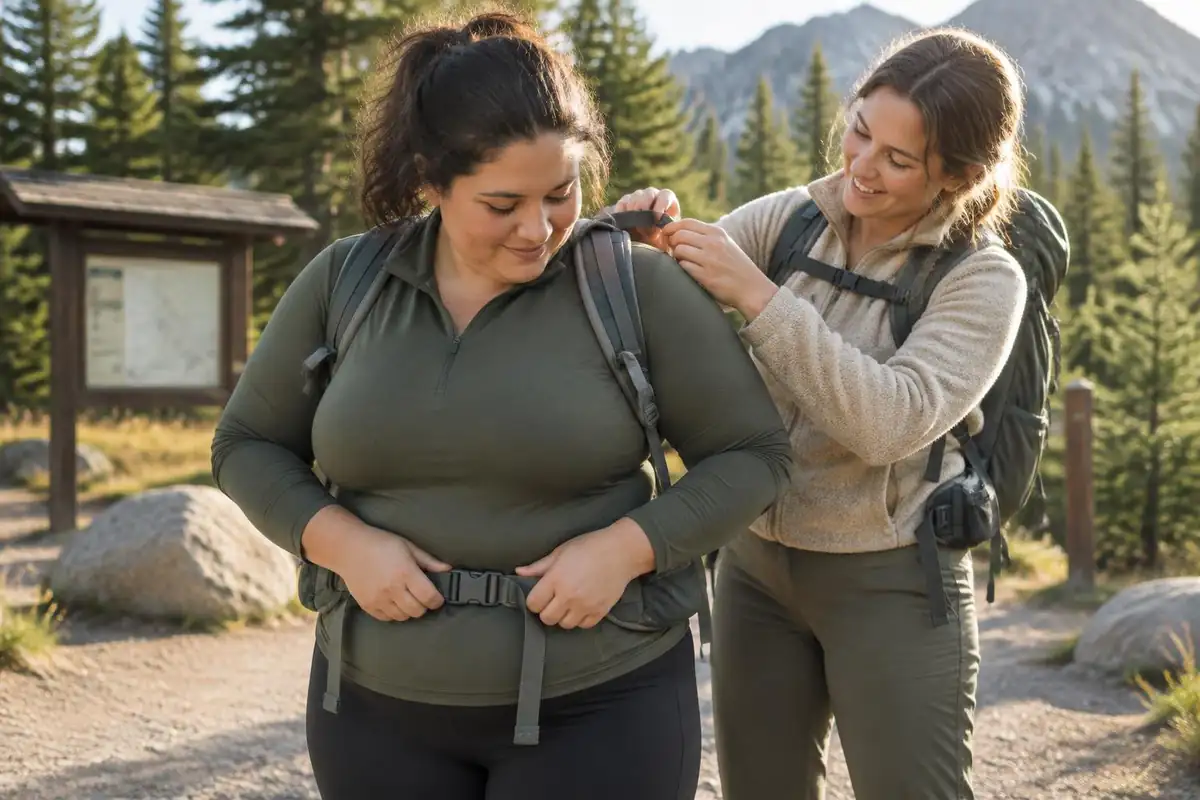
A backpack also has a size you need to check separately. The padded belt around your hips carries much of the load, but only if it can close snugly around the top of your hip bones.6 Brands measure that belt in different ways, so a tape measure and each maker's own chart will save you from guessing.
Who it's for
This is for anyone shopping above the sizes most outdoor labels stock by default, whether you're heading out for a two-hour local loop or a multi-day trip. Needs shift with climate and mileage: hot, humid trails push fabric choice and chafe management to the front, while cold days make layering volume the bigger problem.
What to look for
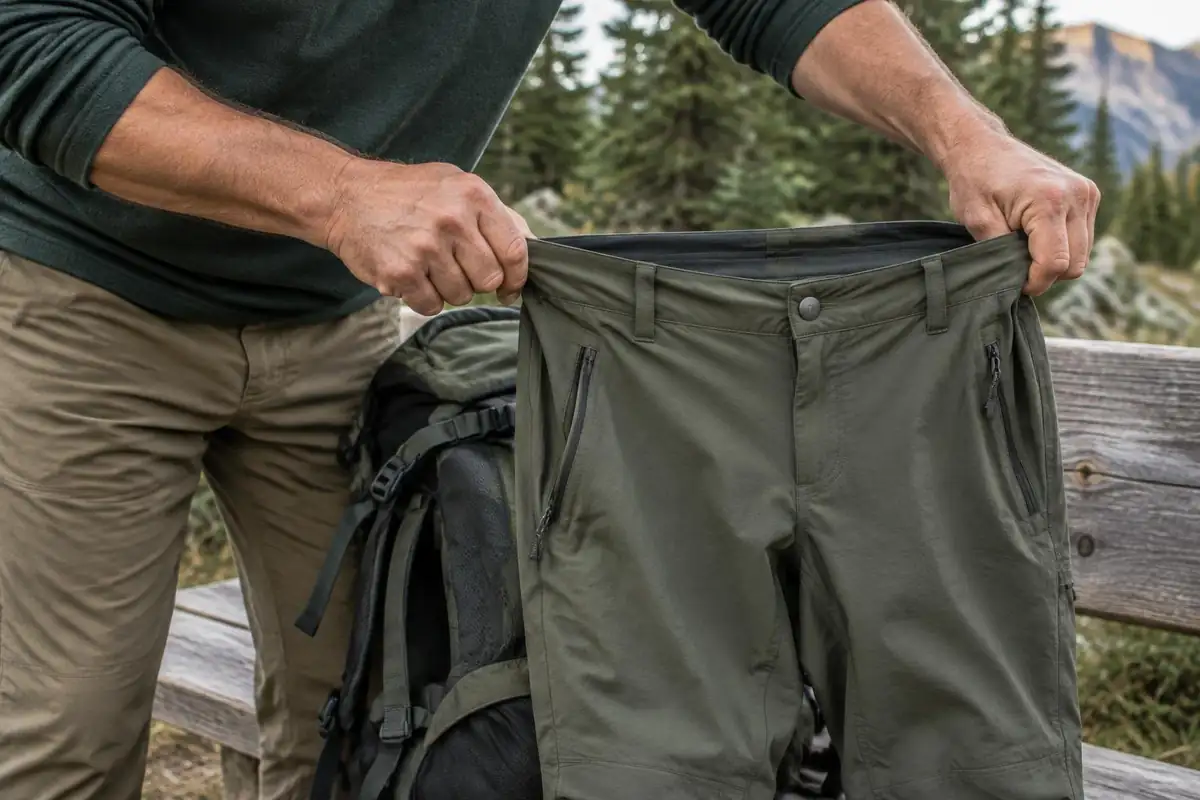
Look past the size number to how a garment is built. Gusseted crotches and articulated knees let pants move with a high step instead of binding; four-way stretch woven fabric does the same for the waist and seat. A higher rise usually stays put better under a hip belt, and adjustable or partly elasticized waistbands absorb the gap between waist and hip measurements.
Friction is a fabric and seam problem before it's a body problem. Synthetic or merino fabrics that wick and dry fast keep damp cotton off skin that rubs, and flat or offset seams keep hard stitching away from the inner thigh and underarm. Longer shorts with a smooth inner short, or lightweight tights worn underneath, solve inner-thigh contact outright.
A pack only carries well when the hip belt closes with room to spare on the straps. Belt ranges vary widely between models, and some packs offer interchangeable or extended belts, so check the stated hip circumference range rather than the pack's size label. Measuring your torso length and hips first, as covered in our pack fit guidance, saves a lot of guesswork.
Width and instep volume matter more than length for a lot of hikers, and the two are separate problems: a wide toe box doesn't help if the shoe is shallow over the instep. Wide and extra-wide options exist across most footwear categories now. Feet also swell on long days, so size with the socks you'll hike in, late in the day.
Outer layers need to fit over the layers beneath them, not just over a base layer in a fitting room. Check that a rain jacket zips with a fleece underneath, that the hem clears your hips, and that sleeves and hood adjust rather than gape. Pit zips and generous cuffs also make a shell more usable when you're working hard uphill.
Extended sizing in technical outdoor apparel has broadened noticeably in recent years, with more labels carrying beyond the old ceiling. Coverage is still uneven: inclusive ranges are more common in base layers and insulation than in rain shells or pants. It's worth checking a retailer's full size chart for each garment rather than assuming a label is consistent.
Measuring for a hip belt: why brands give different answers
Pack makers agree on where a hip belt should sit, but not on how to turn your body into a belt size. Gossamer Gear measures around the top of the iliac crest, the bony ridge of the pelvis, where the top third of the belt should rest.1 Granite Gear measures at the same hip crest and says the result is roughly your regular pant waist size; it also says a well-sized belt wraps over the hip bones and still leaves a gap in the padding at the front.7 That gap is useful, because it means the buckle has room to tighten as the load settles or your layers change.
ULA takes a different route: men's belts are pant waist size plus 2 inches, while women with curvier proportions add 5 inches to their smallest waist measurement and women with straighter builds add 3.2 Mystery Ranch measures around the waist just above the hip bones and, if you fall between sizes, recommends sizing down so the belt can still tighten on the hips.8 Put side by side, these methods can produce answers several inches apart for the same person, so compare your numbers against the chart for the exact pack rather than carrying one figure between brands.
Belt shape matters as well as length. Granite Gear notes that its women's hip belts are built for hips with a greater angle than its unisex belts.7 If a belt closes but rides up or digs in at the top edge, the angle may be the problem rather than the size.
Why a well-fitted belt matters more with a larger frame
The goal of a hip belt is to move weight off the shoulders. Lab research on load carriage found the hip region tolerates pack pressure significantly better than the shoulders, and that static strap force predicts discomfort.9 Military researchers reach a similar conclusion and advise using a hip belt whenever possible because it reduces shoulder pressure.10
How much a belt actually carries is disputed. The Washington Trails Association says around 80% goes to the hips,11 while the US Army's foot-march manual puts it nearer 30% on the hips and 70% on the shoulders for a framed pack with a hip belt.12 Either way, a belt that can't close fully carries far less than it should, and the extra weight shifts back onto the shoulders.
Body mass itself also matters for effort. Knapik's review lists load weight, body mass, speed and grade as the factors that raise the energy cost of walking with a pack.10 That is a practical reason to keep the pack light and let a proper belt do its job, rather than a judgment about anyone's body.
Chafe, damp fabric and temperature
The page's point that friction is a fabric problem lines up with the dermatology advice: the American Academy of Dermatology recommends nylon or moisture-wicking socks, and notes that cotton soaks up sweat and moisture, which can lead to friction and chafing.3 It also says to stop when skin turns red or painful, and to see a doctor if a blister shows signs of infection such as redness, pus or swelling.3
Fabric choice also affects warmth. The National Park Service says cotton absorbs water into its fibers and stays wet a long time, and that base layers should wick moisture off the skin.13 The CDC warns that hypothermia can develop above 40°F if you get chilled by rain or sweat, and lists hikers among the people at higher risk.14 The page groups synthetic and merino together as fast-drying; the library has no neutral source comparing their drying speed. What research does show is a difference in odor: in University of Alberta worn-shirt tests, polyester retained the most odor and merino the least.15
Hot days bring the opposite problem. Sweat rates can reach 1 liter per hour, and the CDC names dehydration as the main predisposing factor in heat illness besides weather and effort.16 More sweat means more damp skin, so fabric and chafe planning matter most on humid summer trails.
Footwear: width, volume and choosing the style
Width and instep height are separate fit problems, which is why the page tells you to check both. The orthopedic guidance on length is simple: measure standing because body weight spreads the foot, size for the larger foot, and leave about half an inch between your longest toe and the tip of the shoe.4 OrthoInfo also advises trying shoes after a workout or at day's end, wearing the sock you will hike in.17
Whether to wear boots or trail runners has no neutral study behind it in this site's library. The one source is a manufacturer: KEEN says a boot's extra stability and support can be welcome under a fully loaded pack, while lighter hiking shoes are built to be lightweight and breathable.18 Weight on the feet has a real cost, though: Knapik's review found each kilogram added to the foot raises energy use by about 7 to 10%.10
Trekking poles are one gear choice with some evidence specific to larger bodies. A small study of obese women found poles reduced temporary muscle and cartilage damage markers after downhill walking.5 Separate lab work found poles lowered knee forces on descents,19 but did not reduce knee compression on level ground.20
Common questions
How do I know if a pack's hip belt will fit me before buying?
Measure around the top of your hip bones at the iliac crest, which is roughly where a belt actually sits, rather than around the widest part of your hips. Compare that number to the hip range the maker publishes, not the pack's small/medium/large label, which usually refers to torso length. If you're near the top of a range, look for models with a larger or swappable belt.
What's the best way to prevent inner-thigh chafing on long hikes?
Start with fabric and fit: a smooth, quick-drying layer in direct contact with the skin beats loose cotton that holds sweat. Many hikers use lightweight tights, bike-style liner shorts, or longer inseams so skin never touches skin. An anti-chafe balm or powder helps on hot, humid days, and reapplying at a break is easier than treating raw skin later.
Do I need hiking-specific clothing, or will regular activewear do?
Plenty of everyday activewear works fine for shorter, milder hikes, and starting with what you already own is reasonable. Hiking-specific pieces mainly add durability against brush and rock, sun protection, pockets that work under a hip belt, and weather resistance. If your current gear is mostly cotton, swapping just the layer against your skin for something synthetic or merino is the single biggest upgrade.
This is general footwear & apparel guidance, not a lab review — it explains what to look for and how to choose so you can pick well. See our affiliate disclosure.