
Hiking Boots vs. Trail Running Shoes: Which Should You Wear?
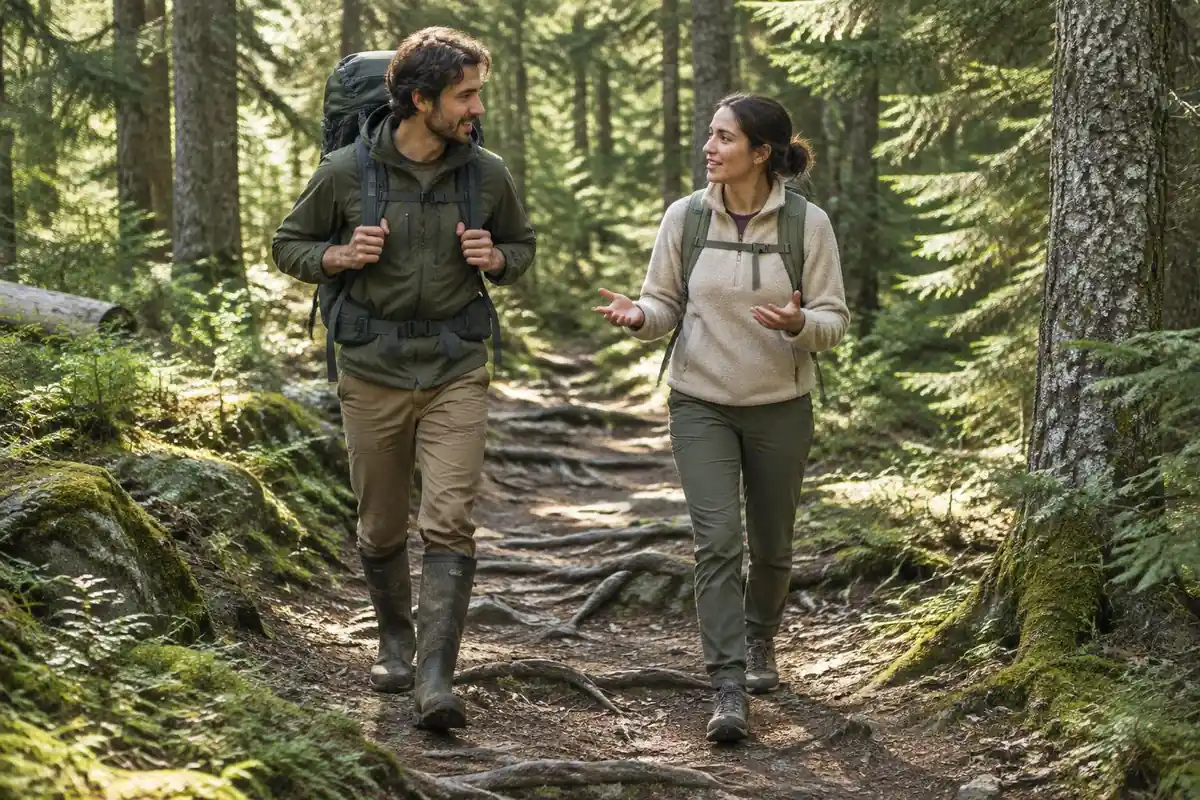
Not long ago the answer was simple — hiking meant boots — but today plenty of people cover the same ground, with the same packs, in shoes that look like they belong on a running track. Both are legitimate choices, and neither is better across the board: the honest answer turns on how much weight you carry, what the ground is like underfoot, and what your ankles have already been through. This page lays the two side by side on the trade-offs that actually change your day.
Affiliate disclosure: this page contains affiliate links. Purchases made through them may earn us a commission at no extra cost to you. See our affiliate disclosure.
In plain English
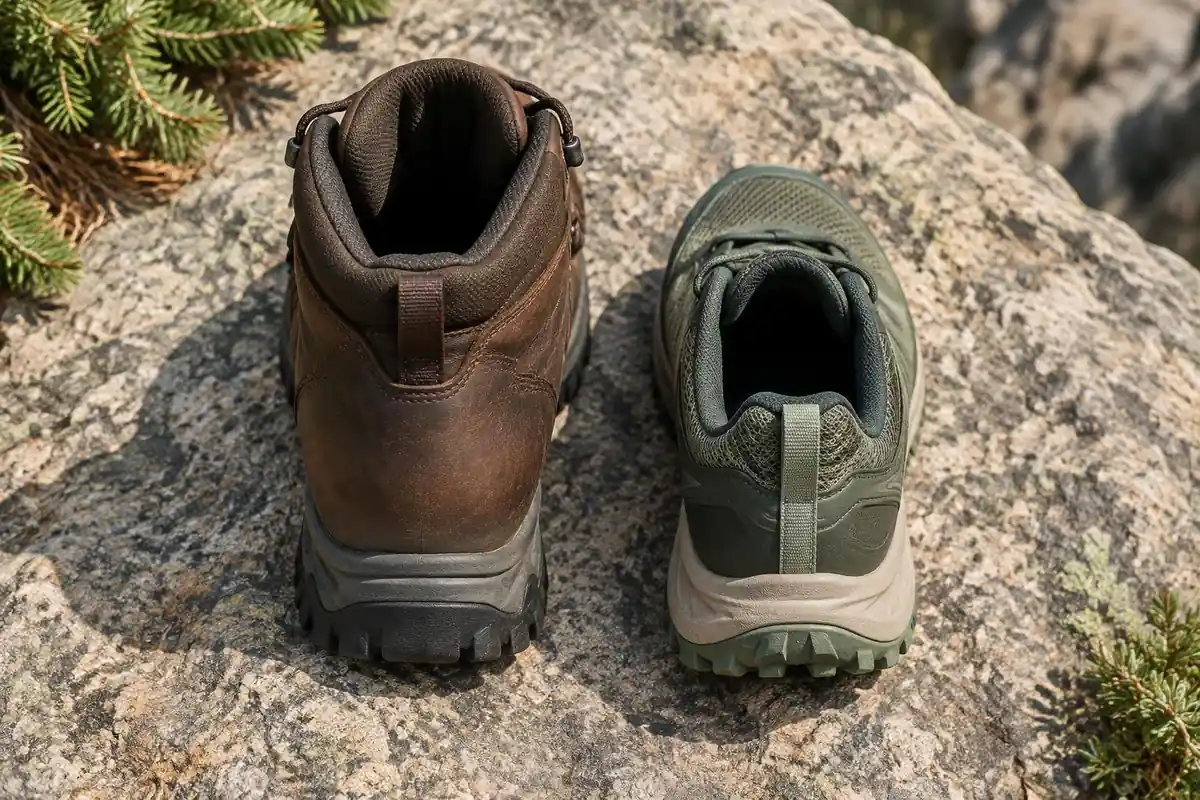
Hiking boots and trail running shoes are two answers to the same question: what should be on my feet out there? Boots are taller, stiffer and tougher. Trail runners are low, light, sneaker-like shoes with grippy soles. Neither one is right for everybody.
Boots are like a sturdy pickup truck: heavier, but built to haul a load over rough ground. Trail runners are more like a small, nimble car: easier to drive all day, but with less protection when the road gets rough. Your pack weight, the ground, the weather and your ankles decide which makes more sense.
A simple way to decide: if you carry a heavy pack, hike on snow or loose rock, or often roll your ankles, lean toward boots. If your pack is light, the trail is smooth, and you cross a lot of water in warm weather, trail runners are often more comfortable.
Who it's for
This comparison is for anyone standing in front of two very different shelves before a trip. Day hikers on groomed trail, weekend backpackers with thirty-plus pounds, and long-distance hikers grinding out high-mileage days all end up in different footwear, and so do people with a history of rolled ankles, wide or high-volume feet, or cold, wet home trails.
How they compare
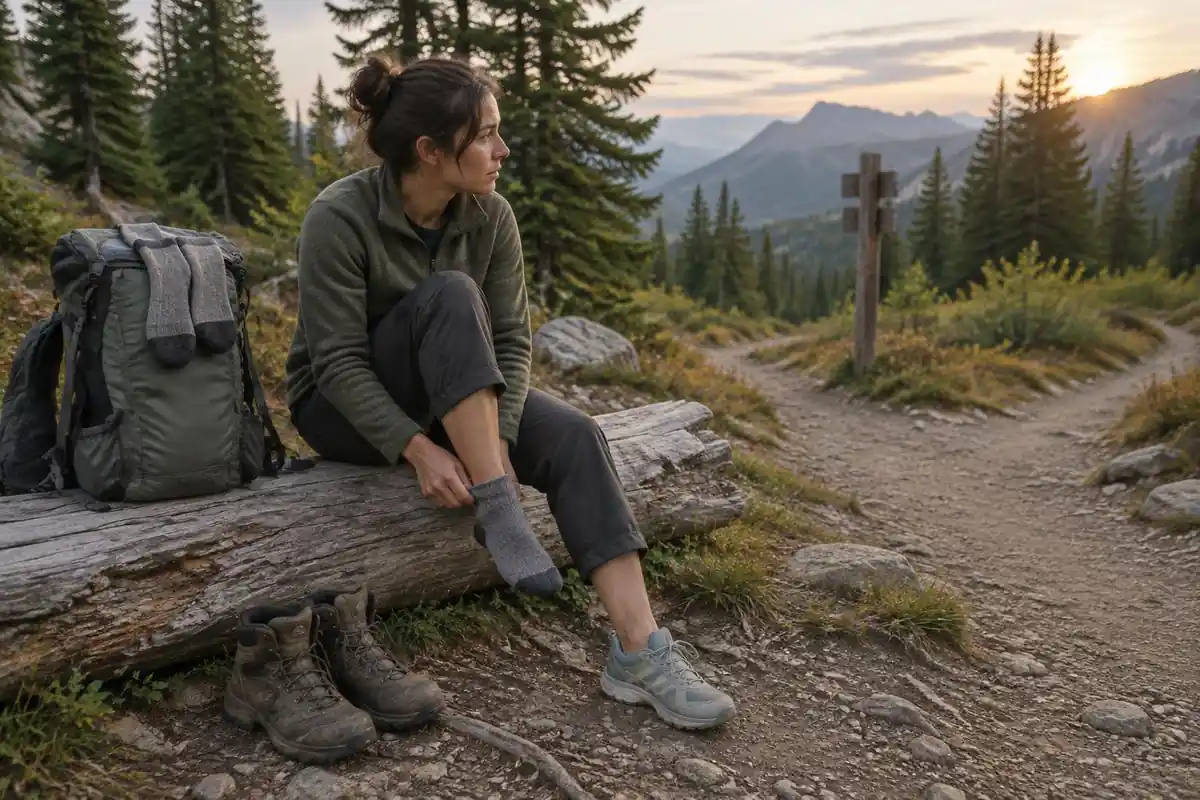
Boots run mid- or high-cut and wrap the ankle in stiff material; trail runners sit low and leave the joint free. The support is real but narrower than people assume: a cuff resists a slow roll on uneven ground, while a low shoe lets the ankle move and strengthens the small muscles that catch you. If you roll ankles often, or carry heavy loads, the cuff earns its place.
Weight on your feet costs more energy than weight on your back: a military review found each kilogram added to the foot raised energy use by about 7 to 10 percent. Trail runners are usually lighter than boots, which run heavier for the added structure; the guides at /footwear/best-womens-trail-running-shoes/ and /footwear/best-mens-trail-running-shoes/ cover what that lightness buys you.
Modern boots need far less breaking in than the stiff full-leather ones of a generation ago, but they still need some: a few weeks of short walks so the midsole and upper mold to your foot before a long trip. Trail runners are essentially ready out of the box, which matters if your trip is next weekend and your old pair has gone flat.
A stiffer boot sole spreads the load of sharp rock, so a long day on talus or cobbles beats up your feet less, and a rand or toe cap saves toenails on kicked rocks. Many trail runners include a thin rock plate, which helps but transmits more. Boot cuffs also keep grit, sticks and snow out, where low shoes need gaiters.
This is where the two genuinely differ. A mesh shoe soaks through at the first creek crossing, then drains and dries as you walk — good in wet country and in desert heat alike. A waterproof boot keeps dew and light rain out, but once water tops the collar the membrane traps it and drying takes days. In snow and cold, that same barrier is what you want.
Trail runners are consumable. The midsole packs out and the lugs round off, and a loaded pack shortens that further. Boots commonly last longer, and some are resoleable. If the sturdier route suits you, the boot guides at /footwear/best-womens-hiking-boots/ and /footwear/best-mens-hiking-boots/ cover what to look for in construction and fit.
What the evidence does and doesn't show
Much of the boots-versus-runners debate rests on hiker experience rather than research. The only source in this site's verified library that addresses the choice directly is a manufacturer. KEEN says that with a fully loaded backpack a hiking boot's extra stability and support can be welcome, and that lighter hiking shoes are designed to be lightweight and breathable while boots are built for durability and weather resistance.1 KEEN sells both, but it is still a brand's view, not an independent trial.
No neutral study in the library compares ankle-injury rates between boot and shoe wearers, and the page's point that a low shoe strengthens the small muscles around the ankle is plausible but not backed by a source here. What injury research does show is where hikers get hurt. A 2023 systematic review found blisters and ankle sprains were the most common hiking injuries, and the lower limb was the most injured body area in all seven studies it reviewed.3 Whatever you wear, good fit and steady footing target the two biggest risks.
The five-to-one rule, checked against the research
A long-standing rule of thumb says weight on the feet costs about five times as much as weight on the back. That ratio has no primary source behind it and should not be treated as a measured figure, so the page cites the research instead. The research that does exist points the same way but frames it differently.
A 2004 review of military load-carriage research found each kilogram added to the feet raises energy expenditure by about 7 to 10%, while each kilogram on the thigh raises it about 4%.2 The same review notes that the energy cost of walking with a pack rises with load weight, body mass, speed and grade.2 So the direction of the old rule is right: lighter footwear saves effort on every step. The size of the saving depends on how heavy your pack is and how fast and steep you walk, which is why a single fixed ratio oversimplifies it.
Where pack weight tips the balance
Pack weight changes what your feet absorb. In a 2026 study of long-distance hikers, forefoot pressure rose 5.41% with a pack at 10% of body weight and 8.73% with a pack at 20%, compared with no pack, and packs heavier than about 10% of body weight produced a clear, load-dependent increase.4 A thin trail-runner sole passes more of that pressure through, while a stiffer boot sole spreads it.
Long, heavy carries bring their own injuries too. Military research lists foot blisters, stress fractures, back strains, metatarsalgia (pain in the ball of the foot) and knee pain among the common ones.2 That supports the page's advice: if you switch to trail runners, build up load gradually, and let your heaviest trips steer you toward more shoe.
Cold and wet: the deciding factor for many
In warm weather, a shoe that drains is a comfort question. In cold weather it becomes a safety one. NIOSH says wet feet lose heat 25 times faster than dry feet, and that trench foot can develop at temperatures as high as 60°F if feet stay wet.5 The National Park Service adds that wool or polypropylene socks keep feet warm even when wet.6 Low shoes can be sealed against snow and grit with gaiters, which close the gap around the top of footwear.7
Common questions
So which one should I choose?
Choose boots if you're carrying a heavy pack, hiking on snow, scree or off-trail, working in cold wet conditions, or you have a history of ankle injuries and want the cuff. Choose trail runners if your loads are light to moderate, the trail is reasonably graded, you cross water often, or your feet swell and overheat in boots.
Do trail runners really work with a heavy backpack?
Many long-distance hikers carry full multi-day loads in them, so it is clearly possible, but it asks more of your feet and ankles. It works best with a light base weight, conditioned legs, and a shoe with enough midsole under the heel. Going straight from a desk job to a thirty-five pound pack in low shoes is where people get hurt.
Is a waterproof lining worth it?
It depends on the water. A membrane is worth it for cold, dewy mornings, snow, and mud, where keeping your feet dry keeps them warm. It is a liability where crossings are frequent or temperatures are high, because the same barrier that blocks water traps sweat and slows drying. Many hikers keep both and pick by season.
This is general footwear & apparel guidance, not a lab review — it explains what to look for and how to choose so you can pick well. See our affiliate disclosure.