
Best Hiking Pants
Hiking pants take more abuse than almost anything else you wear: brush, granite, sweat, sun and the occasional creek crossing. The right pair disappears while you walk; the wrong pair chafes, snags or stays soaked all afternoon. This page covers the choices that actually matter — zip-off convertibles versus fixed legs, fabric weight, how a pant moves with your stride, and sun and bug coverage — so you can match a pair of pants to the terrain you hike.
Affiliate disclosure: this page contains affiliate links. Purchases made through them may earn us a commission at no extra cost to you. See our affiliate disclosure.
In plain English
Hiking pants are lightweight trousers made from quick-drying fabric, usually nylon with a little stretch. They protect your legs from sun, scratchy plants and bugs, and they dry fast if you get wet. Think of them as a tougher, lighter cousin of track pants.
Some have zip-off legs that turn them into shorts. That is handy when a cold morning turns into a hot afternoon, but the zipper adds weight and can rub. Plain pants are simpler and often more comfortable on long walks.
Fit matters more than style. Lift your knee high and squat in the fitting room. If the pants pull tight, slip down, or ride up your leg, they will bother you all day. Check the waistband too, because a backpack's hip belt sits right on top of it.
This page contains affiliate links. Purchases made through them may earn a commission at no extra cost to you. See our affiliate disclosure.
Who it's for
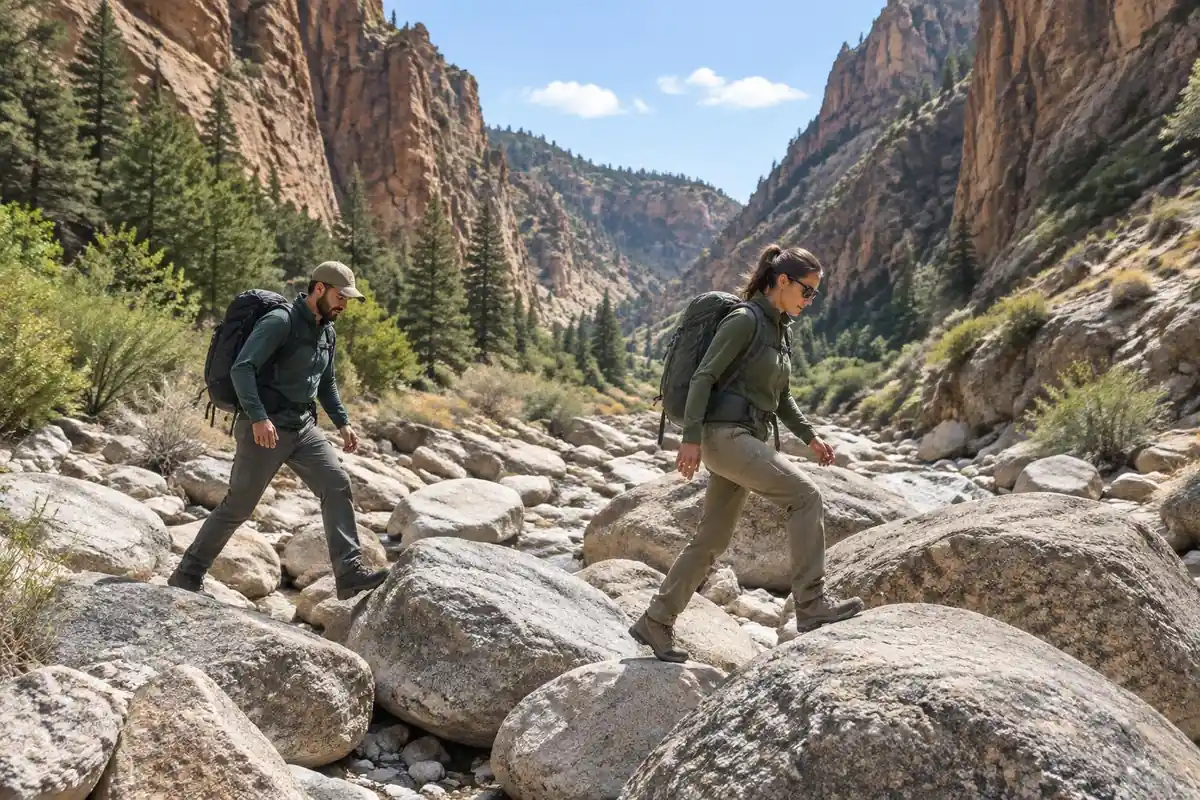
A day hiker on maintained trail can get away with almost anything that breathes. Off-trail scrub, desert sun and long thru-hikes punish weak fabric and bad seams. Hips, thighs and inseam length vary enormously between bodies, and men's and women's cuts can differ in rise and hip-to-waist ratio — buy the cut that fits your shape.
How to choose hiking pants
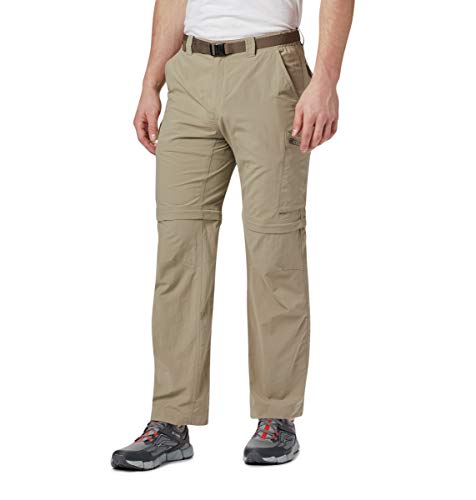
Zip-off convertibles turn into shorts at a creek or a hot ridge, which is genuinely useful when the weather swings in a single day. The cost is a zipper ring that can chafe behind the knee, a little extra weight, and legs that never hang quite as cleanly. Fixed-length pants are simpler, quieter and more comfortable over long miles. Roll-up cuffs with a tab split the difference.
Most hiking pants are woven nylon, often with a little elastane for stretch. Lighter ripstop breathes better, dries faster and packs smaller, but it snags on granite and thorns. Heavier canvas-style nylon or a softshell face fabric shrugs off scrub and wind at the price of warmth and bulk. Softshells also hold a light shower off longer, which matters more in cool, damp country than in desert heat.
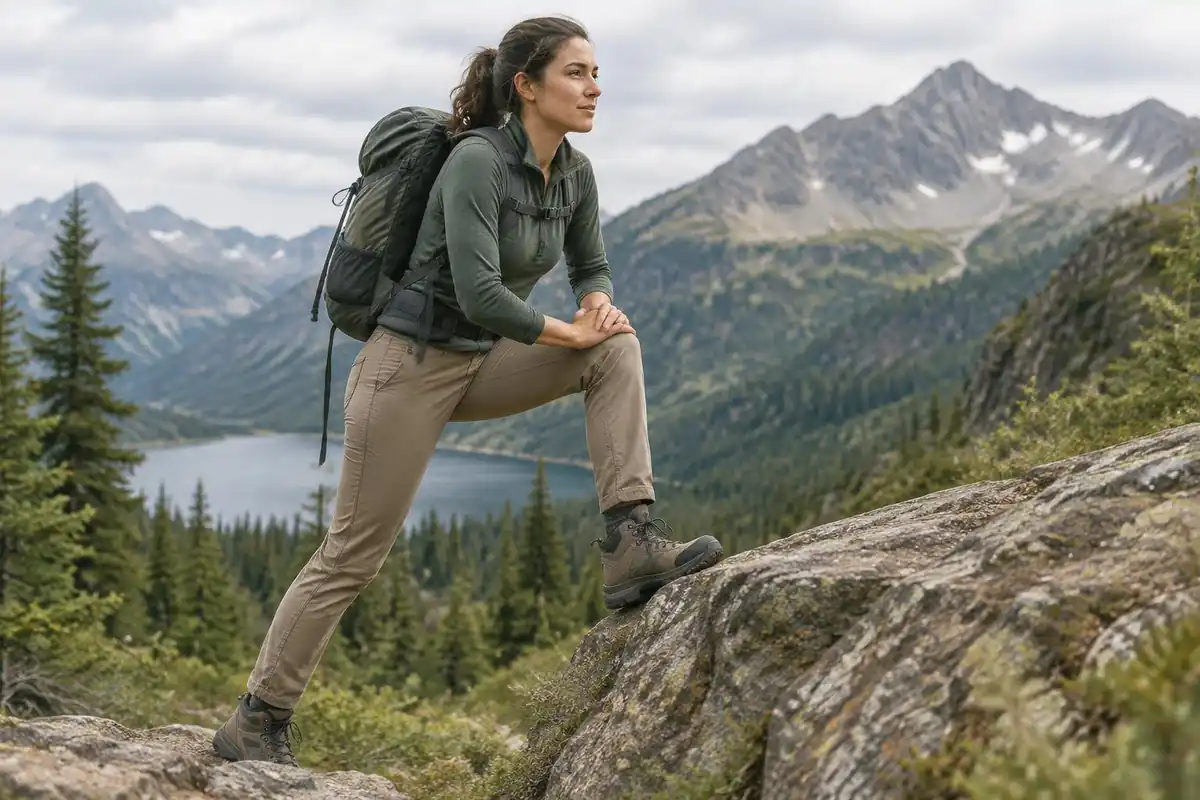
Stand in the fitting room, lift a knee to your chest, then squat. Articulated knees — panels sewn with a bend already in them — and a gusseted crotch stop the fabric binding when you step up onto a rock. A few percent elastane adds give without the sag of a heavy stretch woven. If the waistband drops or the cuff rides up your shin, keep looking.
Long legs are sun protection you never have to reapply. Many hiking pants carry a UPF rating on the label, so check the rating on the specific pair rather than assuming the fabric is protecting you. Fabric also puts a physical barrier between you and mosquitoes and ticks — useful anywhere biting insects are thick, and worth the extra warmth on exposed desert days.
Synthetics wring out and dry on the move; cotton does not, and stays cold and heavy for hours. For routes with repeated fords, favor a thin nylon that sheds water when you squeeze it and dries as you walk. Cuffs that cinch or roll clear the water line, and a DWR finish helps with spray and dew, though it wears off and needs refreshing.
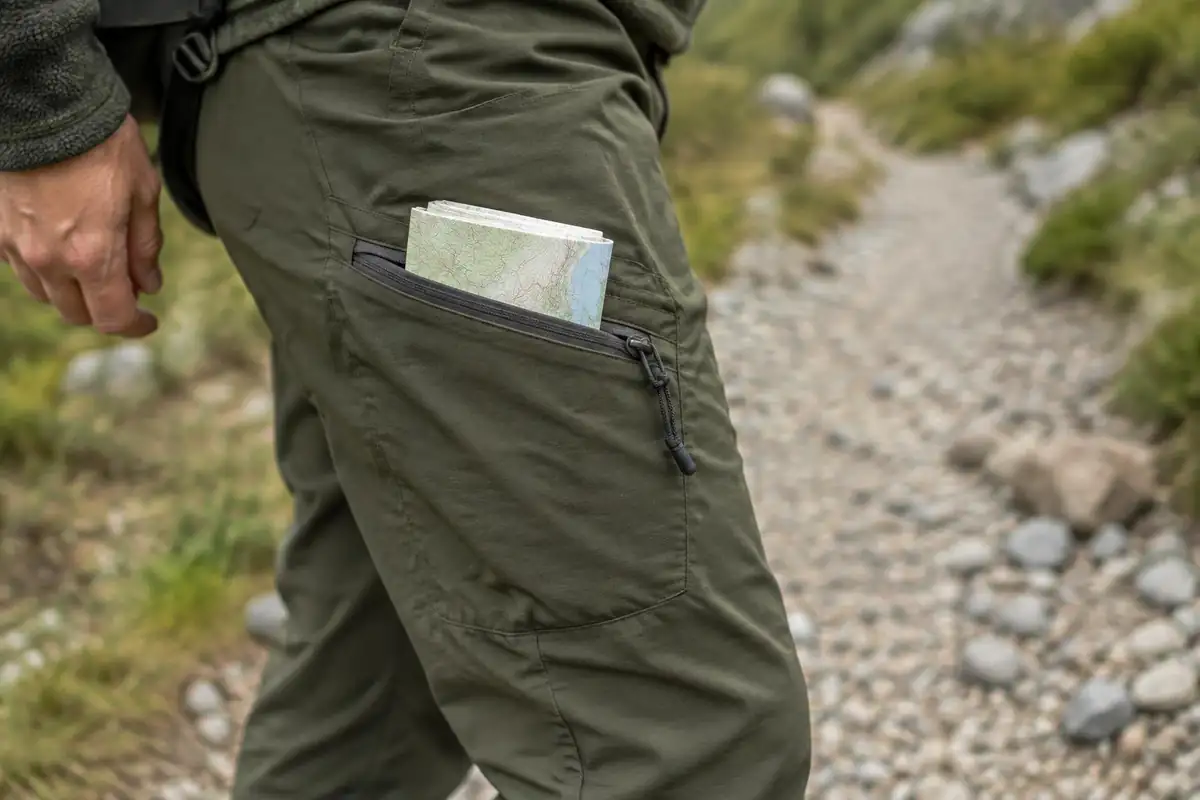
A hip belt sits exactly where a waistband does, so bulky buttons, thick belt loops and stuffed back pockets turn into pressure points after a few hours. Look for a low-profile integrated belt or elastic panel, and pockets placed on the thigh rather than the hip. Zippered thigh pockets keep a phone or map secure on a scramble; open hand pockets spill things.
6 pairs of pants to compare
Real options that fit the criteria above. We don't publish prices or ratings — check the current price and reviews on Amazon.




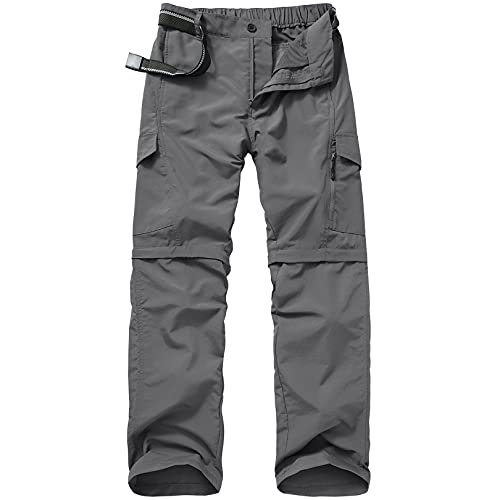
Pants as bug protection
Covering skin is a simple way to cut tick contact. The CDC says ticks are most active in warmer months, April through September, though exposure can happen year-round, and that walking in the center of trails and avoiding high grass and leaf litter reduces contact.1 The CDC also notes that clothing and gear can be treated with an insect-repelling product that lasts through several washings; follow the product label if you use one.1
What you do after the hike matters as much as the pants. The CDC says tumble drying dry clothes on high heat for 10 minutes kills ticks on them, and that showering within two hours of coming indoors has been shown to reduce Lyme disease risk.1 See a doctor if a rash or fever develops within several weeks of removing a tick.5
Sun on your legs
UV exposure on the trail is often higher than hikers expect. The CDC Yellow Book says UVB is most intense from 10 a.m. to 4 p.m., at higher elevations and closer to the equator, and that snow, water and sand reflect UV and increase exposure.6 The EPA puts the elevation effect at about 6% more UV per kilometer above sea level, and notes that overcast skies still let through about 31% of UV.2
Fabric is a steady barrier, while sunscreen wears off and needs reapplying through the day.6 This site's library has no independent source on UPF testing, so check the rating on the specific pair rather than assuming it.
Wet legs, cold legs, and the water-repellent finish
The page's warning about cotton and denim has solid backing. The National Park Service says cotton absorbs water into its fibers and stays wet a long time, making it a poor winter choice.3 Wet clothing matters beyond comfort: the CDC says hypothermia can develop above 40°F when someone is chilled by rain, sweat or cold water.7 For cold-water exposure, NIOSH recommends wool and synthetic clothing rather than cotton.8
The DWR finish on many hiking pants is an invisible water-repellent coating that makes water bead up and roll off.4 It wears with use and abrasion, and Nikwax says regular laundry detergents leave a residue that attracts water, so a technical wash helps it last.4 Older water repellents often relied on PFAS, and the EPA lists stain and water repellents on clothing as a PFAS source.9
Common questions
Are convertible pants worth it, or should I just carry shorts?
It depends on how often you would actually zip off. In a climate where mornings are cold and afternoons hot, convertibles save you carrying a second garment. If you mostly hike in stable weather, a fixed pant plus shorts you already own is more comfortable and often lighter than the zippered version of either.
Can I hike in leggings or jeans instead?
Leggings are comfortable and move well, but thin knit offers little abrasion or bug protection and usually no pockets that work under a hip belt — fine on groomed trail, poor in scrub. Denim is the one to avoid: it is heavy, holds water, dries slowly and chafes badly once wet.
How many pairs do I need for a long trip?
One pair to hike in is the standard answer, however long the trip. Hiking pants are designed to be worn, rinsed and dried on the body, and a spare is dead weight most days. Many hikers add lightweight base-layer bottoms for cold camp evenings and sleeping, which is warmer and lighter than a second pair of pants.
This is general footwear & apparel guidance, not a lab review — it explains what to look for and how to choose so you can pick well. We publish no prices or ratings; current price, availability and reviews are shown on Amazon. Product links are affiliate links: we may earn a commission at no extra cost to you. See our affiliate disclosure.