
Vegetarian, Vegan & Gluten-Free Backpacking Meals
Eating vegetarian, vegan or gluten-free on the trail is mostly a planning problem rather than a food problem. The same rules apply to everyone, since you still need calories, protein and food that survives days in a pack, but you have fewer grab-and-go shortcuts and more labels to read. This page covers how to adapt a standard backpacking menu, where plant-based protein and dairy-free substitutes come from, and what to watch for on ingredient lists.
Affiliate disclosure: this page contains affiliate links. Purchases made through them may earn us a commission at no extra cost to you. See our affiliate disclosure.
In plain English
Eating vegetarian, vegan or gluten-free on the trail works much like at home, with two extra challenges. You carry everything on your back, and you cannot pop into a shop halfway through the week. So the food has to be light, keep without a fridge, and still cover what your body needs.
Protein is the part people worry about most. Beans, lentils, nuts, seeds and dried soy products all travel well. Spread them across the day, the way you would spread out snacks, instead of eating it all at dinner.
If you have celiac disease, a condition where even a little gluten causes harm, reading labels is a health matter, not a preference. Check every packet, every time. For bigger questions about nutrition on a long trip, a doctor or dietitian is the right person to ask.
Who it's for
This matters most once a trip runs past a single overnight. On a weekend you can carry almost anything and make up the difference at home. Over five days, or on a thru-hike, small protein gaps and repetitive food compound into low energy and appetite fatigue. It also matters for anyone with celiac disease, where a stray ingredient isn't simply a preference.
How to adapt your kit
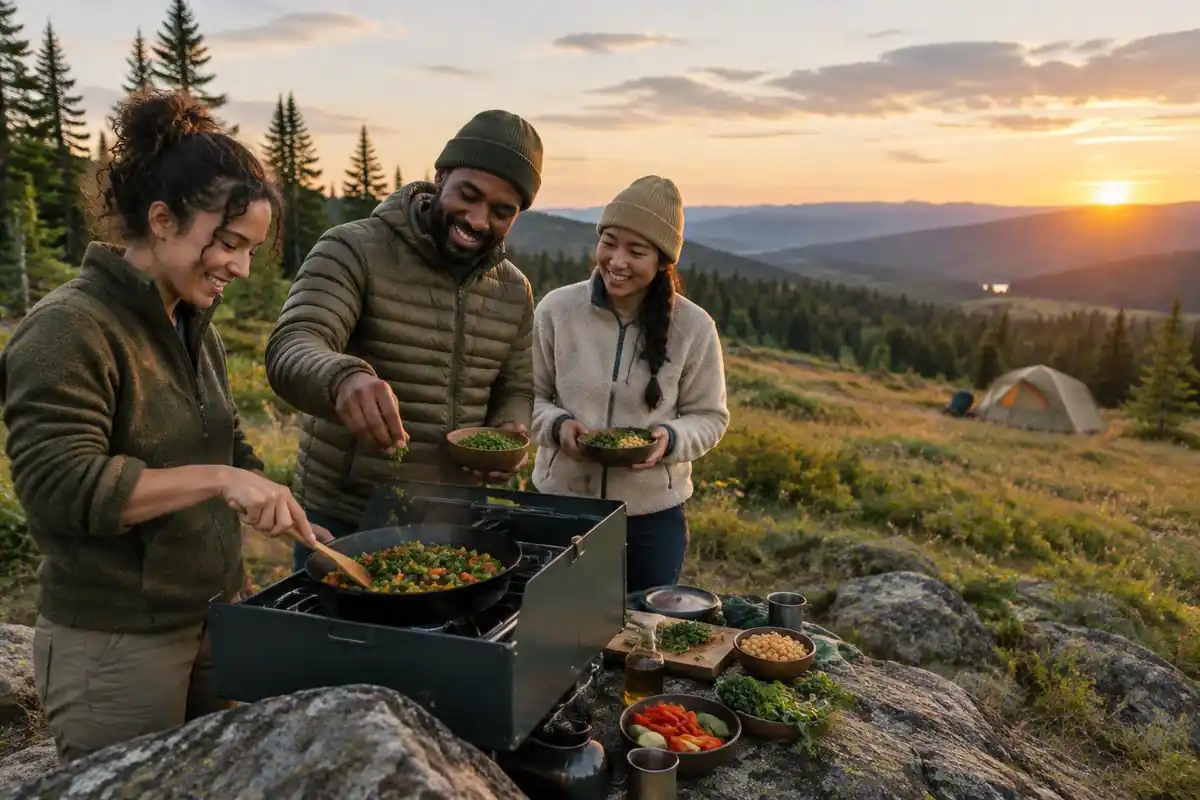
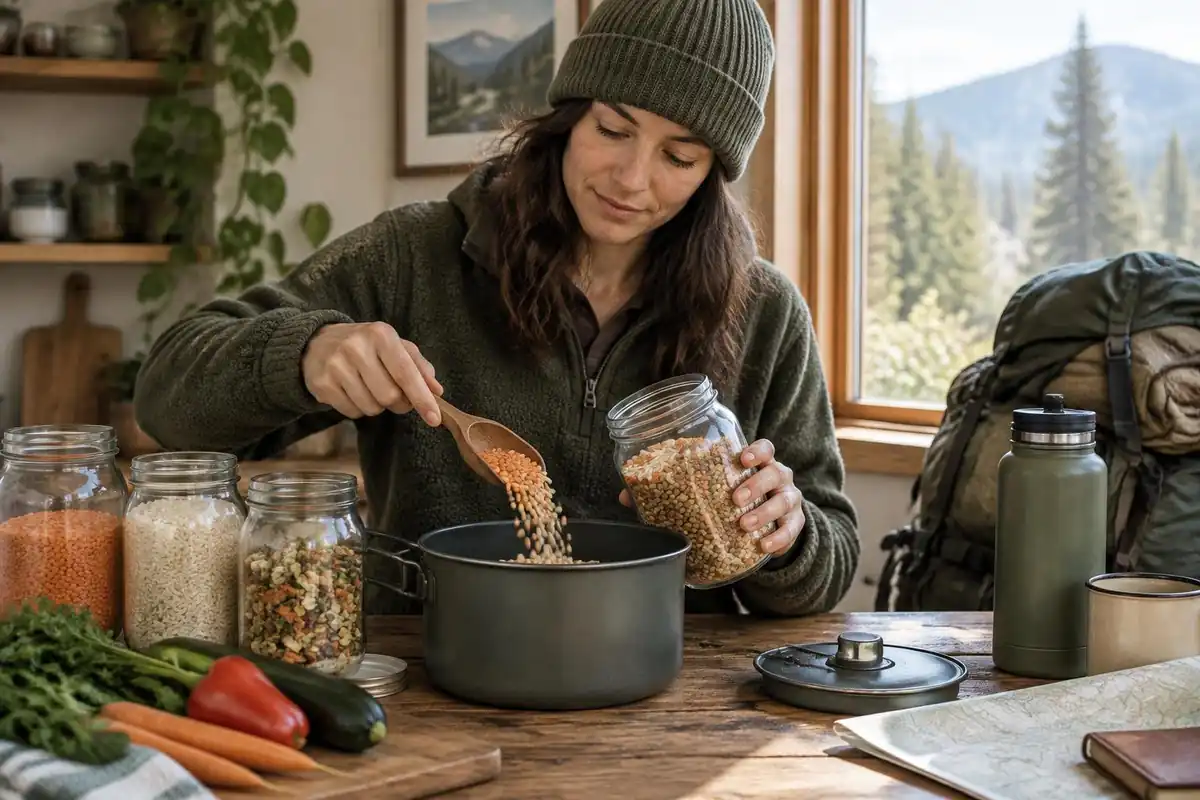
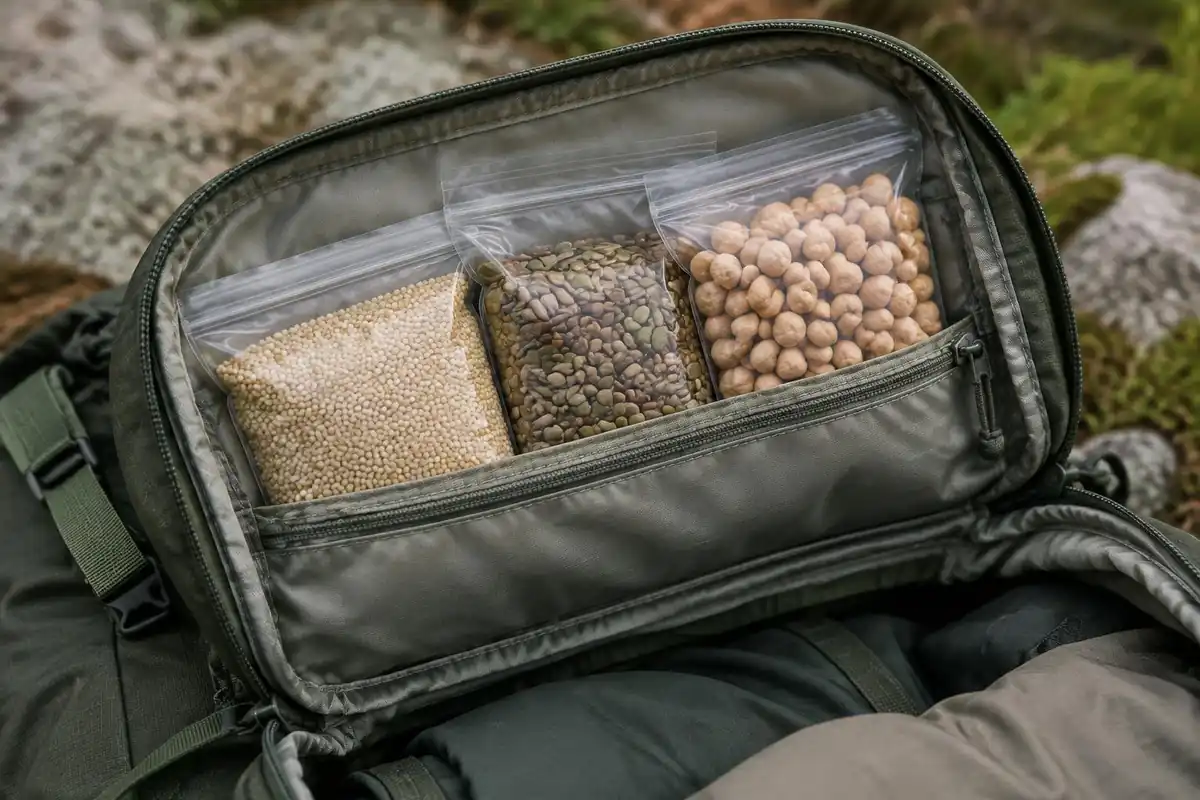
Meat-free trail protein comes from a handful of reliable staples: red lentils and split peas cook fast, textured vegetable protein (TVP) rehydrates in minutes and takes on whatever you season it with, and powdered peanut butter stirs into oatmeal or noodles without the weight of oil. Nuts, seeds and roasted chickpeas add protein and fat between meals. Spread these across the day rather than loading one dinner.
Trail food hides animal products and gluten in unexpected places. Dried soup and noodle bases often use chicken or beef stock, whey or milk powder; gluten turns up in soy sauce, malt, some oats, seasoning blends and as a thickener. Check the ingredient list and any allergen statement on every new item, and re-check familiar ones, since manufacturers reformulate without much fanfare.
Creamy camp dinners usually lean on milk powder or cheese. Coconut milk powder does both jobs, since it thickens, adds fat and calories, and keeps well, and it works in curries, chowder-style soups, oatmeal and hot drinks. Cashew or soy milk powders are milder if you don't want coconut flavor in everything. Nutritional yeast covers the savory, cheesy note without dairy.
You no longer have to build every dinner from scratch. Most freeze-dried meal makers now list vegetarian, vegan and gluten-free options, usually marked on the pouch and filterable on their websites. Quality and portion sizes vary, so read the nutrition panel rather than assuming a plant-based pouch matches the calories of the meat version. Mixing a few pouches with homemade dinners keeps the menu varied without planning every meal.
Plant-based swaps can be bulkier per calorie than the food they replace, so weigh the pack, not just the plan. Lean on fat to close the gap: olive oil, nut butters, seeds and coconut flakes carry far more calories per ounce than dried carbohydrates do. Gluten-free crackers and breads can also be denser for the same calories, so compare nutrition panels by weight.
Energy needs don't change with the menu
Switching to a plant-based menu changes where calories come from, not how many you burn. The Compendium of Physical Activities rates backpacking at 7.0 METs, where one MET is about 1 kcal per kilogram of body weight per hour, and climbing hills with a load of 20 pounds or more on a 5 to 20% grade at 10.0 METs.1,5 The page's point about calories per ounce follows from this: if plant foods are bulkier for the same energy, the pack gets heavier or you eat less.
There is also a limit on how much you can use. A 2019 study found the body's digestive energy supply tops out at about 2.5 times basal metabolic rate over long efforts, and spending more draws down body stores.6 Calorie-dense fats such as oil and nut butter do not raise that ceiling, but they let you carry the energy you can use with less weight.
Drying your own beans, vegetables and eggs
Homemade dinners let you control every ingredient, which helps with gluten and hidden animal products. The National Center for Home Food Preservation says dehydrators are designed to dry food at 140°F.7 Cook beans and lentils fully before drying them; as the cold-soak guide on this site notes, raw legumes need heat to become edible, and soaking in camp will not fix that.
Plan storage around vegetables, which do not last as long as fruit. The center says most dried fruits keep about 1 year at 60°F or 6 months at 80°F, and vegetables keep about half as long; store them somewhere cool, dry and dark.3 For vegetarians who eat eggs, Utah State University Extension warns that bacteria may survive freeze-drying and that eggs must be cooked before freeze-drying or after rehydration.2
Fitting a plant-based menu into a bear canister
Where canisters are required, volume is the real limit. Glacier Bay's loaner canister holds 560 cubic inches, about six days of food for one person, and weighs 2.8 pounds.4 Puffed cereals, crackers and some gluten-free breads take up a lot of space for their calories, while nut butters, oils and dense powders such as coconut milk powder pack tightly. Pack the canister at home to check that a full trip fits, and repackage anything in rigid boxes.
Everything scented goes inside, including the nutritional yeast and spice bags. The National Park Service says bears treat any scented item as food and that storage rules vary by park.8
Common questions
How do I get enough protein on a vegan thru-hike?
Aim to include some protein at every meal rather than one big hit at dinner. Lentils, TVP, dried tofu, powdered peanut butter, nuts, seeds and protein powder all travel well. If you have specific nutrition concerns, such as covering your protein needs on a plant-based menu, talk with a doctor or dietitian before a long trip.
Are instant oats gluten-free?
Oats are naturally gluten-free, but most are grown, milled and packed alongside wheat, so standard instant oats aren't safe for celiac disease. Look for packets specifically labeled gluten-free, which are sourced and processed to avoid that contact. The same caution applies to bulk-bin trail mix, granola and seasoning blends scooped from shared containers.
Can I resupply vegan or gluten-free in small trail towns?
Sometimes, but don't count on it. A small-town gas station may have nuts, chips, dried fruit and peanut butter, and little else labeled clearly. Hikers with strict dietary needs usually mail resupply boxes to post offices or hostels along the route for the thinnest stretches, and treat town stores as a bonus rather than the plan.
This is general backpacking-food guidance, not a lab review — it explains what to look for and how to plan so you can choose well. See our affiliate disclosure.