
Is Freeze-Dried Backpacking Food Worth It?
For most multi-day trips, yes — freeze-dried meals earn their place by being light, shelf-stable, and ready in minutes with nothing but boiling water. For a single overnight close to the trailhead, they're a convenience rather than a necessity, and cheaper options work just as well. This page lays out what you actually get for the weight and the cost, and when something simpler makes more sense.
Affiliate disclosure: this page contains affiliate links. Purchases made through them may earn us a commission at no extra cost to you. See our affiliate disclosure.
In plain English
A freeze-dried meal is dinner with the water taken out. You pour boiling water into the bag, close it, wait a few minutes and eat straight from the bag. Think of instant noodles, but with a full meal inside.
Whether it is worth it comes down to three things: how far you are carrying your food, how tired you will be at dinner, and how much you want to spend. On a long trip, removing the water from every dinner saves real weight on your back. On one night close to the car, the saving is small and cheaper food works fine.
One rule never changes, whatever you eat. Boil your water outside your tent, never inside it, even when it is cold, dark or raining.
Who it's for
This question matters most once a trip stretches past two nights, when food weight and cooking time start to compound. Weekend hikers can reasonably go either way. Thru-hikers, anyone cooking for a group, and hikers mailing resupply boxes ahead lean on freeze-dried food hardest, as do winter and high-altitude trips where a fast hot meal is worth more than variety.
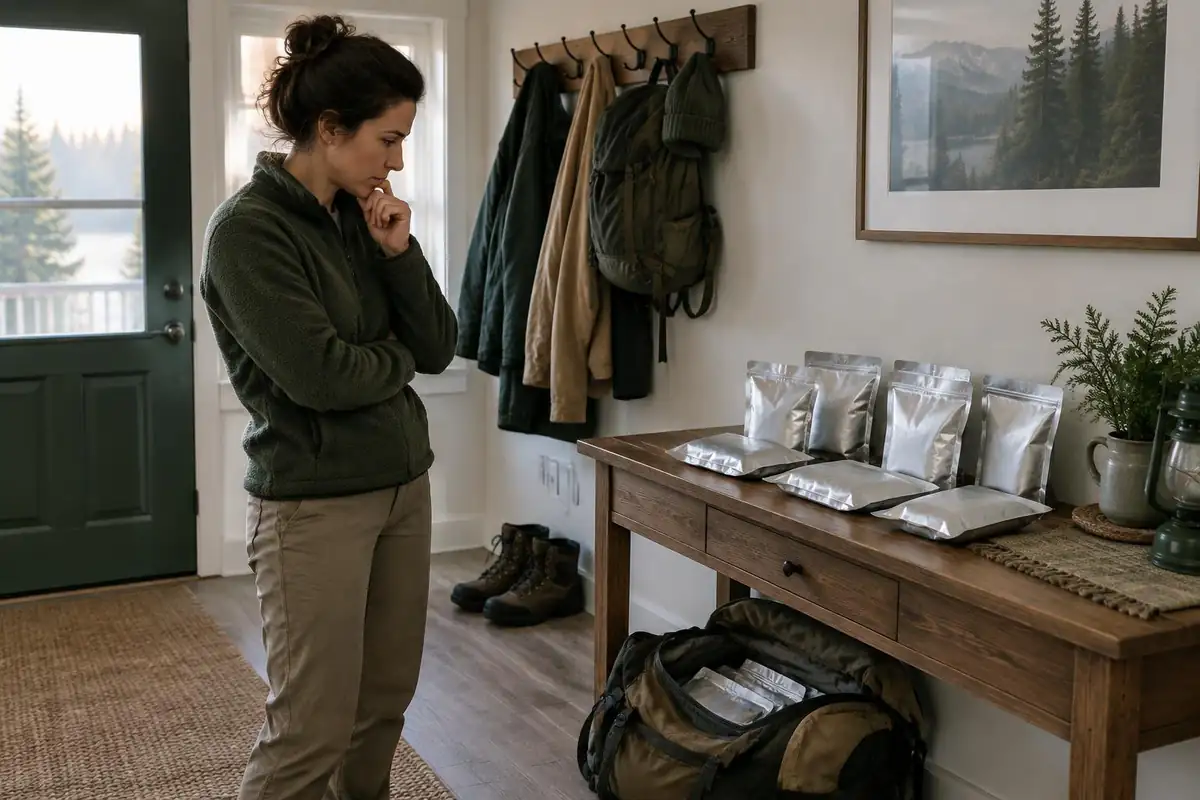
Weighing it up
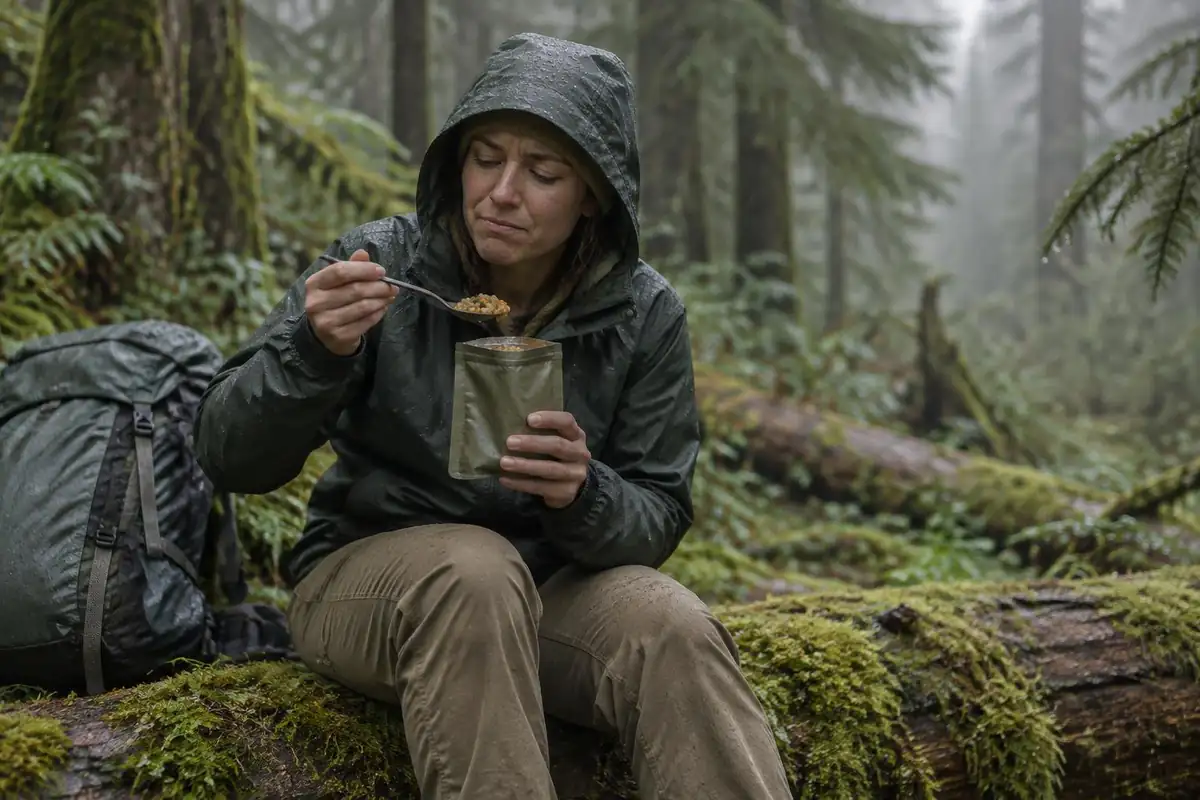
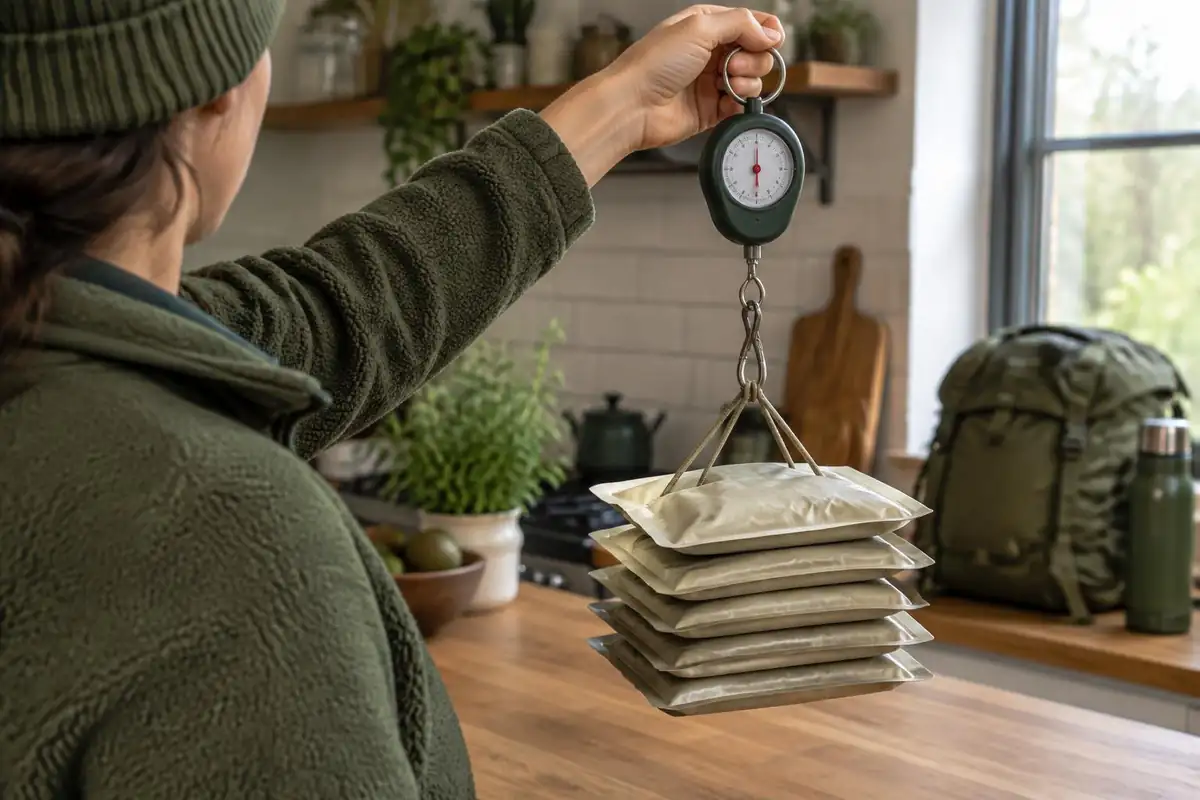
Water is the heaviest thing in food, and freeze-drying removes almost all of it. A full dinner pouch commonly weighs around four to six ounces dry and carries several hundred calories, which is hard to match with fresh or canned food. Over three or four days that difference adds up to pounds on your back, which is where the case gets strong.
Most pouches rehydrate in the time printed on the label with boiling water poured straight into the bag, so you cook in the pouch, eat from the pouch, and wash nothing. In rain, wind, cold, or full dark, or when you rolled into camp late and exhausted, that simplicity is worth more than it looks on paper. It also saves stove fuel, since you only boil once.
For a one-night trip an hour from the car, the weight savings are small and the convenience gap narrows. A tortilla-and-cheese dinner, a foil pouch of tuna, or a supermarket instant noodle block does the job for less, and you can carry a bit of fresh food — real cheese, an apple, a pepper — without a real penalty.
Freeze-dried pouches are the most expensive way per calorie to feed yourself in the backcountry. If you hike often, a home dehydrator plus bulk grains, dried beans, and instant potatoes will feed you for a fraction of it, and cold-soaking couscous or ramen in a jar costs almost nothing. The trade is prep time at home before every trip.
Commercial pouches lean salty, partly for flavor and partly for preservation, and a single dinner can cover a large share of a day's sodium. That's often fine when you're sweating hard all day, but it's worth reading labels if you're watching sodium, eating gluten-free, or managing allergies, and worth asking a doctor about any real dietary restriction.
You don't have to pick a side. A common approach is freeze-dried dinners only — the meal you're most tired for — with cheaper, self-assembled breakfasts and lunches: oats, tortillas, nuts, bars, cheese, cured meat. That captures most of the weight and convenience benefit at a fraction of the cost, and keeps some variety in the food bag.
Where the weight saving comes from
A freeze dryer freezes the food and then pulls a vacuum, removing up to 98% of its moisture.1 Water weighs about a kilogram per liter, so the water taken out of a meal is almost pure weight saved.5 You do have to carry water back in to rehydrate, which matters on dry stretches: Guadalupe Mountains National Park tells backpackers to carry a gallon per person per day there, and a gallon weighs about 8 lb.6
The 100 to 130 calories per ounce quoted in this page's FAQ is a rule of thumb from the hiking community, not a measured standard, and pouches vary a lot. The honest comparison is to divide the calories on each label by the dry weight printed next to them, then do the same for the food you would carry instead.
Shelf life, resupply boxes and food safety
Utah State University Extension says freeze-dried food can stay safe 10 to 15 years, sometimes up to 25, in airtight, moisture-proof packaging, though it does not recommend keeping home freeze-dried products beyond 5 to 10 years.2 That long window is the real reason pouches suit mailed resupply boxes that may sit in a post office for weeks.
Freeze-drying is not sterilization. The same source warns that bacteria may survive in a dormant state and that meats and eggs must be cooked before freeze-drying or after rehydration.2 If you cold-soak, as the FAQ discusses, nothing is heated, so treat soaking water as drinking water. The CDC says boiling is the best way to kill germs and that most portable filters remove parasites but not viruses or bacteria.7
The cold-weather case, and its hazard
The page argues that freeze-dried food shines in cold, wind and dark. Fuel decides how well that works. MSR says isobutane boils at 11°F at sea level and vaporizes poorly in the cold, while propane boils at -44°F.4 Canister pressure falls as temperatures drop, whereas a liquid-fuel bottle can be pumped to hold pressure.8 MSR also says pressure-regulated canister stoves perform much better in the cold than unregulated ones.9
Bad weather tempts people to boil water inside the tent. Don't. Any burning fuel makes carbon monoxide, an odorless, colorless gas, and sleeping people can die before they notice symptoms.10 A CDC report on two Georgia camping incidents, which caused six deaths including one with a propane stove burning in a zipped tent, says stoves should never be used inside a tent and that opening flaps or windows does not prevent dangerous build-up.3 The CPSC adds that CO poisoning is easily mistaken for a cold or flu and that the risk is higher at high altitude, where a fast hot meal is most tempting.11 If anyone gets a headache, dizziness or confusion near a stove, get them to fresh air and get medical help.10
Sodium: context, not a verdict
The page notes that pouches run salty. In hot weather that can help: Grand Canyon National Park advises eating salty snacks to balance water intake and warns about hyponatremia, low blood sodium from drinking a lot of water while losing salt.12 On a cool day, or if you limit salt for a medical reason, the same pouch is a different proposition, so follow your doctor's advice.
Common questions
How much does freeze-dried food actually save me in pack weight?
Freeze-dried meals are often quoted at roughly 100 to 130 calories per ounce, though pouches vary, so check each label, while canned or fresh food is far lower once you count the water. Over a four-day trip, switching dinners alone can cut a pound or more. The savings grow with every extra day, which is why long-trip hikers care about it most.
Is freeze-dried the same as dehydrated?
Not quite. Freeze-drying removes water at very low temperature under vacuum, which preserves texture and lets a meal rehydrate quickly. Dehydrating uses warm air, holds a little more residual moisture, and usually needs longer soaking or simmering. Both work well on the trail; home dehydrators make the second kind, which is why DIY meals often cook slower.
Can I cold-soak freeze-dried meals instead of boiling water?
Many will rehydrate in cold water, but it takes far longer, and the texture suffers, especially with meat and rice. Meals with dairy or fat rehydrate poorly cold. If you plan to skip the stove, choose foods built for it, like couscous, instant refried beans, or ramen, and follow the package guidance.
This is general backpacking-food guidance, not a lab review — it explains what to look for and how to plan so you can choose well. See our affiliate disclosure.