
Freeze-Dried vs. Dehydrated vs. Fresh: Backpacking Food Compared
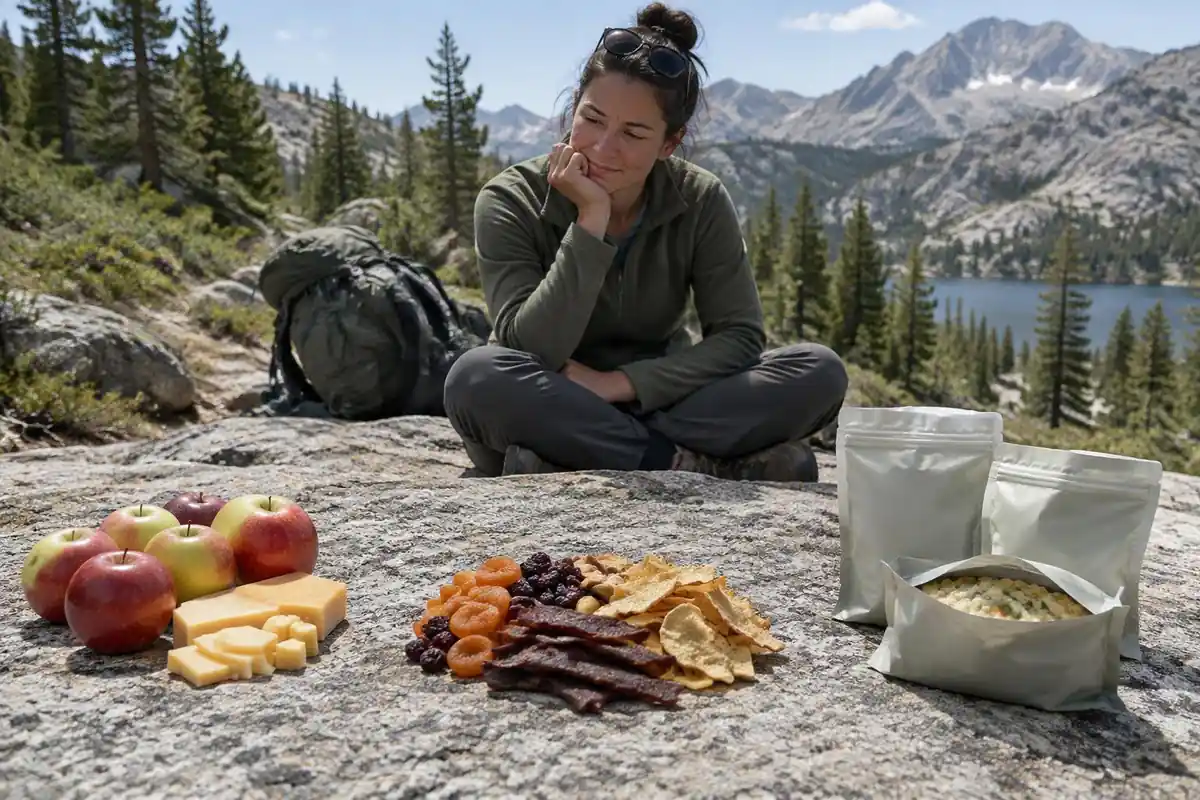
Backpacking food falls into three broad camps: commercially freeze-dried meals, dehydrated food you dry at home, and fresh groceries carried straight from the store. Each one trades weight, cost, prep time and taste against the others, and the right answer changes with the length of your trip. This page compares all three on the dimensions that actually decide what ends up in your food bag.
Affiliate disclosure: this page contains affiliate links. Purchases made through them may earn us a commission at no extra cost to you. See our affiliate disclosure.
In plain English
Most food is full of water. An apple, a chunk of cheese or a pot of stew is heavy mainly because of the water inside it. When you carry food for several days, you are also carrying all of that water up every hill.
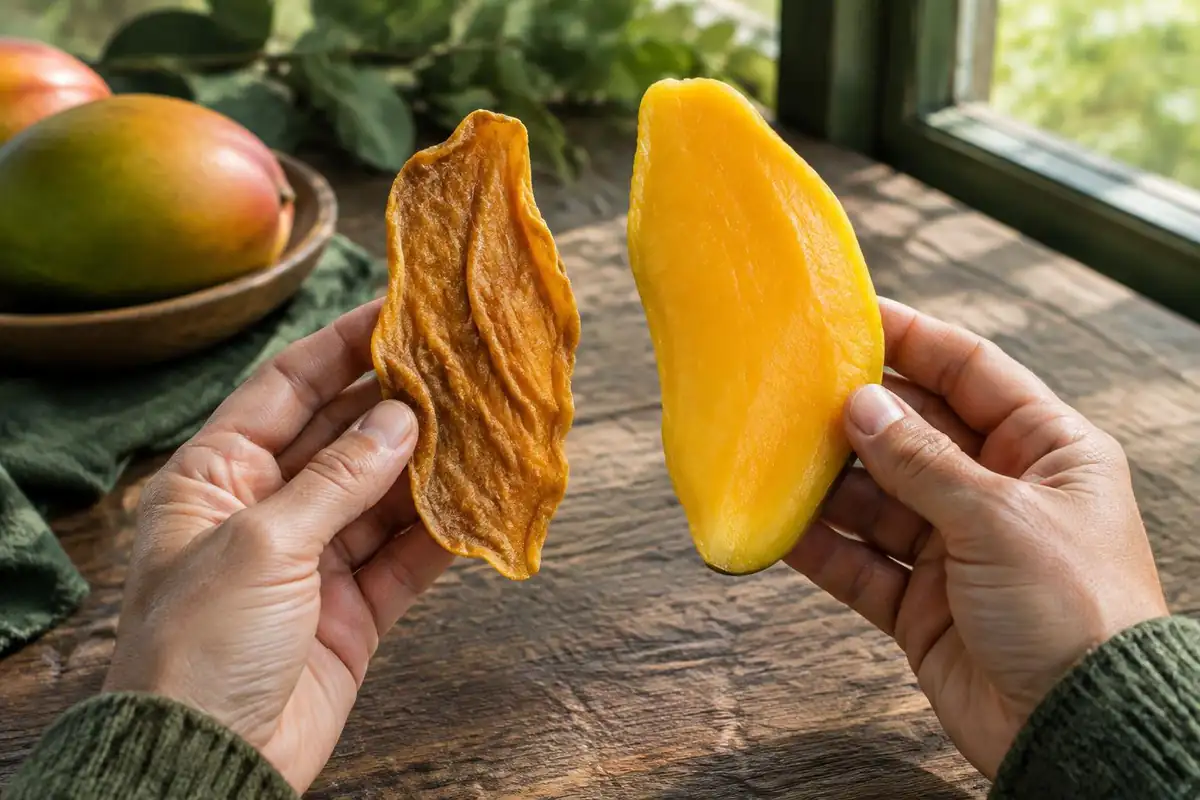
Drying takes the water out. A home dehydrator works like a warm fan in a box: it blows warm air over thin slices of food until they turn leathery or crisp. Freeze-drying works differently. The food is frozen hard, then placed in a vacuum so the ice turns straight into vapor, leaving a light, spongy piece that soaks water back up quickly.
Fresh food skips all of that. It tastes best and needs no soaking, but it is heavy and spoils fast, especially in summer. Most hikers end up mixing all three on the same trip.
Who it's for
This matters most once you're carrying more than a day's food. On an overnighter, almost anything works — fresh food included. By day three the weight of water in fresh ingredients starts to hurt, and on a week-long resupply leg or a thru-hike, the freeze-dried and home-dehydrated choice becomes the difference between a comfortable pack and a punishing one.
How they compare
Fresh food is mostly water, and water weighs roughly two pounds per liter no matter how good it tastes. Freeze-drying removes nearly all the moisture; home dehydrating removes most of it. That puts both dried approaches in a similar, much lighter class, while fresh produce, cheese and meat stay heavy for the calories they deliver — the single biggest reason long-distance hikers dry their food.
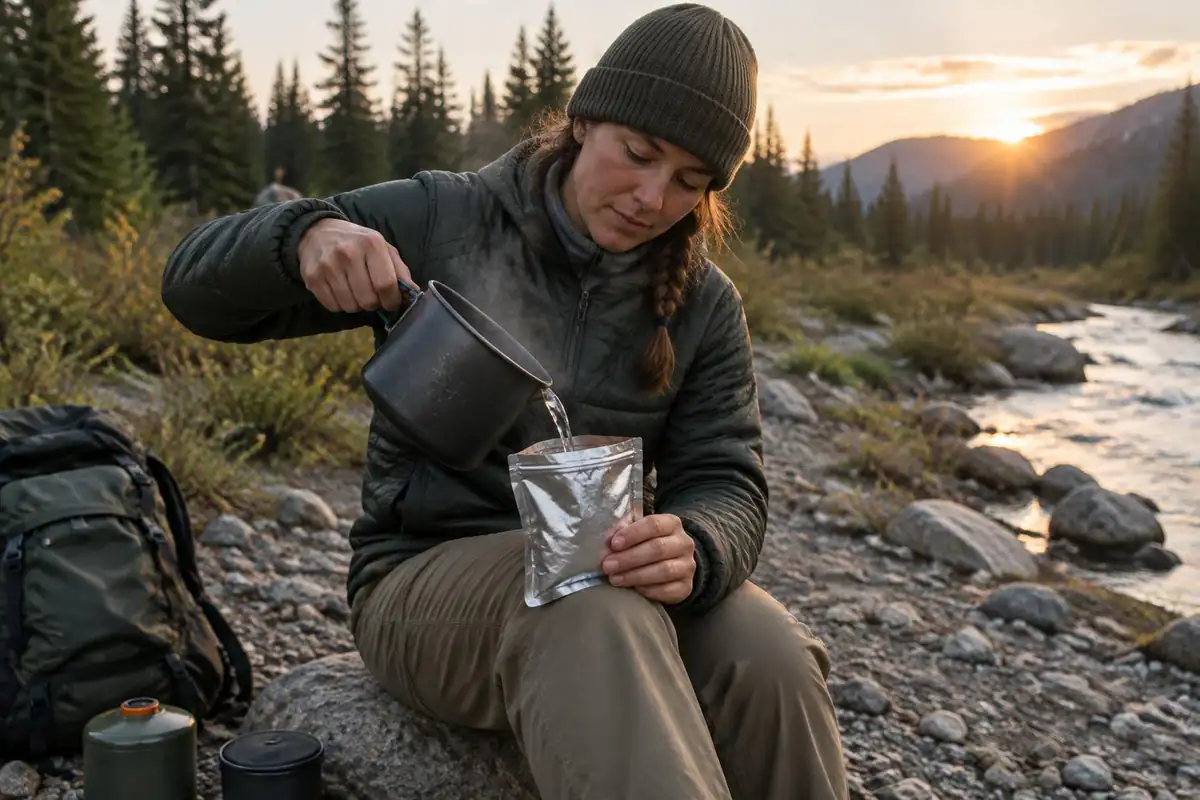
Freeze-dried food wins here. Its structure stays porous, so boiling water soaks back in and most meals are ready in the time printed on the pouch. Home-dehydrated food shrinks denser as it dries and usually needs a longer soak, gentle simmering, or a cold-soak head start. Fresh food needs no rehydration at all — only cooking.
Freeze-dried meals come back close to their original shape but can end up uneven — crunchy corners where the water never reached, mushy centers where it pooled. Dehydrated food rehydrates softer and more uniformly, and because you choose the ingredients and seasoning, it tends to taste like the cooking you already like. Fresh food, unsurprisingly, tastes best of the three.
Commercially freeze-dried pouches are sealed with an oxygen absorber and stay good for years unopened, which makes them easy to buy ahead and mail to resupply points. Home-dehydrated food keeps for months rather than years (dried meat is much shorter, about two weeks at room temperature), and longer if vacuum-sealed and frozen between trips. Fresh food is the short fuse — days at best, and less in summer heat.
Freeze-drying needs industrial vacuum equipment, so it's the most expensive way to buy a calorie — you're paying for the process, not just the ingredients. Home dehydrating flips that: a countertop dehydrator and an afternoon turn ordinary groceries into trail food at close to grocery cost, at the price of planning and kitchen time. Fresh food costs whatever the store charges.
None of the three wins outright. Freeze-dried suits long trips, cold weather and anyone who wants dinner without a project — speed and shelf life are its argument. Home-dehydrated suits hikers with dietary needs, repeat trips and time to prep, since control and running cost are its argument. Fresh suits one- and two-night trips where a real meal outweighs a heavier pack.
What each drying method does to the food
A freeze dryer first freezes the food and then creates a vacuum in the chamber, removing up to 98% of the moisture.1 Utah State University Extension says proper freeze-drying lowers water activity, a measure of how much water is free for microbes to use, to about 0.3 or below.4 Home dehydrators use gentle heat instead: the National Center for Home Food Preservation (NCHFP) says they are designed to dry food at 140°F and recommends an enclosed thermostat adjustable from 85°F to 160°F.2 The library holds no comparable moisture percentage for home-dried food, so the page's 'removes most of it' is as precise as the evidence allows.
Food safety: the step people skip
Neither method cooks or sterilizes food. USU Extension warns that bacteria may survive freeze-drying in a dormant state and says meats and eggs must be cooked either before freeze-drying or after rehydration.4 For home jerky, NCHFP says meat should reach an internal temperature of 160°F to kill bacteria such as E. coli O157:H7, then be dried in a dehydrator or oven preheated to 140°F.3 Some guides suggest lower drying temperatures; for meat, follow the NCHFP sequence.
Once rehydrated, dried food is moist, cooked food again, so eat it at that meal. If you cold-soak, the soaking water gets no heat at all, so treat it exactly like drinking water. The CDC says clear stream water can still carry germs and that most portable filters remove parasites but not viruses or bacteria.7
Shelf life in real numbers
The page says home-dehydrated food keeps for months rather than years. NCHFP puts numbers on that: most dried fruits keep 1 year at 60°F or 6 months at 80°F, vegetables about half as long, and all of it should be stored cool, dry and dark.5 Home jerky is far shorter, about two weeks at room temperature.3 A hot car or a summer resupply box runs warm, so plan on the short end. NCHFP also suggests conditioning dried fruit in sealed jars for 7 to 10 days to even out moisture before storing it.5
Freeze-dried food sits at the other extreme. USU Extension says it can stay safe 10 to 15 years, sometimes up to 25, in airtight, moisture-proof packaging, but does not recommend keeping home freeze-dried products beyond 5 to 10 years after processing.4
The calorie range in this page's FAQ
The 2,500 to 4,500 calorie daily range is a hiking-community planning figure; no official body in this site's source library publishes a backpacking calorie target. The closest research figures are military. A National Academies review for military field operations put soldiers' energy needs in the cold at 3,400 to 4,300 kcal a day, and the military's cold-weather ration standard is 4,500 kcal.8 Those describe soldiers in cold conditions, not a typical summer hiker.
For a personal estimate, the Compendium of Physical Activities rates backpacking at 7.0 METs, where one MET is about 1 kcal per kilogram of body weight per hour.9,10 A 70 kg hiker backpacking for six hours works out to roughly 2,900 kcal for the walking alone (70 × 7.0 × 6), before the rest of the day is counted.
Common questions
Can I mix all three on one trip?
Most hikers do. A common pattern is fresh food for the first night while it's still good, home-dehydrated dinners for the middle of the trip, and a freeze-dried pouch held back for the night you arrive late, cold and too tired to cook. Mixing also keeps flavor fatigue at bay on longer stretches.
Does dried food use less stove fuel?
Usually, yes — but the saving comes from how long you heat, not the drying itself. Freeze-dried meals only need water brought to a boil and poured into the pouch. Home-dehydrated food often needs a few minutes of simmering, and fresh ingredients can need far longer. Soaking dried food while you walk cuts cook time either way.
How many calories should a day's food add up to?
A day of backpacking is commonly estimated by hikers at somewhere between 2,500 and 4,500 calories (a rule of thumb, not an official figure), depending on effort, terrain, temperature and body size, and dried food is the easiest way to reach the top of that range without a heavy pack. Anyone with dietary restrictions or a medical condition should read labels closely and talk to a doctor.
This is general backpacking-food guidance, not a lab review — it explains what to look for and how to plan so you can choose well. See our affiliate disclosure.