
Best Freeze-Dried Backpacking Meals
Freeze-dried meals are the backbone of most backpacking dinners: a sealed pouch of cooked food with the water removed, brought back to life by pouring in hot water and waiting. They keep for years, weigh a fraction of the fresh ingredients, and need no pot-scrubbing at the end of a long day. The trade-offs are sodium, serving sizes that read smaller than they look, and a menu that can wear thin over a long trip.
Affiliate disclosure: this page contains affiliate links. Purchases made through them may earn us a commission at no extra cost to you. See our affiliate disclosure.
In plain English
A freeze-dried meal is a cooked dinner with almost all of its water taken out. Picture a bowl of pasta that has been frozen solid, then had the ice pulled away as vapor. What is left is light, crunchy and shelf-stable, a bit like the dried noodles in a cup of instant soup.
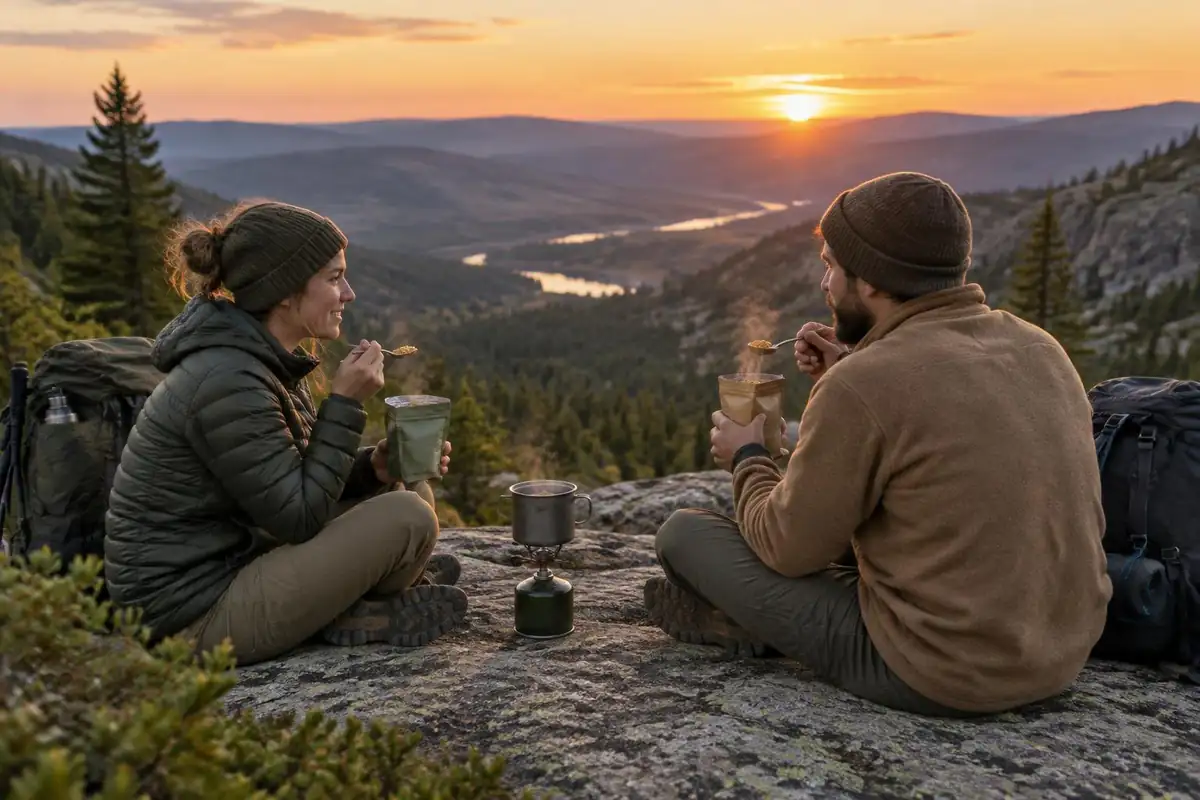
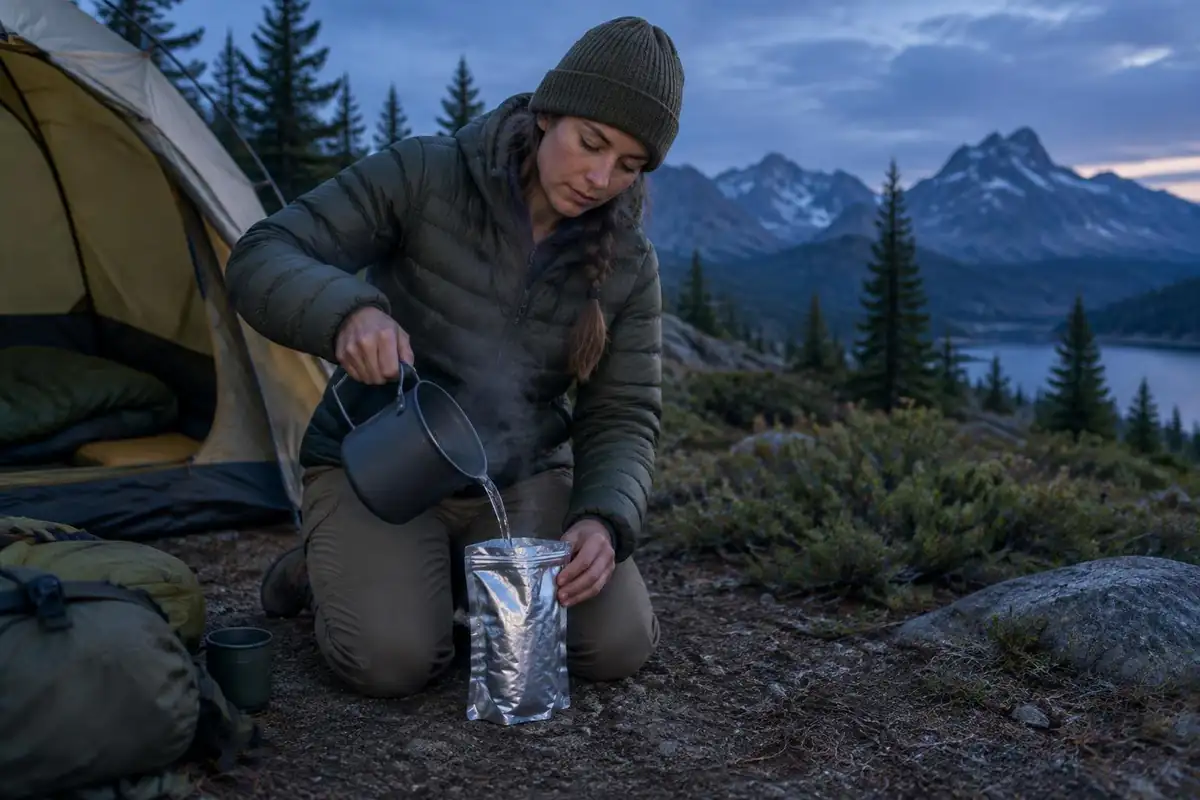
On the trail you put the water back. You pour hot water into the pouch, seal it, wait about ten minutes, and eat straight from the bag with a long spoon. No pot to scrub, no dishes to wash.
The catch is that the water has to come from somewhere, and it must be safe to drink, because the pouch does not clean it for you. The meal also only covers part of a hiking day's food. Think of a pouch as the anchor of dinner, not your whole day of eating.
This page contains affiliate links. Purchases made through them may earn a commission at no extra cost to you. See our affiliate disclosure.
Who it's for
On an overnight, almost any meal works; you'll eat one dinner and go home. The calculus changes on a five-day traverse or a thru-hike, where you carry every dinner from the last resupply and eat the same handful of flavors week after week. Hikers with dietary restrictions or big appetites need to read labels closely before committing to a box of pouches.
How to choose a backpacking meal
This is the number that matters most for a multi-day carry. Freeze-dried entrees commonly land somewhere around 100 to 130 calories per dry ounce, which is why they beat canned or fresh food by a wide margin once you're carrying several days of food. Compare the total calories in the pouch, not the per-serving figure, since many pouches contain two, against its dry weight.
Freeze-dried meals rehydrate with boiling water in the time printed on the pouch, which also tells you how much to add. That water has to come from somewhere, so factor it into your carry on dry stretches. Denser ingredients like beans and rice sit at the slow end; a cold-soak meal takes hours instead.
A hot dinner should do more than fill you up. Look for meals in the 15 to 25 gram protein range to support recovery on back-to-back big days. Sodium is the flip side: freeze-dried entrees are often heavily salted, and a single pouch can carry a large share of a typical day's intake. Check labels if you monitor salt or have a dietary restriction.
Something that tastes great on night one can be hard to face on night twelve. Palate fatigue is real on long trips, and it's a common reason hikers stop eating enough late in a trip. Buy a mix of flavors rather than a case of one, lean toward meals you'd enjoy at home, and pack hot sauce, olive oil, or spices to change the character of a repeat dinner.
Most freeze-dried meals come in a stand-up pouch with a flat bottom and a wide mouth, designed so you add water, seal it, wait, and eat straight out of the bag with a long-handled spoon. That saves a pot, a bowl, and the water you'd use to wash them. Check that the pouch stands up on its own and that the seam is wide enough for a spoon.
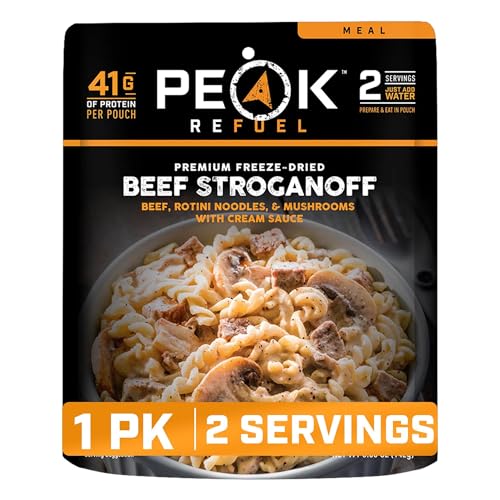
7 meals to compare
Real options that fit the criteria above. We don't publish prices or ratings — check the current price and reviews on Amazon.


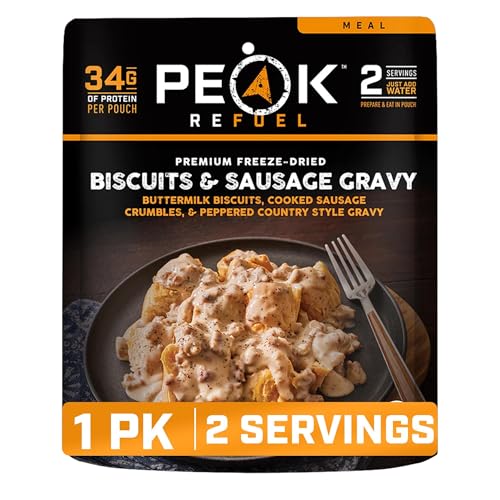


What freeze-drying actually does to the food
A freeze dryer first freezes the food, then creates a vacuum in the chamber so the ice turns straight to vapor, and the process can remove up to 98% of the moisture.1 Utah State University Extension explains that proper freeze-drying lowers the food's water activity, a measure of how much water is free for microbes to use, to about 0.3 or below.2 That is why a sealed pouch can sit in a closet for years without spoiling.
It is not the same as cooking or sterilizing. The same extension guidance warns that bacteria may survive freeze-drying in a dormant state, and that meats and eggs must be cooked either before freeze-drying or after rehydration.2 Commercial entrees are cooked before they are dried, which is why hot water alone makes them ready to eat. Once you add water, you have ordinary moist, cooked food again, so eat it within the meal rather than saving half for later on a warm day.
Shelf life, and why the package matters
Utah State University Extension says freeze-dried foods can stay safe for 10 to 15 years, sometimes up to 25, but only in airtight, moisture-proof packaging.2 The pouch is doing real work: once it is opened or punctured, moisture and air get in and that long shelf life no longer applies. For home freeze-dried food, the same source does not recommend keeping products beyond 5 to 10 years after processing.2 Check pouches for pinholes before a trip, and use older stock first.
Water, weight and cold rehydration
Water weighs about 1 kilogram per liter, so the one to two cups a pouch asks for adds roughly half a pound to a pound for each meal.3 On a dry camp where you carry all your water in, that is part of the true weight of the dinner, not a detail to ignore.
Cold rehydration skips the heat entirely, which means nothing in the pouch is being disinfected. The CDC notes that water from a clear mountain stream can still carry germs, that boiling is the best way to kill them, and that its hiking page says most portable filters remove parasites but not viruses or bacteria, so check what your filter is rated for.5 Treat soaking water exactly as you treat drinking water.
Sodium, heat and the calorie range on this page
Salt is not simply a negative on the trail. The National Park Service at Grand Canyon advises hikers in hot weather to eat salty snacks to balance their water intake, and warns about hyponatremia, low blood sodium from drinking a lot of water while losing salt.6 A salty pouch may suit a hot day better than a cool one. If you limit salt for health reasons, follow your doctor's advice instead.
The 2,500 to 4,500 calorie daily range quoted on this page is a hiking-community planning figure; no official body publishes a backpacking calorie number. The closest research figures are military: a National Academies review put energy needs for soldiers in the cold at 3,400 to 4,300 kcal a day.7 Use either as a starting point, not a target.
Pouches in a bear canister
Stand-up pouches are bulky for their weight, and canister space is fixed. Glacier Bay's loaner canister holds 560 cubic inches, which the park says fits about six days of food for one person.8 Many hikers repack pouch contents into flat freezer bags to save volume, and the empty, smelly pouch still goes back in the canister, because bears treat trash as food.4
Common questions
How many freeze-dried meals do I need per day?
Most hikers plan one pouch for dinner and cover breakfast and lunch with simpler options like oats, bars, tortillas, and nuts. A day of backpacking food is commonly estimated by hikers at 2,500 to 4,500 calories (a rule of thumb, not an official figure), depending on effort, terrain, and body size, and a single entree pouch rarely covers more than a third of that.
What's the difference between freeze-dried and dehydrated meals?
Freeze-drying removes water by freezing the food and drawing the ice off under vacuum, which keeps the structure intact, so meals rehydrate quickly and taste closer to the original. Dehydrating uses low heat and air, producing denser, chewier food that usually needs longer soaking and often a simmer. Both work on trail; freeze-dried is faster and lighter for its volume.
Can I rehydrate a meal with cold water?
Sometimes, though it takes much longer than with boiling water, and the texture stays firmer, especially with rice, beans, and pasta. Cold soaking lets you skip a stove entirely, which some long-distance hikers prefer. Use treated water, keep the pouch sealed while it soaks, and don't leave a soaked meal sitting warm for hours.
This is general backpacking-food guidance, not a lab review — it explains what to look for and how to plan so you can choose well. We publish no prices or ratings; current price, availability and reviews are shown on Amazon. Product links are affiliate links: we may earn a commission at no extra cost to you. See our affiliate disclosure.