
Best Food Dehydrators for Backpacking
Drying your own food at home turns everyday groceries into lightweight backpacking meals, and a dehydrator is the tool that makes it repeatable. Removing most of the water from fruit, vegetables, cooked grains and meat cuts pack weight dramatically while keeping calories intact. This page covers what separates one dehydrator from another — tray design, airflow, wattage and cleanup — so you can pick a machine that suits how much trail food you actually make.
Affiliate disclosure: this page contains affiliate links. Purchases made through them may earn us a commission at no extra cost to you. See our affiliate disclosure.
In plain English
A food dehydrator is a small box with a heater and a fan. It blows warm, dry air over trays of sliced food for hours until most of the water is gone. It works a lot like a clothes line on a hot, breezy day, only indoors and controlled.
Why bother? Dried food weighs far less than fresh food, and it does not spoil as fast. You can cook chili at home, dry it, and carry a light bag of it on the trail, then add water at camp to bring it back.
The machine to choose depends on how much you plan to dry and how often. The most useful feature is a temperature dial you can set yourself, because fruit, vegetables and meat need different handling. The other big question is how far ahead you prepare, because dried food still has a shelf life.
This page contains affiliate links. Purchases made through them may earn a commission at no extra cost to you. See our affiliate disclosure.
Who it's for
A dehydrator earns its keep if you hike often enough to eat more than a handful of store-bought pouches a year. Weekend hikers can get by drying fruit and jerky in small batches; thru-hikers and anyone prepping a season of resupply boxes will want real capacity. If you hike twice a year, the math rarely works.
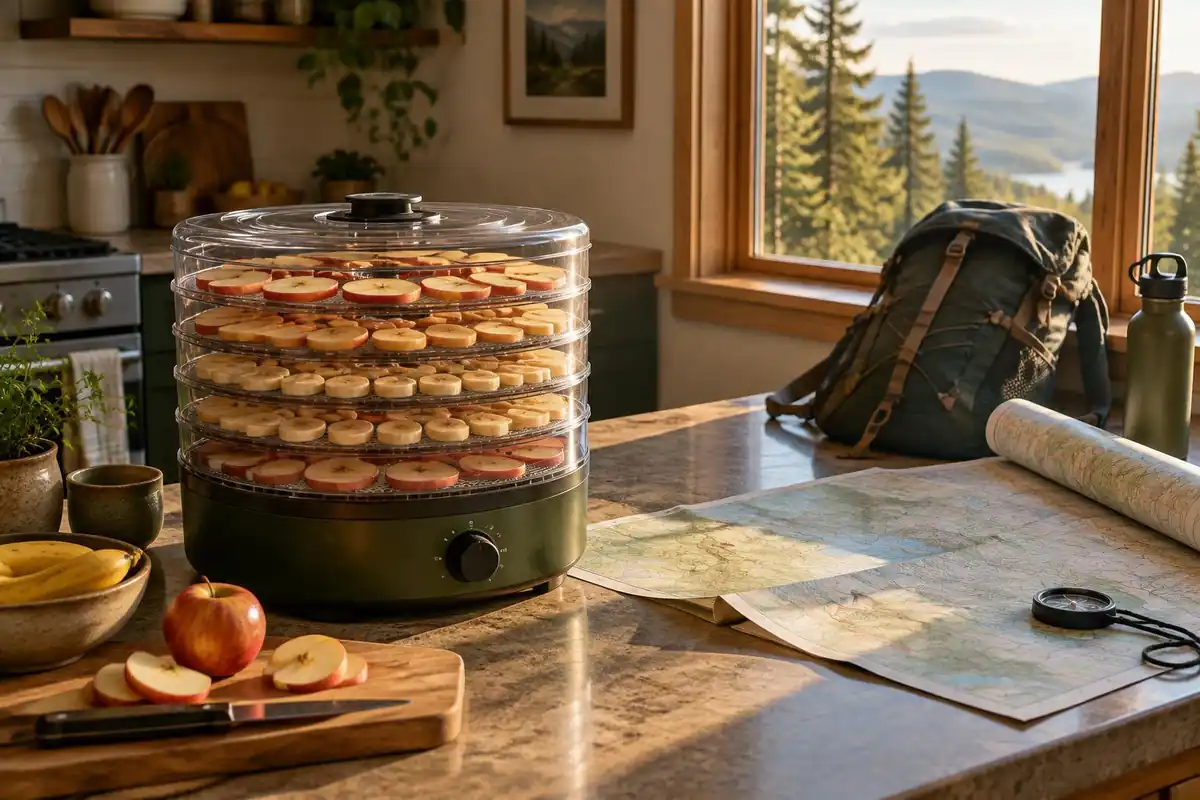
How to choose a food dehydrator
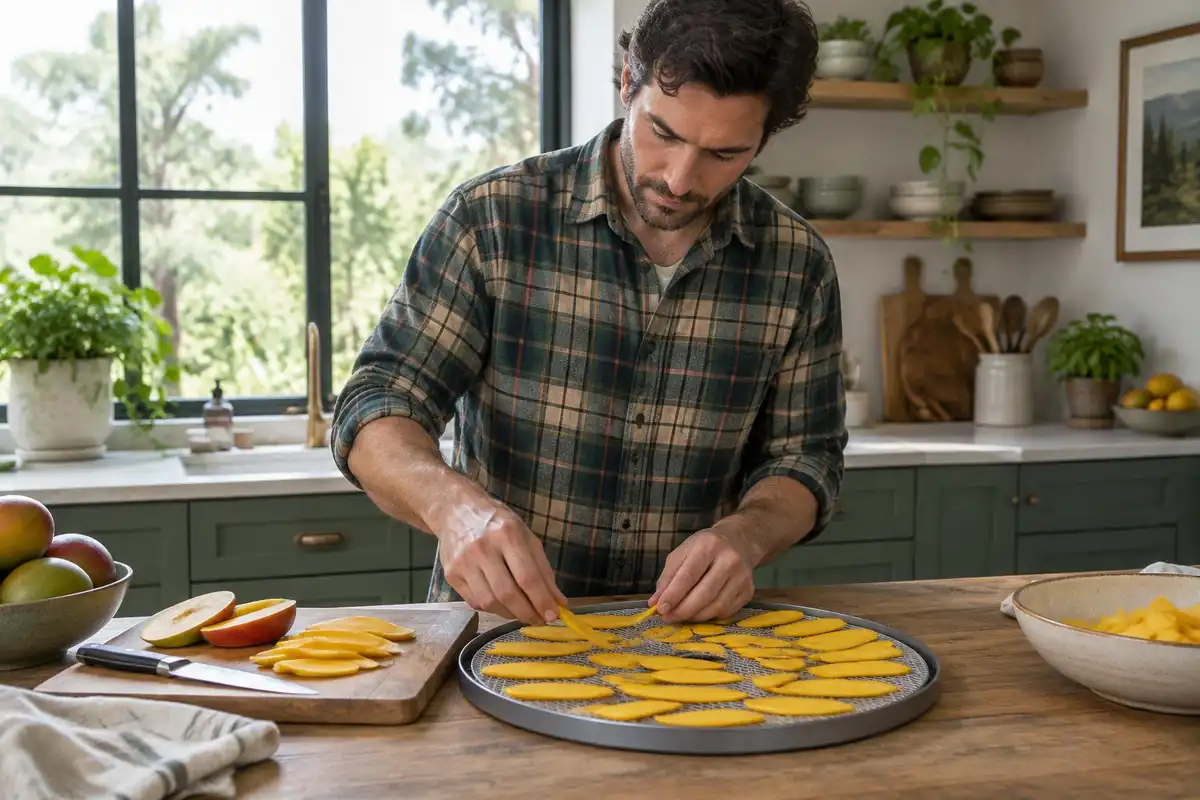
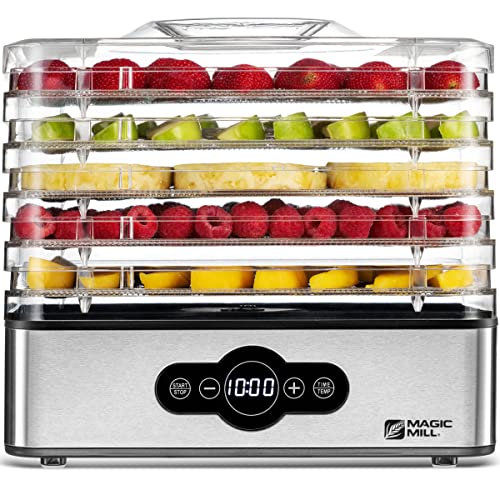
Stackable models build upward from a base, with trays that nest on top of each other. Drying is often uneven between the tray nearest the fan and the one farthest away, so you rotate mid-run. Box or shelf dehydrators hold trays in a cabinet and slide out like oven racks — bulkier on the counter, but easier to load and more consistent tray to tray.
Where the fan sits decides how evenly food dries. Bottom-mounted fans in stackable units push air up through the stack, so lower trays finish first and drips can reach the motor. Rear- or side-mounted fans in box models blow air horizontally across each shelf, which usually means less rotating and no juice running into the works.
Higher wattage moves more heat, which matters when every tray is loaded and wet. Just as important is an adjustable thermostat, because different foods want different settings, and jerky meat has to reach 160°F internal before it is dried at 140°F. A single fixed temperature forces a compromise on one job or the other, so look for a real dial or digital range.
Trail meals shrink hard: a full tray of cooked ground beef or chili reduces to a small bag, so a four-tray machine fills up fast when you are prepping a week of dinners. Count how many trays you can run at once and whether extra trays are available later. Drying a batch takes hours, so more surface area means fewer separate runs.
A dehydrator runs for six to twelve hours at a stretch, often overnight, and the fan is audible the whole time. Think about where it will live: a large box unit takes real counter or shelf space and needs clearance for the exhaust. Quieter machines and a spare room or garage make long runs much easier to live with.
Sauces, marinades and pureed fruit leather all end up baked onto plastic, and hand-washing a stack of mesh screens is the chore that quietly decides whether you keep dehydrating. Look for dishwasher-safe trays, smooth mesh liners and nonstick fruit-leather sheets that lift clean. Fiddly grids with tight corners take far longer to scrub than flat, removable inserts.
4 dehydrators to compare
Real options that fit the criteria above. We don't publish prices or ratings — check the current price and reviews on Amazon.


What the thermostat numbers mean
The National Center for Home Food Preservation, based at the University of Georgia, says food dehydrators are designed to dry food at 140°F and recommends looking for an enclosed thermostat that adjusts from 85°F to 160°F.1 That range is the practical version of this page's advice to avoid a single fixed temperature. The low end suits delicate items, 140°F is the working setting, and the top end gives headroom.
The important limit is meat. The same center says meat for jerky should reach an internal temperature of 160°F to kill bacteria such as E. coli O157:H7, and then be dried in a dehydrator or oven preheated to 140°F.2 A drying temperature of 140°F does not by itself bring meat to 160°F inside, so heating the meat first is a step the machine does not replace, however high its dial goes.
Dehydrator or home freeze dryer?
Shoppers researching dehydrators often run into home freeze dryers, which work differently. A freeze dryer first freezes the food and then creates a vacuum in the chamber, removing up to 98% of the moisture.4 Utah State University Extension says proper freeze-drying lowers water activity to about 0.3 or below, and that freeze-dried foods can stay safe 10 to 15 years in airtight, moisture-proof packaging, though it does not recommend keeping home freeze-dried products beyond 5 to 10 years.5
A dehydrator cannot match that shelf life, and it does not need to for most hikers. It is a far smaller and less costly appliance, and a season's worth of trail food rarely has to last a decade. One caution applies to both: freeze-drying does not kill bacteria, which can survive in a dormant state, and meats and eggs must be cooked before drying or after rehydration.5
Matching capacity to shelf life
The center's storage guidance sets a useful ceiling on batch size. Most dried fruits keep about 1 year at 60°F or 6 months at 80°F, and vegetables keep about half as long.3 Jerky is shorter again: properly dried, it keeps about two weeks at room temperature in a sealed container.2 So a big machine is most useful for drying a season's meals in a few weekends, not for stockpiling years ahead.
Two process steps also affect how many trays you need. The center recommends conditioning dried fruit in sealed jars for 7 to 10 days to even out moisture, and storing dried foods somewhere cool, dry and dark.3 Conditioning ties up containers, not trays, so a smaller machine run more often can keep pace if you plan the calendar.
Common questions
Can I just use my oven instead?
You can, and plenty of people start there. An oven set to its lowest temperature with the door cracked will dry fruit and jerky, but most ovens do not go low enough, they tie up the kitchen for hours, and airflow is poor. A dehydrator holds a steady low temperature with constant air movement, which is the whole trick.
How long do home-dried backpacking meals keep?
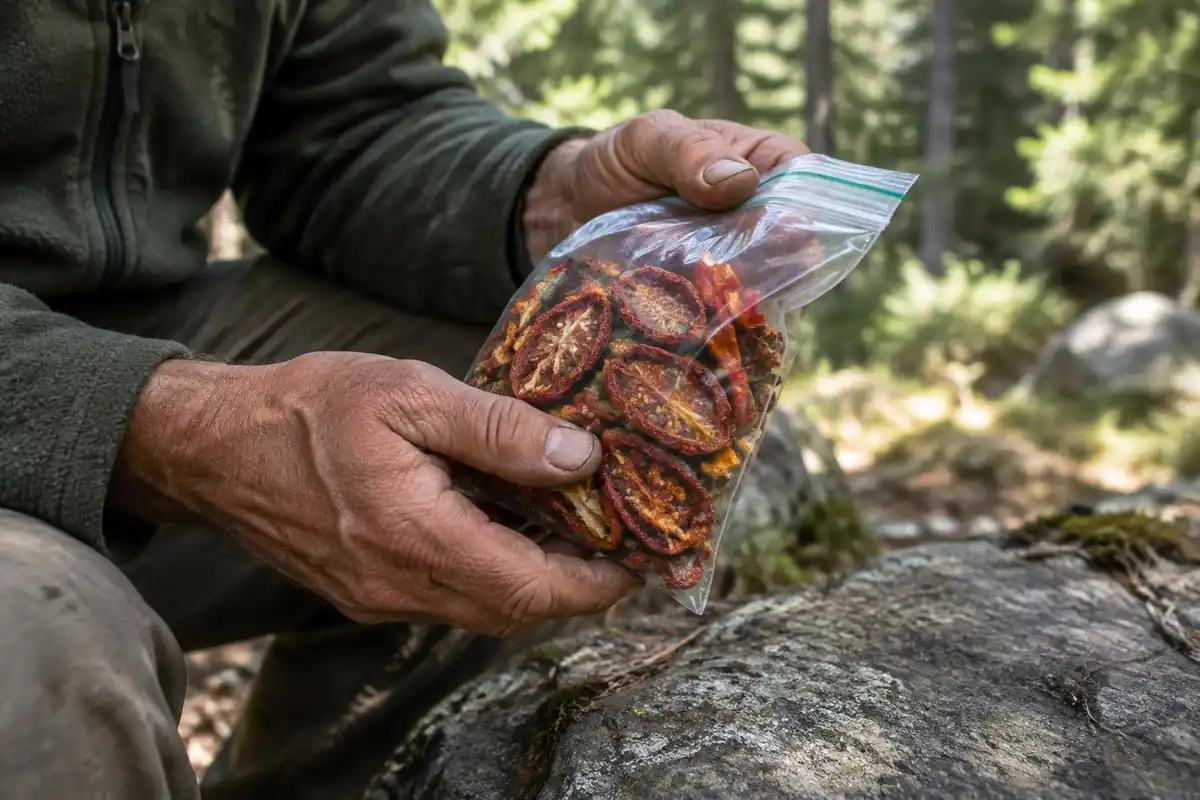
Properly dried food that snaps or feels leathery rather than soft, stored in an airtight bag away from heat and light, generally keeps for months; vacuum sealing and a cool, dark cupboard extend that further. Anything with fat goes rancid soonest, and jerky keeps only about two weeks at room temperature in a sealed container, so freeze it. Label every bag with the date and smell-check before a trip.
How many trays do I actually need?
For occasional weekend trips, four to five trays handles fruit, vegetables and a batch of jerky without much waiting. If you are building a resupply plan or drying full dinners like chili and pasta sauce, eight or more trays saves entire evenings, because each run takes most of a day regardless of how full the machine is.
This is general backpacking-food guidance, not a lab review — it explains what to look for and how to plan so you can choose well. We publish no prices or ratings; current price, availability and reviews are shown on Amazon. Product links are affiliate links: we may earn a commission at no extra cost to you. See our affiliate disclosure.