
Best Backpacking Coffee Makers
Coffee is one of the few luxuries worth carrying weight for, and backpacking coffee makers range from a featherweight filter cone to a full stainless percolator. This page covers the main ways to brew on trail: percolator, pour-over dripper, French press and instant, and how each one trades grams against the quality of the cup. Choosing well means being honest about how much ritual you actually want at 6 a.m.
Affiliate disclosure: this page contains affiliate links. Purchases made through them may earn us a commission at no extra cost to you. See our affiliate disclosure.
In plain English
A camp coffee maker is just a small tool that lets hot water and ground coffee meet, then keeps the grounds out of your cup. At home a machine does this for you. On the trail you boil water on a little camping stove and pick a method: a filter cone, a small press, a pot that bubbles coffee up through a basket, or plain instant powder.
The choice comes down to three things. How much weight you will carry, how much fuel you will burn, and how much mess you will pack out. A heavy metal pot makes great coffee for a group but costs weight and fuel. Instant costs almost nothing but gives up the ritual.
Two safety habits matter more than any brewer. Always cook outside your tent, never inside it, even when it is cold. And treat used grounds like food scraps: bag them, carry them out, and keep them away from where you sleep.
This page contains affiliate links. Purchases made through them may earn a commission at no extra cost to you. See our affiliate disclosure.
Who it's for
Anyone who drinks coffee daily at home will feel its absence on a trip. Weekend hikers can justify a heavier brewer for two mornings; thru-hikers counting every ounce usually drift toward instant within a few weeks. Cold-weather campers, big groups sharing one pot, and anyone hiking where waste has to be packed out all have different priorities here.
How to choose a camp coffee maker
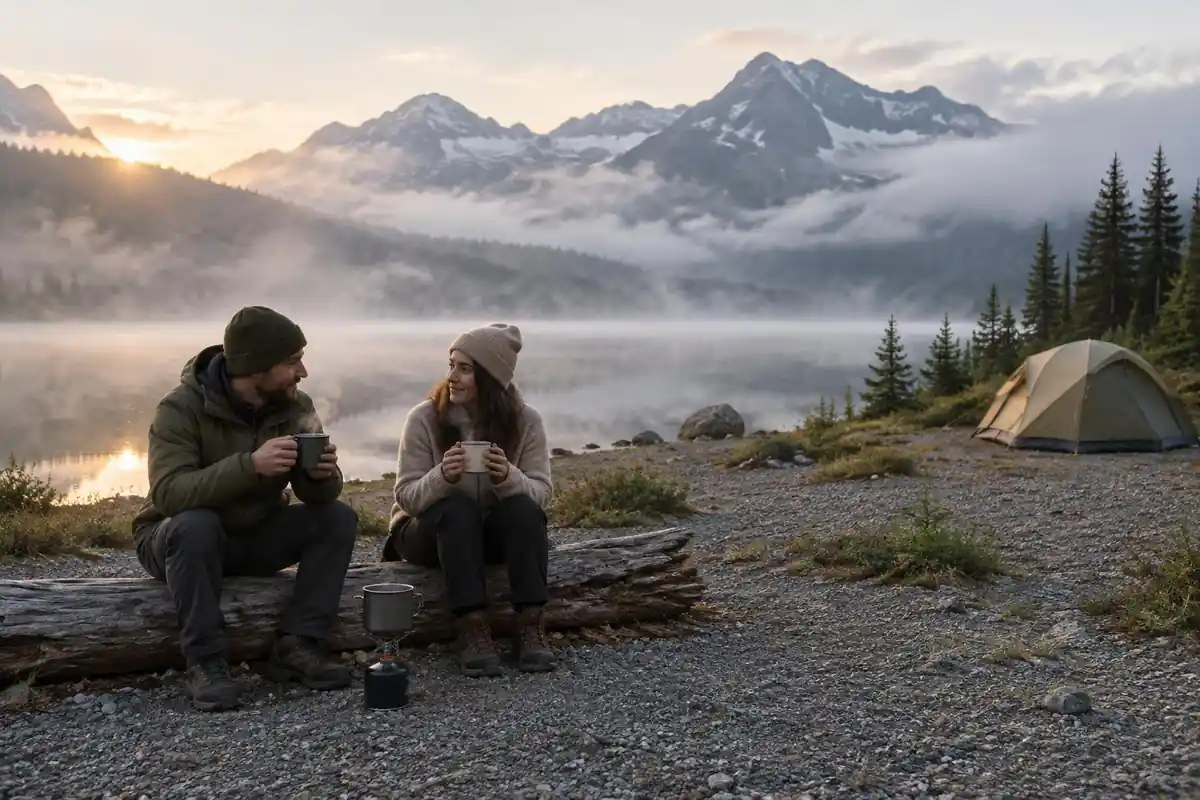
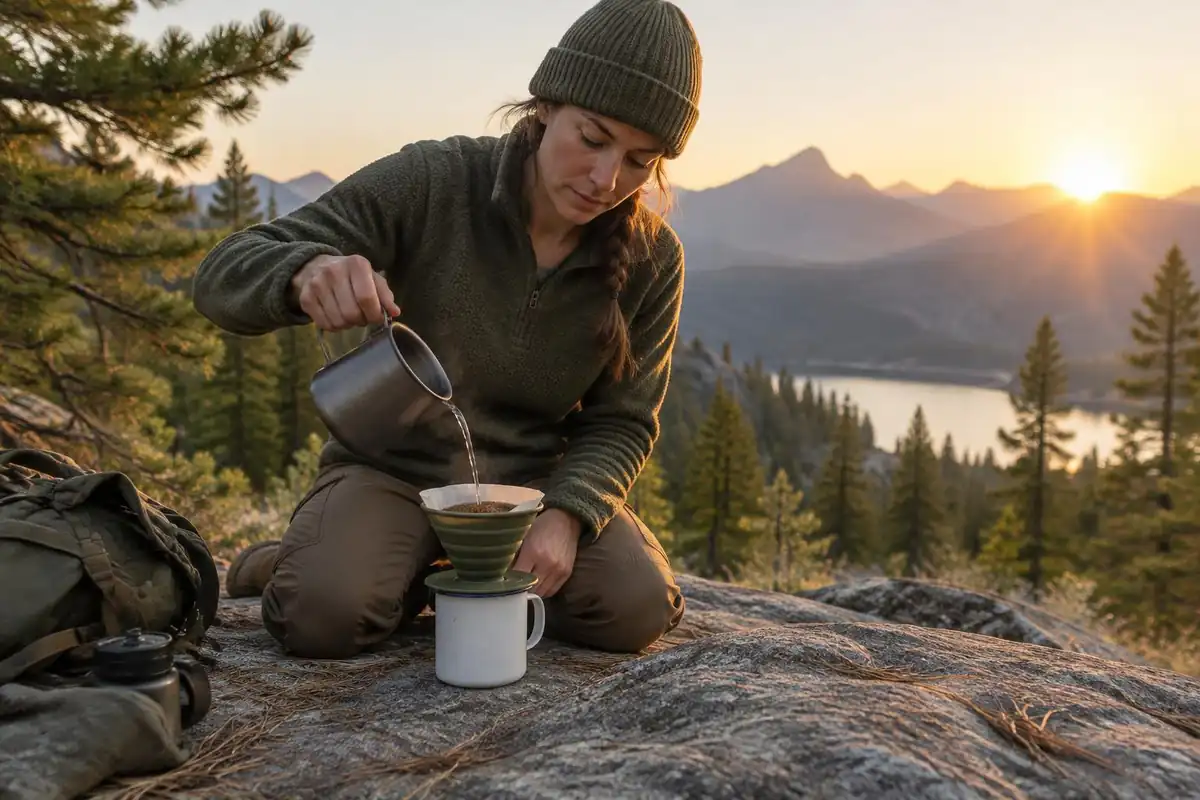
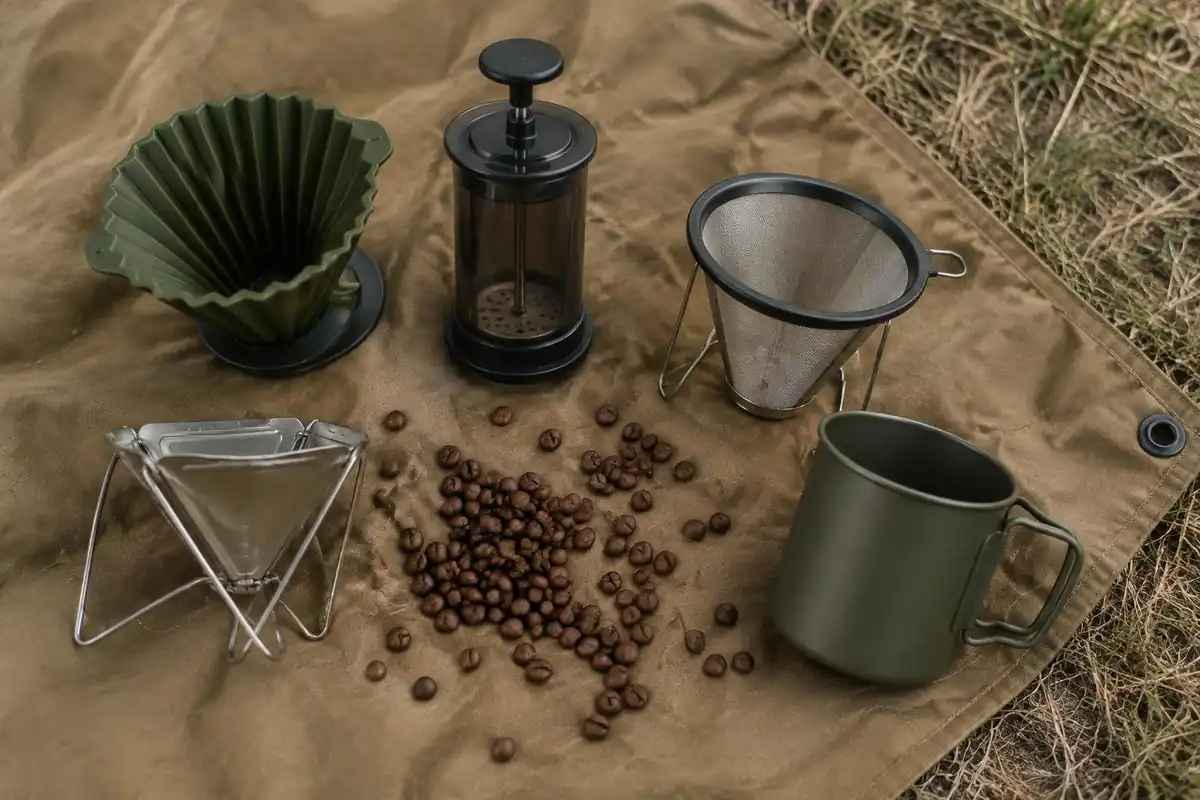
Percolators make a strong, hot pot for a group but are the heaviest option and burn the most fuel. Pour-over cones weigh almost nothing and give a clean, bright cup. French presses keep the oils and body that paper filters strip out, all in one vessel. Instant is the lightest and fastest by a wide margin. Pick the method first, then the hardware.
A collapsible dripper adds a fraction of an ounce; a stainless percolator or press can add close to a pound once you count the pot. Neither choice is wrong. If the morning brew is the reason you get out of the bag, that weight buys you something real. If coffee is just caffeine, instant delivers it for almost no penalty.
Trail kitchens live or die on nesting. A brewer that collapses flat, folds into a lid, or sits inside your pot costs you no extra volume; a rigid one demands its own space and rattles. Check that whatever coffee maker you choose fits your existing pot and stove, and that handles or silicone parts will not snag inside a stuffed pack.
Wet grounds are trash you carry, not something to scatter or bury. Presses and percolators leave a sludgy basket to scrape into a sealed bag; a paper filter lifts out whole and goes straight in. Instant leaves nothing at all. Factor in how much water you will spend rinsing, too, because in dry country that alone can settle the argument.
Below freezing, everything works against you: water cools fast, metal chills your hands, and fiddly pour-overs are miserable with gloves on. Preheat the mug, brew directly into an insulated vessel, and favor methods with fewer steps. Instant and a press both do well here because the coffee stays covered while it brews. Keep a bandana handy for cold metal handles, and brew outside the tent: a stove running inside a tent risks carbon monoxide poisoning.
Method dictates grind: presses and percolators want coarse, drippers want medium. Pre-grinding at home saves carrying a grinder, but the coffee fades over days, so a long-trip bag tastes flatter by week two. Budget fuel as well, since a percolator holds a boil for several minutes while a pour-over needs only one kettle of hot water.
6 coffee makers to compare
Real options that fit the criteria above. We don't publish prices or ratings — check the current price and reviews on Amazon.


Cold mornings and carbon monoxide
The temptation to brew inside the tent is strongest on exactly the mornings this page's cold-weather section describes. The CDC describes carbon monoxide as an odorless, colorless gas produced whenever fuel is burned in stoves, lanterns and grills, and notes that sleeping people can die from it before they have symptoms.6 A CDC report on two 1999 camping incidents in Georgia recorded six deaths, including one involving a propane stove burning inside a zipped tent, and stated that opening tent flaps or windows does not prevent dangerous build-up.1
The US Consumer Product Safety Commission adds that carbon monoxide risk is higher at high altitude and that poisoning while camping can be mistaken for a cold or flu.7 Symptoms the CDC lists include headache, dizziness, weakness, upset stomach, chest pain and confusion.6 If anyone feels that way after cooking, get them into fresh air and get medical help. The practical rule for brewers is simple: the longer a method keeps a flame going, the more it matters where you run it.
Why the brewer choice interacts with your stove
A pour-over needs one kettle of hot water. A percolator keeps the pot boiling for several minutes. That difference in burn time is small on a warm morning and large on a freezing one, because canister stoves lose power in the cold. MSR's fuel guide gives isobutane a sea-level boiling point of 11°F and propane -44°F, so standard blends vaporize poorly as temperatures drop.3 MSR also notes that canister pressure falls as it gets colder and the user cannot offset it, while a liquid-fuel bottle can be pumped to keep pressure up.2 MSR says its IsoPro fuel is an 80/20 isobutane and propane blend designed to hold higher pressure in cold.8
For winter trips, a quick method paired with a warm canister is usually the more efficient pairing than a long-boiling brewer on a sluggish stove.
Water temperature at altitude
Water boils at a lower temperature the higher you go. The CDC Yellow Book notes that at about 16,000 feet boiling water reaches only about 182°F, which is still hot enough to inactivate intestinal germs.9 For brewing, that means a high camp's boil is already cooler than a sea-level one, so methods that rely on very hot water extract a little less. A slightly finer grind or a longer steep can compensate.
Grounds, rinse water and wildlife
The page is right that grounds get packed out. The reason goes beyond tidiness: the National Park Service says bears treat any scented item, including toiletries, trash and fuel, as food, and that storage rules vary by park.4 A bag of wet grounds belongs in the same canister or hang as your dinner. When you rinse a press or percolator, do it at least 200 feet from lakes and streams, using small amounts of biodegradable soap if you use any at all.5
Common questions
Is instant coffee actually worth using?
Modern freeze-dried and specialty instant coffees are a long way from the bitter crystals of decades past, and plenty of experienced hikers use nothing else. It weighs almost nothing, needs no cleanup, works with water that is not quite boiling, and packs flat. If you are counting ounces or hiking in cold, it is hard to beat.
What do I do with used coffee grounds?
Pack them out. Grounds are food waste, they do not break down quickly, and scattered piles attract animals and leave a mess at popular sites. Scrape them into a sealable bag that lives with your trash, and rinse the brewer well away from any water source. Some areas have stricter rules, so check local guidance before your trip.
Do I need a separate brewer, or can I use my cook pot?
Plenty of hikers skip dedicated gear entirely. Cowboy coffee, with grounds dropped straight into the pot, boiled, then settled with a splash of cold water, needs nothing extra and tastes better than its reputation. The trade-off is grit in the last mouthful and a pot to clean before dinner. A brewer buys you a cleaner cup and a tidier kitchen.
This is general backpacking-food guidance, not a lab review — it explains what to look for and how to plan so you can choose well. We publish no prices or ratings; current price, availability and reviews are shown on Amazon. Product links are affiliate links: we may earn a commission at no extra cost to you. See our affiliate disclosure.