
Backpacking Dinner Ideas
Dinner is the meal that carries the most weight on a backpacking trip — it's the one hot, calorie-heavy thing waiting at the end of a long day, and it does as much for morale as it does for recovery. This page walks through the main categories of trail dinner, from one-pot pasta to cold-soaked grains, and shows how to make each one taste like something you actually look forward to.
Affiliate disclosure: this page contains affiliate links. Purchases made through them may earn us a commission at no extra cost to you. See our affiliate disclosure.
In plain English
Dinner is usually the biggest meal of a backpacking day and the one people look forward to most. The simplest version is one pot: boil water, add quick-cooking pasta or rice, stir in dried vegetables and some protein, and let it sit until soft. You eat from the same pot you cooked in.
Where you cook matters as much as what you cook. Food smells travel, and animals follow them. So hikers cook and store food a good distance from where they sleep, and they pack out every scrap and wrapper.
Weather changes the plan too. On a rainy night it is tempting to cook inside the tent. Don't. Stoves give off a gas you cannot see or smell that can kill in a closed space. Cook in the open, even if that means a quick meal under a rain jacket.
Who it's for
Anyone cooking away from a car benefits, but the stakes rise with day count. On an overnight, a dull dinner is survivable. On a week-long trip — or a thru-hike where dinner repeats forty times — variety and calorie density stop being luxuries. Hikers in fire-ban areas or stealth camps also need at least one no-cook dinner in the rotation.
Dinner options
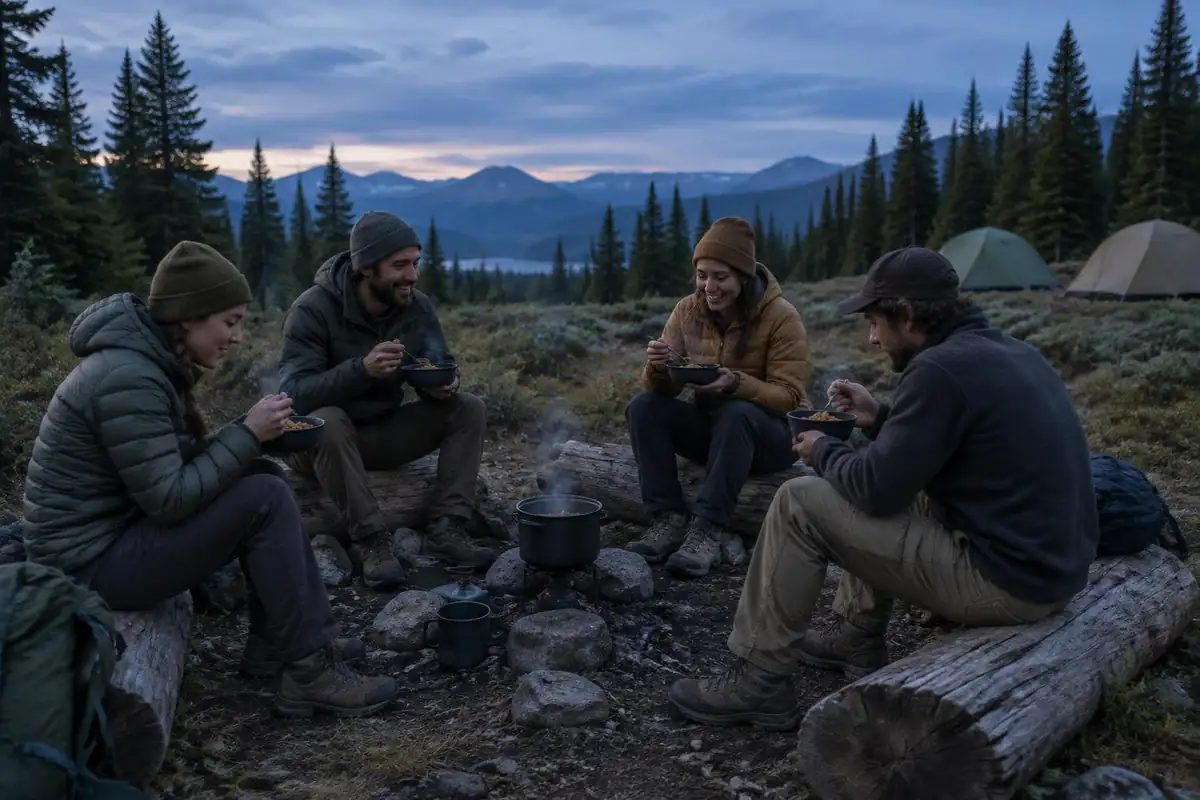
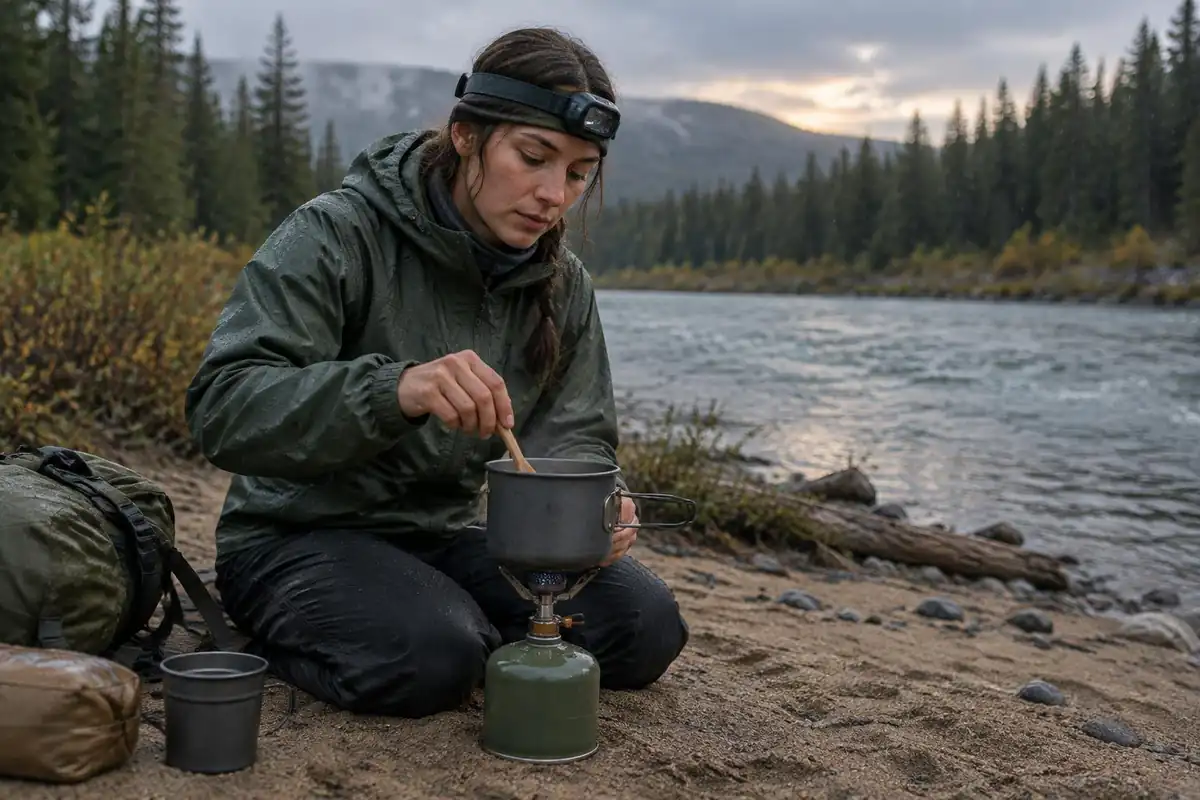
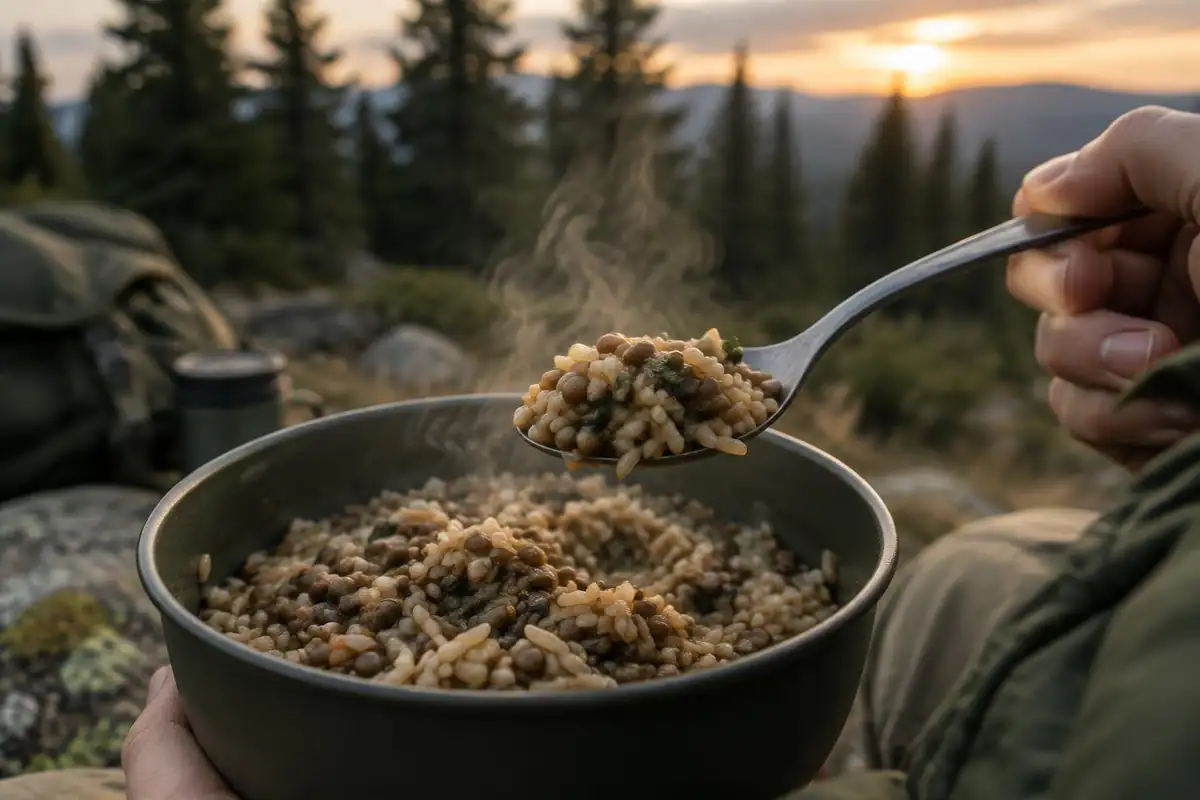
The workhorse dinner: boil water, add quick-cooking pasta, instant rice or couscous, stir in dried vegetables and a shelf-stable protein, and let it sit covered until everything softens. Because the starch, vegetables and protein cook in the same water, nothing gets drained and nothing gets wasted — you eat straight from the pot and wipe it out with a spoon and a splash of water.
Commercial freeze-dried dinners are the lowest-effort option — pour boiling water into the pouch, seal it, and wait the time printed on the label. Cleanup is nothing but a packed-out bag. The trade-offs are cost per meal, sodium that can run high, and serving sizes that sound generous on the label but leave a hungry hiker wanting more.
A block of instant ramen cooks in a couple of minutes and weighs almost nothing, but on its own it is mostly salt and refined starch. Treat it as a base: add a pouch of tuna or chicken, a handful of dried mushrooms or peas, a spoon of peanut butter or miso, and a slick of oil. It becomes a real dinner for very little extra weight.
When fires and stoves are restricted, or you are camping discreetly and want no smell or light, cold soaking fills the gap. Couscous, instant mashed potato, ramen and quick oats all rehydrate in cool water given enough time in a sealed jar carried in your pack; how long depends on the food and how cold the water is. Season aggressively, because cold food tastes flatter.
Base carbs are cheap calories but dull. Carry flavor in small containers: olive oil in a leakproof bottle, powdered cheese, bouillon, dried onion, chili flakes, curry powder, a squeeze tube of hot sauce. Fat carries more calories per ounce than carbohydrate or protein, so a spoonful of oil stirred in at the end lifts both the calorie count and the taste.
On a trip longer than a couple of nights, morale starts to matter as much as nutrition. Rotate dinners so the same flavor never lands two nights running, and save the one you most look forward to for the longest or hardest day. Something small helps too — a hot drink after, or a square of chocolate — turning the meal into an event rather than refueling.
Where to cook, not just what
A dinner spot is a smell source for the whole night. The Forest Service in the Idaho Panhandle National Forests advises pitching tents 100 yards uphill from cooking and food storage areas where possible, and hanging food at least 10 feet up and 4 feet from the trunk.1 The National Park Service says to place bear canisters on level ground 100 feet or more from camp, and notes that food storage rules vary by park.5 Some parks go further: Rocky Mountain National Park requires canisters for all wilderness overnights and says the canister must be kept 200 feet from the campsite at all times.6 Check the specific rules before you go, because the distances are not the same everywhere.
Rain, vestibules and carbon monoxide
Wet evenings are when dinner moves toward the tent. The CDC describes carbon monoxide as an odorless, colorless gas made whenever fuel burns in stoves, and warns that sleeping people can die from it before they have symptoms.3 A CDC report on camping deaths in Georgia recorded a propane stove burning inside a zipped tent and stated that opening tent flaps or windows does not prevent dangerous build-up.7 The Consumer Product Safety Commission adds that the risk is higher at high altitude.8 A no-cook dinner, or a fast one-pot meal cooked in the open, is the safer choice on a stormy night than a long simmer near the door.
Stove bans versus fire bans
The page recommends at least one no-cook dinner for fire-ban areas, which is sound planning, but the rules vary. In Coconino National Forest, stage restrictions ban fires including charcoal, while pressurized-fuel stoves remain allowed.2 California national forests, by contrast, require a campfire permit year-round outside developed sites, including for stoves.9 Read the current restriction order for your forest or park. You may be able to keep a hot dinner, or you may need the cold-soak backup.
Cleanup water and scraps
The page's clean-up routine of drinking the rinse water keeps food waste out of camp. When you do wash, the National Park Service's Leave No Trace guidance says to wash at least 200 feet from streams or lakes using small amounts of biodegradable soap, and never to feed animals.4 Strained food scraps and empty pouches are scented trash, which bears treat as food, so they go in the canister with tomorrow's meals.5
The calorie targets on this page, 700 to 1,000 for dinner and 2,500 to 4,500 for the day, are hiking-community planning figures rather than published standards; the closest research numbers are military cold-weather estimates of 3,400 to 4,300 kcal a day.10
Common questions
How many calories should a backpacking dinner have?
Dinner is usually the biggest meal of the day, so a reasonable target is somewhere around 700 to 1,000 calories, more on high-mileage days. A full day of backpacking food is commonly estimated by hikers at 2,500 to 4,500 calories (a rule of thumb, not an official figure), depending on effort, terrain and body size. Weigh your packed dinner and check the label to see where yours actually lands.
Do I need a stove for backpacking dinners?
No. Cold-soaked couscous, instant potatoes, ramen or bean flakes make a complete dinner with nothing but a sealed container and time. Going stoveless saves the weight of the stove, fuel and pot, and it works where stoves are restricted. Fire bans vary by forest and many still allow pressurized-fuel stoves, so check the current rules. The cost is comfort — a hot dinner on a cold, wet night is hard to replace.
How do I keep cleanup simple after dinner?
Cook and eat from the same pot, and keep the meal dry enough that nothing is left to drain. Wipe the pot with a spoon, add a splash of water, swirl and drink it — that liquid carries calories and keeps food waste out of camp. Strain any scraps, pack them out, and scatter gray water well away from water sources and your tent.
This is general backpacking-food guidance, not a lab review — it explains what to look for and how to plan so you can choose well. See our affiliate disclosure.