
Backpacking Breakfast Ideas
Breakfast on a backpacking trip has one job: get warm calories into you fast enough that you're moving before the morning gets away. The options run from a pot of instant oats to a no-cook wrap eaten by headlamp, and the right one depends on how early you're leaving and how much you enjoy fussing with a stove. This page walks through the main breakfast styles and when each makes sense.
Affiliate disclosure: this page contains affiliate links. Purchases made through them may earn us a commission at no extra cost to you. See our affiliate disclosure.
In plain English
Breakfast on a backpacking trip has one job: give you steady energy for the first hours of walking. It also has to be light to carry, keep without a fridge, and be something you will still want to eat on day five.
There are two broad styles. Hot breakfasts, like oatmeal or a pouch of scrambled eggs, need a small stove and a few minutes. No-cook breakfasts, like granola with powdered milk or oats soaked in water overnight, need nothing but a container and a spoon.
A good rule is to mix quick energy with something that lasts. Sugar and plain oats give a fast lift that fades. Adding nuts, nut butter or milk powder slows it down, a bit like adding a log to a fire that was burning only paper.
Who it's for
Anyone spending a night out needs a breakfast plan, but the stakes rise with day count. On a single overnight you can carry almost anything, including fresh items. On a week-long trip or a thru-hike, breakfast has to be light, shelf-stable, and repeatable without becoming so boring you stop eating it, which is how people run low on energy by mid-morning.
Breakfast options
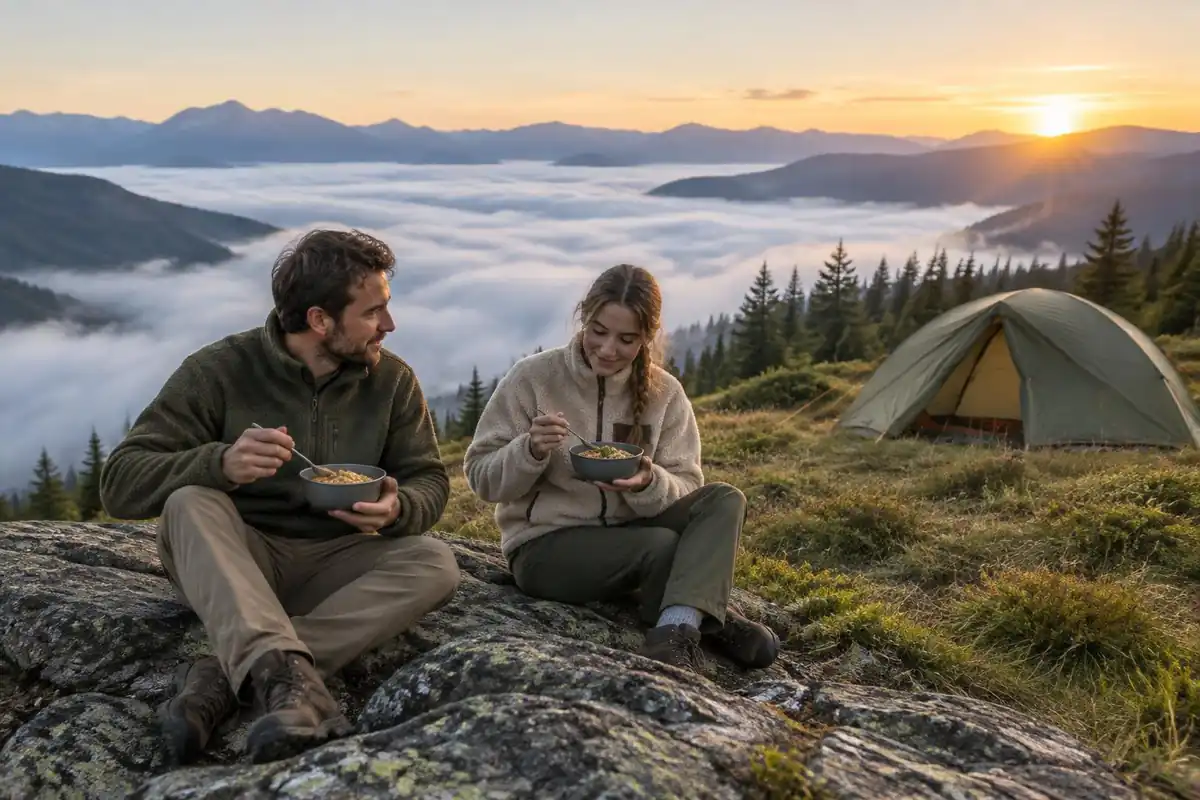
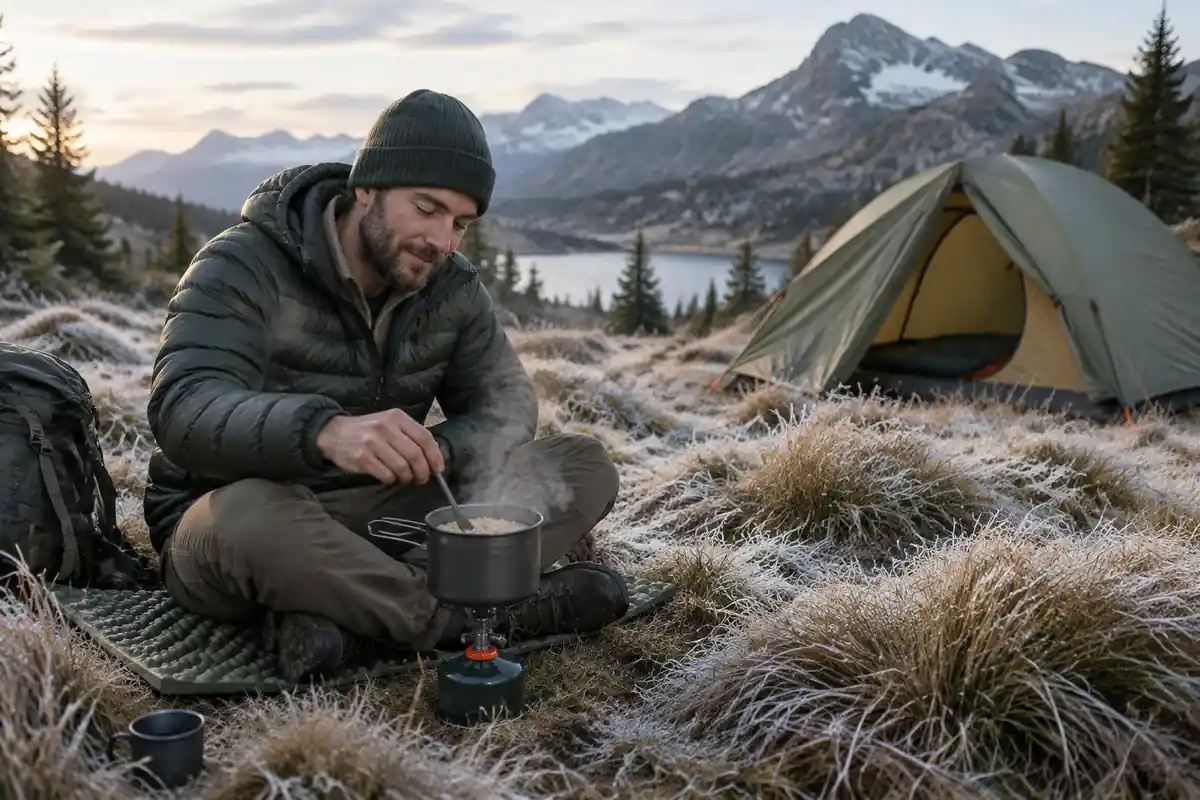
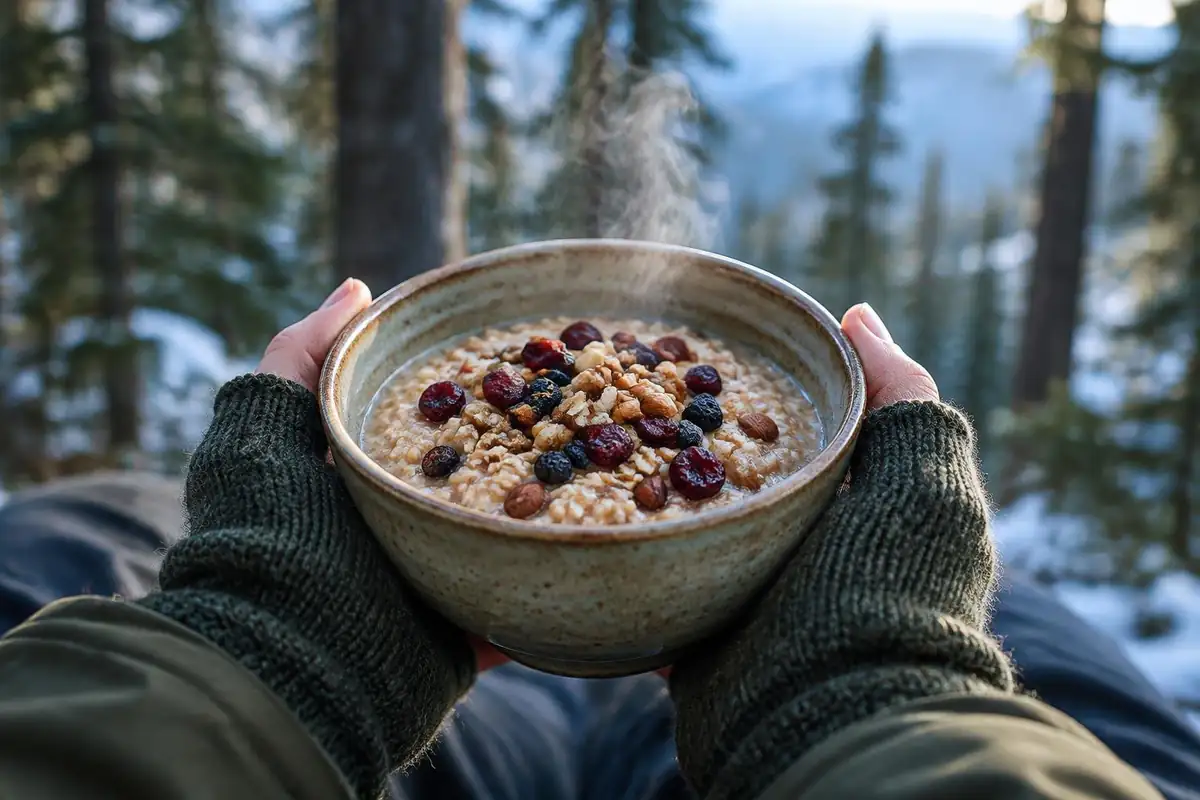
Plain instant oats are cheap, pack flat, and rehydrate in a mug with hot water, but on their own they're mostly light carbs that fade by mid-morning. Build them up at home: powdered milk, a scoop of nut butter, chopped dried fruit, nuts, or brown sugar, bagged per morning. The fat and protein slow the burn and make it taste like real food.
Granola plus powdered milk is the classic no-stove breakfast: pour both into a wide-mouth jar or freezer bag, add cold water, stir, and eat. It's calorie-dense thanks to the oil and nuts, needs no cleanup beyond rinsing, and works in any weather. Measure the milk powder at home, and pick a granola with real nuts rather than mostly puffed grain.
Cold soaking means adding water to oats the night before and letting them rehydrate in a sealed container while you sleep. You wake up to a ready meal with no stove, no fuel, and no waiting, useful on a pre-dawn start or when a morning is too windy to cook. Use a leakproof screw-top container, store it with your food overnight, and leave dairy mixes out in warm weather.
Freeze-dried breakfast pouches, from egg scrambles to hash-style potato meals, are the hot, savory end of the range. Most rehydrate in the pouch with boiling water in the time printed on the label, so they suit a slower camp morning rather than a rushed start. They're heavier per calorie than oats once you count the fuel to boil water, but the warmth pays for itself on a cold morning.
For an alpine start you often want to be walking within minutes of unzipping the tent. That's what bars, tortilla wraps with nut butter and honey, or a bag of trail mix are for: eat one in the dark, then take a second breakfast at sunrise once you've warmed up and the pace has settled. Set them aside the night before so you're not digging by headlamp.
If coffee is part of your morning, decide the format before you leave: instant sticks, steeped bags, or a lightweight pour-over all work, and each changes how long you stand around. Plan the food timing too. A sugar-heavy breakfast alone tends to fade within an hour or two, so pair carbs with fat and protein, and carry a snack you can eat on the move mid-morning.
Eggs and dairy: what the freeze-drying guidance says
Freeze-dried egg scrambles are among the few hot breakfasts that need only boiling water, and it helps to know why. Utah State University Extension says bacteria can survive freeze-drying in a dormant state, and that meats and eggs must be cooked either before freeze-drying or after rehydration.2 Commercial breakfast pouches are cooked before drying. If you freeze-dry your own eggs at home and did not cook them first, a soak in hot water is not enough; they need real cooking in the pot.
The page's advice to leave dairy mixes out of overnight soaks in warm weather follows the same logic. Once powdered milk or eggs are wet, they are ordinary perishable food again, sitting at air temperature all night.
Overnight oats and bear storage
Cold-soaking oats overnight means leaving a jar of wet, sweet-smelling food near camp. The National Park Service says bears treat any scented item as food, that bear-resistant containers only work when closed and locked, and that canisters belong on level ground at least 100 feet from camp.1 In Yosemite the food that must be stored includes all food and drinks, trash and toiletries, and hanging food is illegal everywhere in the park.6 The soaking jar goes in the canister, so check at home that it fits. New York's environmental agency describes typical canisters as about 8 by 12 inches.7
The soak water matters as well. The CDC notes that even clear stream water can carry germs, and that boiling is the best way to kill them.5 An overnight soak is not a boil, so use treated water.
Why a hot breakfast matters more in the cold
The page says cooking is worth it when you are cold. The CDC explains that hypothermia can develop even above 40°F if a person is chilled by rain, sweat or cold water, lists hikers among those at higher risk, and says warm drinks can help, while alcohol should not be given.3 A CDC report on camping deaths advised campers to bring adequate bedding and clothing and to eat and drink extra rather than relying on fuel-burning heat.4 Warning signs include shivering, confusion, fumbling hands and slurred speech; a body temperature below 95°F calls for immediate medical attention.3
The same report is the reason to cook outside. It recorded carbon monoxide deaths from a stove burning inside a zipped tent and found that opening tent flaps does not prevent dangerous build-up.4 Cook in the open, then take the hot mug back into the bag.
About the calorie targets
The page's 500 to 800 calorie breakfast and 2,500 to 4,500 calorie day are hiking-community planning figures, not published standards. The research figures that exist are military: a National Academies review put soldiers' cold-weather needs at 3,400 to 4,300 kcal a day.8 Use the ranges as a starting point and adjust by how you feel mid-morning.
Common questions
How many calories should a backpacking breakfast be?
There's no single number, but a day of backpacking is commonly estimated by hikers at 2,500 to 4,500 calories (a rule of thumb, not an official figure), depending on effort, terrain, and body size, and breakfast often carries a quarter to a third of that. Roughly 500 to 800 calories is a common target. Build it from calorie-dense ingredients rather than volume: oil, nuts, and milk powder do more than extra oats.
Do I need to cook breakfast at all?
No. Plenty of hikers skip the stove entirely in the morning and save fuel and time for dinner. Granola with powdered milk, cold-soaked oats, bars, and wraps all cover breakfast without lighting anything. Cooking is worth it when you're cold, when morale is low, or when a hot drink is the thing that gets you out of the sleeping bag.
How do I stop breakfast getting boring on a long trip?
Rotate two or three bases, such as oats, granola, and a savory pouch, instead of repeating one for a week, and vary the add-ins rather than the whole meal. Small things carry a long way: cinnamon, cocoa powder, instant coffee stirred into oats, a different dried fruit. Repack everything into labeled single-serving bags at home so variety doesn't mean extra weight.
This is general backpacking-food guidance, not a lab review — it explains what to look for and how to plan so you can choose well. See our affiliate disclosure.